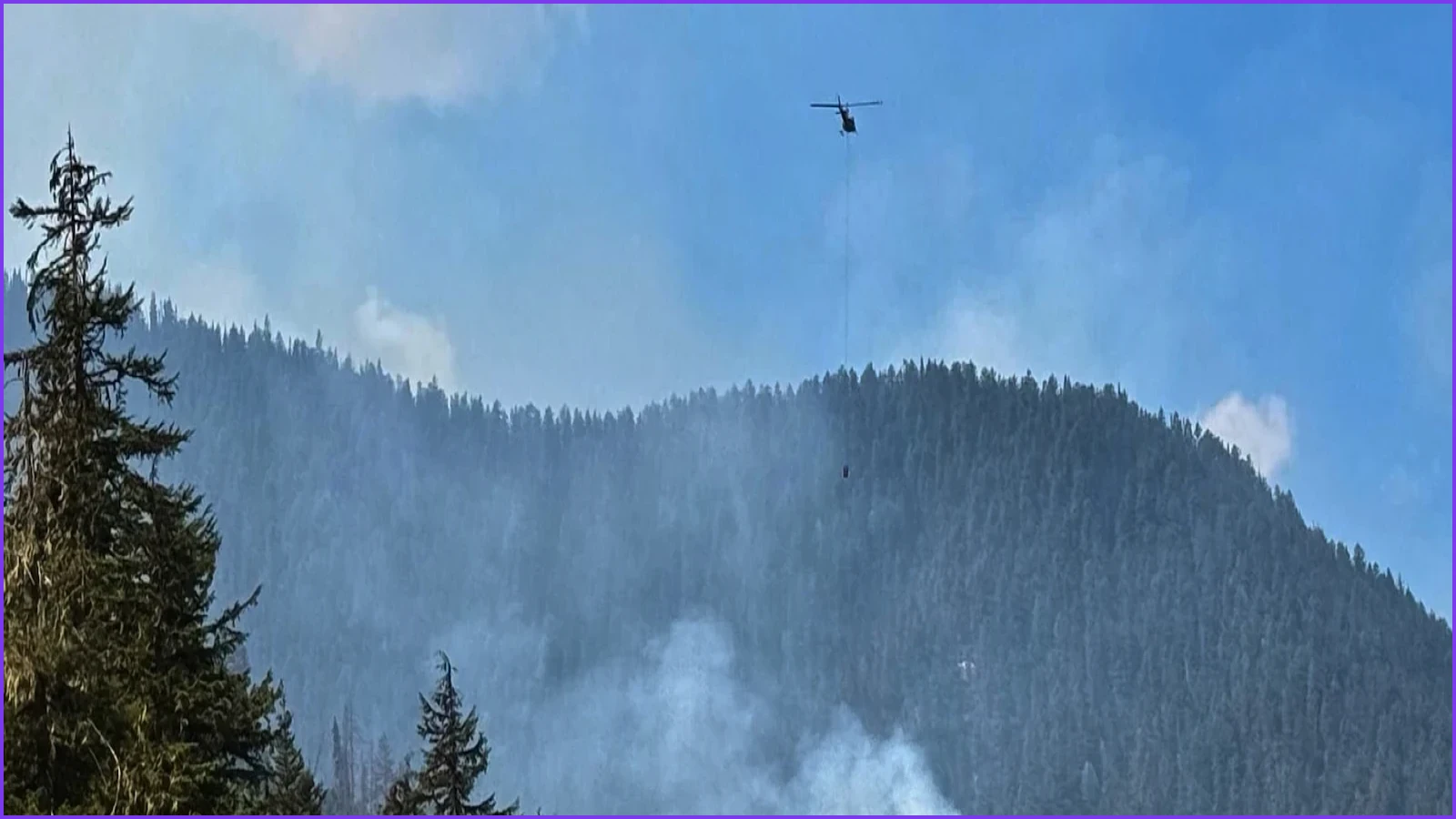
A rapidly intensifying wildfire in western Canada has forced more than 20,000 people to flee their homes, prompting British Columbia Premier David Eby to warn that the event may represent a “new normal.” The blaze, which ignited near the community of Summerland in the Okanagan region last Friday, moved with such unexpected velocity that emergency crews were forced to prioritize assisting residents with evacuations over active firefighting efforts.
By Wednesday, the Bald Range wildfire had expanded to cover approximately 184 square kilometers, or 71 square miles. The disaster has already resulted in the loss of homes and the death of an 80-year-old woman, a tragedy Premier Eby described as a “tragic loss” during his visit to an evacuation reception center in Penticton. Eby noted that the fire’s intensity and speed significantly outpaced official modeling, leaving many residents with minimal time to escape.
Emergency Management Minister Kelly Greene stated that officials are currently withholding specific details regarding property damage to prevent residents from learning about the loss of their homes through social media or news broadcasts before they can be notified directly. While damage assessments are underway, the affected area remains unsafe, and no timeline has been established for when residents might be permitted to return. Highway 97, a vital transportation artery, remains closed as crews focus on clearing vegetation to impede the fire's progression.
Local concerns are mounting, with Summerland pharmacist Jonathan Kiesman describing the distress of watching the fire approach his community. Mayor Doug Holmes has cautioned that the recovery process for the region will be both long and difficult. Meanwhile, officials are monitoring weather patterns, as incoming thunderstorms threaten to introduce erratic winds that could further escalate fire activity. Premier Eby warned that given ongoing drought conditions and summer heat, this event is unlikely to be the final major fire of the season.
In response to the crisis, the provincial government plans to review its wildfire planning, including current building standards and vegetation management protocols near residential areas. Canada has faced increasingly severe wildfire seasons in recent years, a trend attributed in part to the country warming faster than the global average. In 2023, the nation experienced a record-setting season with over 14.6 million hectares—an area roughly the size of Illinois—burned by wildfires, often leaving remote, spruce- and pine-dominated forests difficult to contain once fires take hold.