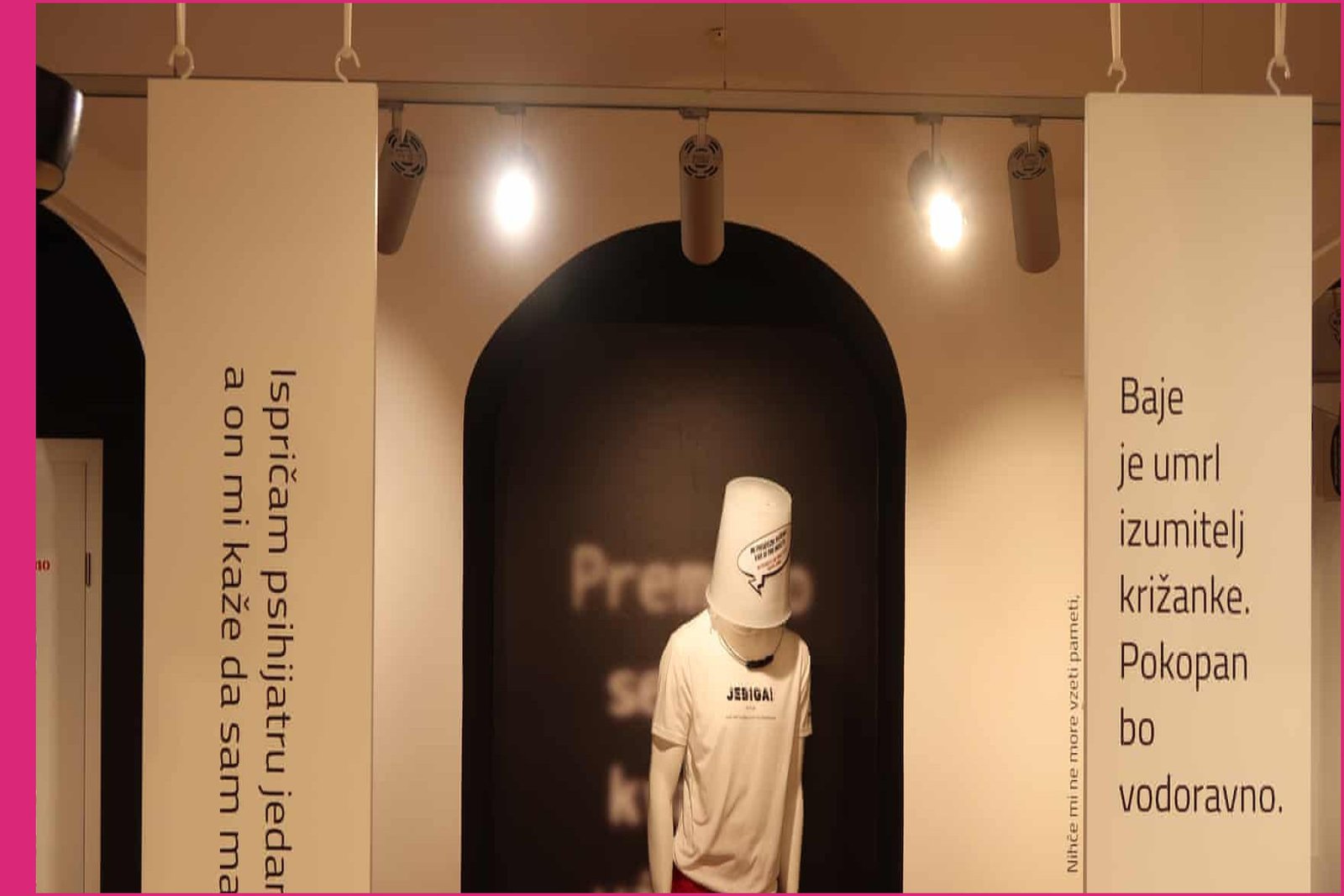
Located in the heart of old Ljubljana, a unique cultural project has emerged to explore the complex and often antagonistic humour of the former Yugoslavia. Since its launch in May, the museum has welcomed visitors with an unconventional display: a mannequin wearing a bucket on its head. This sets the tone for a space dedicated to the concept of “yebiga,” a term that roughly translates to “fuck it” or “screw it,” which founder Borut Kokelj identifies as the central thread of Balkan humour.
The museum consists of five intimate rooms featuring mannequins in odd accessories, AI-generated images of laughing figures, and various jokes displayed on cardboard screens or in frames. Kokelj, who sports a T-shirt asking, “What part of yebiga don’t you understand?”, believes that humour serves as a vital survival mechanism in the region. “Even when there’s no money, when there are no jobs, when nothing is settled, everything can be solved with humour,” he explains. “And for that to work, humour must have no filter.”
While the institution labels itself as the home of “Balkan” humour, its primary focus is the joke culture of the former Yugoslavia—a socialist federation that included present-day Slovenia, Croatia, Serbia, Montenegro, Bosnia and Herzegovina, and Kosovo. The exhibition reflects the region’s fragmented history, including the linguistic tensions that persisted after the collapse of the state. One prominent poster at the entrance highlights these divisions, noting: “A fool is a fool in both the Cyrillic and the Latin alphabets.”
The exhibition also touches on the region’s history of conflict. It features an absurdist play on the title of the 1996 Serbian drama Lepa Sela Lepo Gore, which translates to “pretty villages burn nicely.” The museum adapts this into Lepa jela lepo goje, meaning “fine food fattens you up well.” Other displays tackle social issues, including the definition of a “starleta,” described as a mythical being with the body of a woman and the head of a turkey, and jokes about the nature of men, often referred to as “konj” or horses.
Kokelj, who has amassed a collection of approximately 25,000 regional jokes, intentionally avoided politically charged content. “If we were to exhibit all the truly ‘Balkan’ jokes, we likely wouldn’t have opened,” he admits, noting that the selection excludes jokes targeting specific ethnic groups, religious identities, or national symbols. Instead, the focus remains on the everyday absurdities of life, romantic relationships, and the ability to laugh at one's own shortcomings. Common themes include the experience of living through hardship and the wisdom gained from mistakes.
A unifying element throughout the museum is rakija, the traditional fruit brandy offered to visitors upon entry. The spirit is described as the “first aid of every Balkan household” and is deeply intertwined with the philosophy of yebiga, which the museum defines as the “maximum feeling, minimum energy” approach to life, ideally accompanied by a cigar and a song.
Formed out of the wreckage of the first world war, Yugoslavia was a political project to unite southern Slav and some non-Slavic minorities under a common identity and language, then officially known as Serbo-Croatian. But the genocidal wars that accompanied Yugoslavia’s disintegration in the early 1990s demonstrated t