The manga and anime series "Golden Kamuy," created by Noda Satoru, serves as more than just a piece of popular entertainment; it acts as a cultural bridge to understanding Japan’s historical role in Northeast Asian borderlands and its complex relationship with Russia. Running as a serialized manga from 2014 to 2022, the series has expanded into a five-season anime—with its conclusion expected in late 2026—alongside several live-action films. The plot follows veteran Sugimoto Saichi and an Ainu girl named Asirpa as they search for a hidden treasure marked on the backs of 24 escaped prisoners from Abashiri prison.
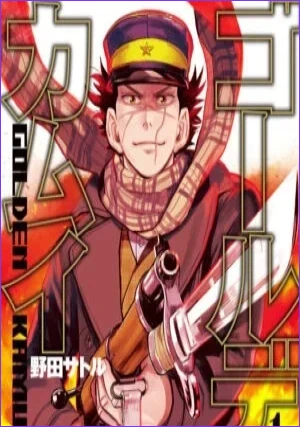
The first tankōbon volume cover, featuring Saichi Sugimoto, introduces the series' gritty aesthetic. Geographic setting is central to the narrative, with much of the action unfolding in Hokkaido, the traditional homeland of the Ainu. The story also navigates the contested borderlands of Sakhalin, an area historically settled by Ainu, Nivkh, and Uilta/Orok peoples that has shifted between Japanese and Russian control. By weaving these settings into the plot, the series illustrates how territorial disputes and cultural interactions continue to influence modern diplomatic tensions.
Spoiler Alert: Key plot points in “Golden Kamuy” discussed in detail below. The narrative frequently integrates real-world history, such as the assassination of Tsar Alexander II. In the series, Asirpa’s father, Wilk, is reimagined as a member of the People’s Will who assassinates the Tsar to further his dream of an indigenous-led Far Eastern federation. While this is a fictionalized account, it draws upon the historical reality of the People’s Will, a revolutionary movement whose 1881 bombing attack redirected the course of Russian leadership. Similarly, the series features the character Hijikata Toshizou, based on the real-life samurai who fought for the short-lived Republic of Ezo before dying at the Battle of Hakodate in 1869.
The victory in the Russo-Japanese War, which cemented Japan’s status as a major power, is a pivotal element that fueled Japan’s efforts to integrate Hokkaido and assimilate the Ainu population. Asirpa’s journey highlights these struggles as she attempts to navigate her role as an Ainu woman in a changing world. She acts as a cultural ambassador, teaching her companions about Ainu traditions while striving to protect her heritage from the encroachment of colonial policies. You have reached the limit of 2 free articles this month.
While historical attempts to suppress Ainu culture through assimilation were largely successful, causing the Ainu language to become critically endangered, there has been a recent resurgence in Ainu identity. Initiatives like the Upopoy National Ainu Museum and Park, opened in 2020, and modern AI language synthesis are part of a broader effort to preserve this history. "Golden Kamuy" has contributed to this awareness by sparking international interest in Ainu culture and boosting tourism to Hokkaido.
Today, Russo-Japanese relations remain at a historic low, strained by the dispute over the Southern Kuril Islands—known in Russia as the Northern Territories—and Japan's support for Ukraine during the ongoing Russo-Ukrainian War. Despite the lack of a diplomatic breakthrough, "Golden Kamuy" remains a valuable medium for examining the historical complexities of these two nations and their enduring impact on the region's indigenous populations.