A Thailand-led diplomatic initiative is currently underway to re-engage Myanmar’s military-backed government, a move designed to prevent the Association of Southeast Asian Nations (ASEAN) from becoming diplomatically marginalized. This shift follows a multi-phase election held in late 2025, nearly five years after the February 2021 coup. The polls, which heavily favored the military, saw the military-aligned Union Solidarity and Development Party secure 232 of 263 seats in the lower house and 109 of 157 seats in the upper house. Min Aung Hlaing subsequently assumed the presidency in April 2026, framing the transition as a return to constitutional civilian governance.
Seeking to transition from pariah status, the Naypyidaw administration has embarked on a diplomatic campaign targeting neighboring states, including India, Laos, China, and Thailand. As part of this effort to soften international criticism, the regime moved Nobel laureate Aung San Suu Kyi from prison to house arrest in late April and permitted a visit from the International Committee for the Red Cross on August 3 as proof of life. Despite these gestures, Min Aung Hlaing has signaled a desire to modify ASEAN’s Five-Point Consensus, arguing that it must reflect the current operational realities of his administration.
The diplomatic tour began in India, where discussions centered on maritime domain awareness, border stabilization, and counter-insurgency cooperation along the Mizoram-Chin State border. In Laos, the regime secured support for Mekong hydropower development and sister-city agreements. During a June visit to Beijing, Min Aung Hlaing met with President Xi Jinping, signing 18 memorandums of understanding. However, China notably withheld financial commitments for major infrastructure projects like the Kyaukphyu Deep-Sea Port and the Muse–Mandalay Railway, conditioning future investment on the security of Chinese assets and personnel amid ongoing conflict with the Arakan Army and other ethnic armed groups.
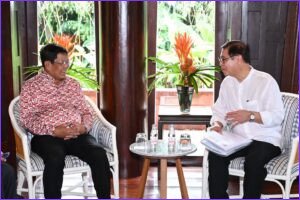
Thailand, under Prime Minister Anutin Charnvirakul, has emerged as a key proponent of this “calibrated engagement.” Facing border insecurity, refugee flows, and transnational crime syndicates, Bangkok is advocating for a shift from the fractured Five-Point Consensus toward a more flexible framework. Foreign Minister Sihasak Phuangketkeow has promoted a “3R” strategy—regionalism, relevance, and resilience—to restore ASEAN’s central role in regional affairs. This approach involves hosting informal dialogues and encouraging Myanmar’s reintegration into regional forums.
This push has gained traction among several ASEAN members, including the Philippines, Indonesia, Cambodia, Vietnam, and Laos. While nations like Singapore and Malaysia maintain a stance of non-recognition, the bloc is increasingly adopting a dual-track strategy: maintaining the Five-Point Consensus as a standard while allowing frontline states to pursue bilateral and informal dialogues. By reasserting this collective agency, ASEAN aims to safeguard its strategic perimeter and ensure it remains the primary mediator in its own backyard, rather than yielding influence entirely to external powers like China and India.
You have reached the limit of 2 free articles this month.
You have read 1 of your 2 free articles this month.