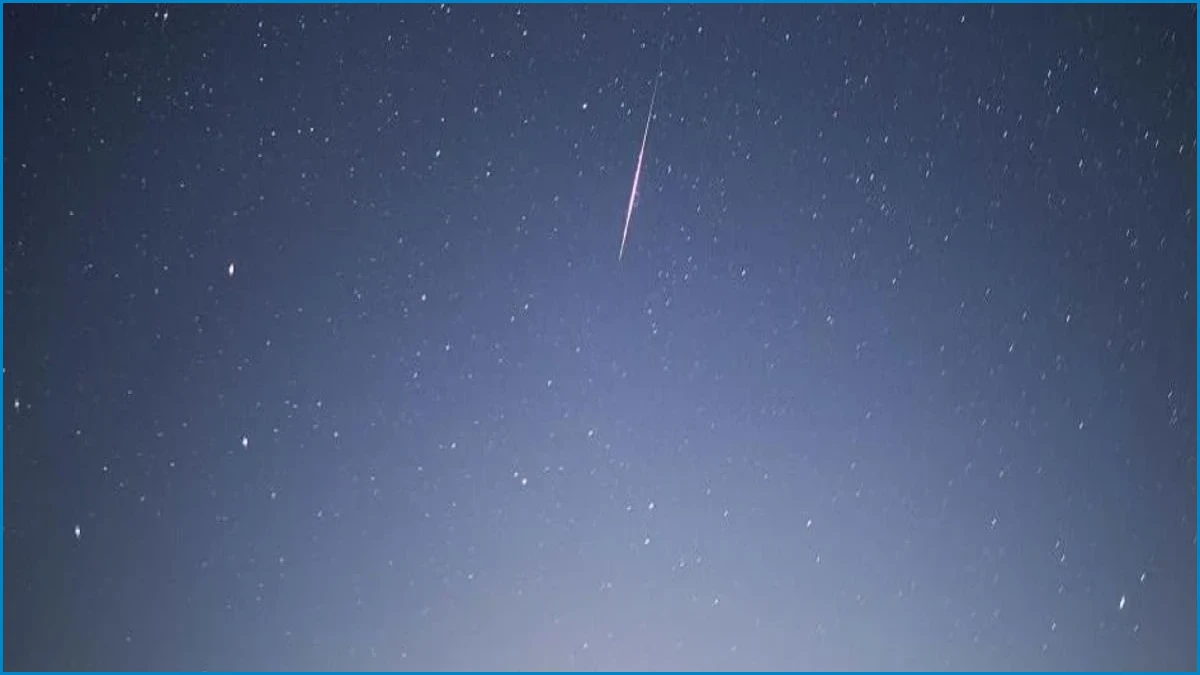
The annual Perseid meteor shower has returned, promising a dazzling display that is set to peak on Wednesday night. This year’s event is particularly notable as it coincides with a new moon, meaning there will be no bright moonlight to obscure the view of the meteors.
Dr. Becky Smethurst, a Royal Astronomical Society Research Fellow, described the event as one of the best nights for astronomy all year, calling it a perfect cosmic coincidence.
Meteor showers occur when Earth passes through debris trails left by comets or asteroids—essentially snowballs of frozen rock and gas orbiting the Sun. As this debris enters the atmosphere, it burns up, creating streaks of light known as meteors.
The Perseids are specifically caused by debris from the Swift-Tuttle comet.
This comet is a large object with a solid core measuring 16 miles (26km) across, and because it takes 133 years to orbit the Sun, some of the rock fragments currently burning up in our atmosphere may have been shed more than a century ago.
"It's sort of like the Universe's own cosmic clock in a way," Smethurst said.
While the Perseids are active from mid-July through August 23, the most spectacular viewing occurs during the peak nights. This year, the optimal time to watch is during the early morning hours between midnight and dawn on August 12 and 13.
During these peak periods, observers could potentially see more than 100 shooting stars per hour. The meteors appear to originate from the constellation Perseus and are visible globally.
For the best experience, astronomers recommend choosing a location away from artificial city lights, which can hide fainter meteors. Observers should allow 20 to 30 minutes for their eyes to adjust to the dark and look toward the widest possible expanse of the sky.
In England and Wales, skies are expected to be largely clear with only minor mist patches.
However, those in Northern Ireland, Scotland, and the far north of England may face more challenging conditions, with potential cloud cover and occasional showers. Residents in north-west Scotland may find an early night to be a more practical option.
This year’s celestial calendar also features a deep partial solar eclipse occurring in the early evening, shortly before the Sun sets. While the two events are unrelated, they contribute to an exceptional window for stargazing.
It is important to note that the solar eclipse will only be visible as a partial event in the UK.
Dr. Smethurst warned that for those in regions witnessing a total eclipse, such as Spain, the chance of spotting a shooting star during the event is extremely slim.
Furthermore, she emphasized that remember for a solar eclipse you must use certified solar glasses – looking directly at the sun without proper eye protection can cause permanent eye damage.