Lee Yi-yang, the head of the Taipei Economic and Cultural Representative Office in Tokyo, chose to boycott this year’s memorial marking the 81st anniversary of the U.S. atomic bombing of Nagasaki. The decision followed a dispute over seating assignments, which Lee characterized as an insult to Taipei and an indication that city officials are acting as a proxy for Chinese interests.
In a public statement posted to social media, Lee argued that the city’s seating plan deliberately denied Taiwan’s status as a nation, thereby disregarding its sovereignty and dignity. Because the designated seats for Taiwanese officials were not included among those reserved for diplomatic missions, Lee and two of his deputies opted not to attend. Instead, a lower-ranked official, Chen Ming-chun, was sent from Fukuoka to represent the office. Speaking to Nippon Television, Chen expressed that there should be no discrimination at a memorial dedicated to praying for a world free of war and nuclear weapons.
Nagasaki Mayor Shiro Suzuki defended the city’s actions, denying allegations that the local government was bowing to pressure from Beijing. Suzuki told reporters that the city maintains strong ties with Taiwan and places great importance on that relationship. According to Nagasaki officials, seats for Taiwanese representatives were placed just behind other envoys and were not intended to be clearly distinguished as non-diplomatic guests. The Asahi newspaper reported that the seating plan for Taiwan was grouped with international organizations and envoys who could not be accommodated in the special guests section reserved for ambassadors and senior Japanese officials.
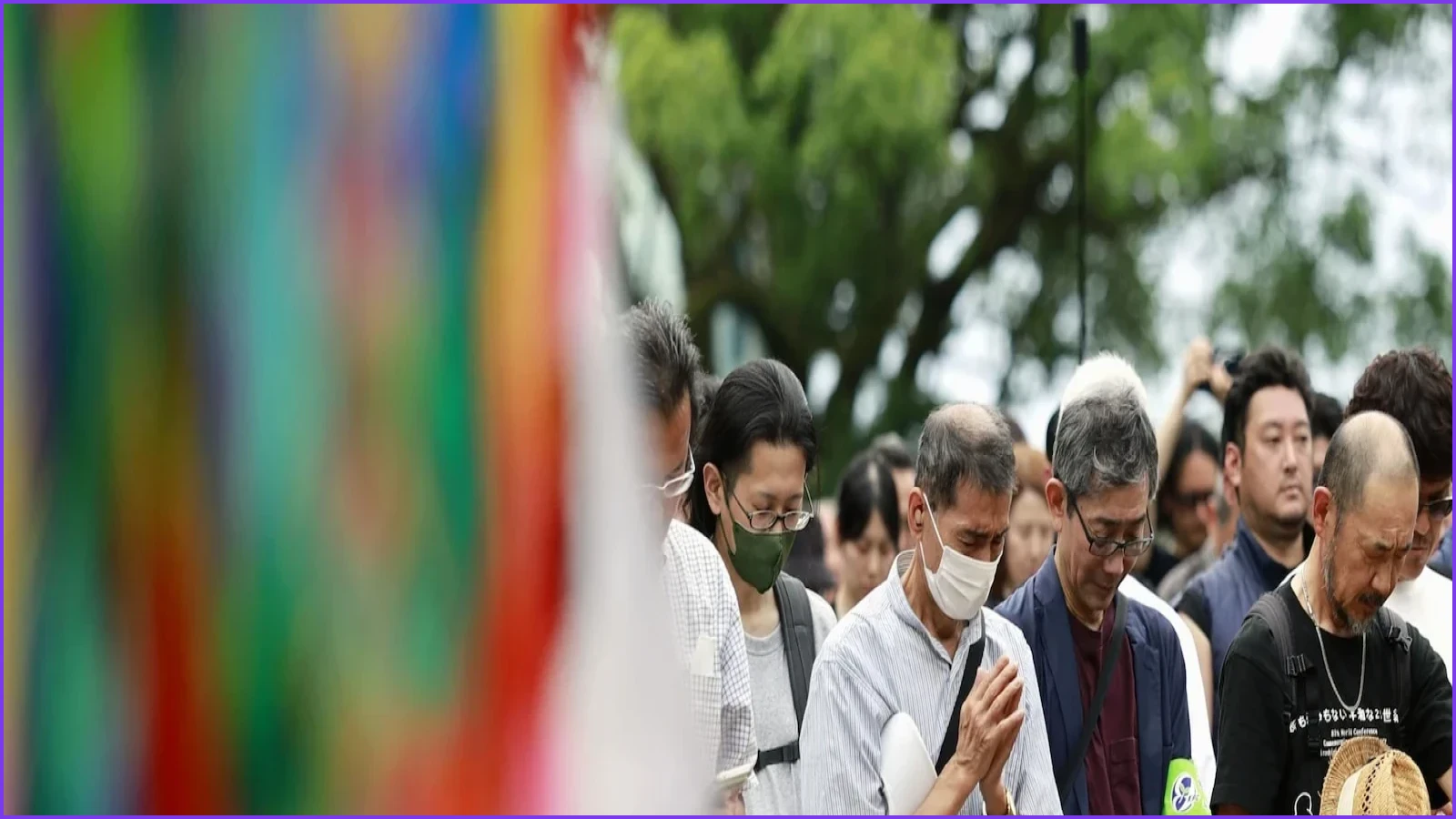
The memorial, held at the Peace Park in Nagasaki, was attended by representatives from 98 countries and three international organizations, including the United Nations, the European Union, and the International Committee of the Red Cross. The U.S. attack on Nagasaki occurred on August 9, 1945, resulting in 70,000 deaths by the end of that year, following the August 6 Hiroshima bombing that killed 140,000. These events led to Japan's surrender on August 15, 1945.
Nagasaki recently established a policy of inviting countries, regions, and organizations that maintain diplomatic missions in Japan or at the United Nations, a criteria that includes countries currently in conflict like North Korea. While Taiwan does not fit these categories, officials noted that they had accommodated Taiwanese representatives at their request last year. Lee, who took his post in September 2024, had previously attended the Hiroshima memorial on August 6, where he noted he was treated equally alongside other foreign envoys. He stated that he did not protest a similar seating arrangement in Nagasaki last year in order to prioritize friendship, but felt compelled to speak out this year. Lee emphasized that Taiwan is a peace-loving nation, contrasting it with China’s increasing regional threats through military and nuclear expansion.