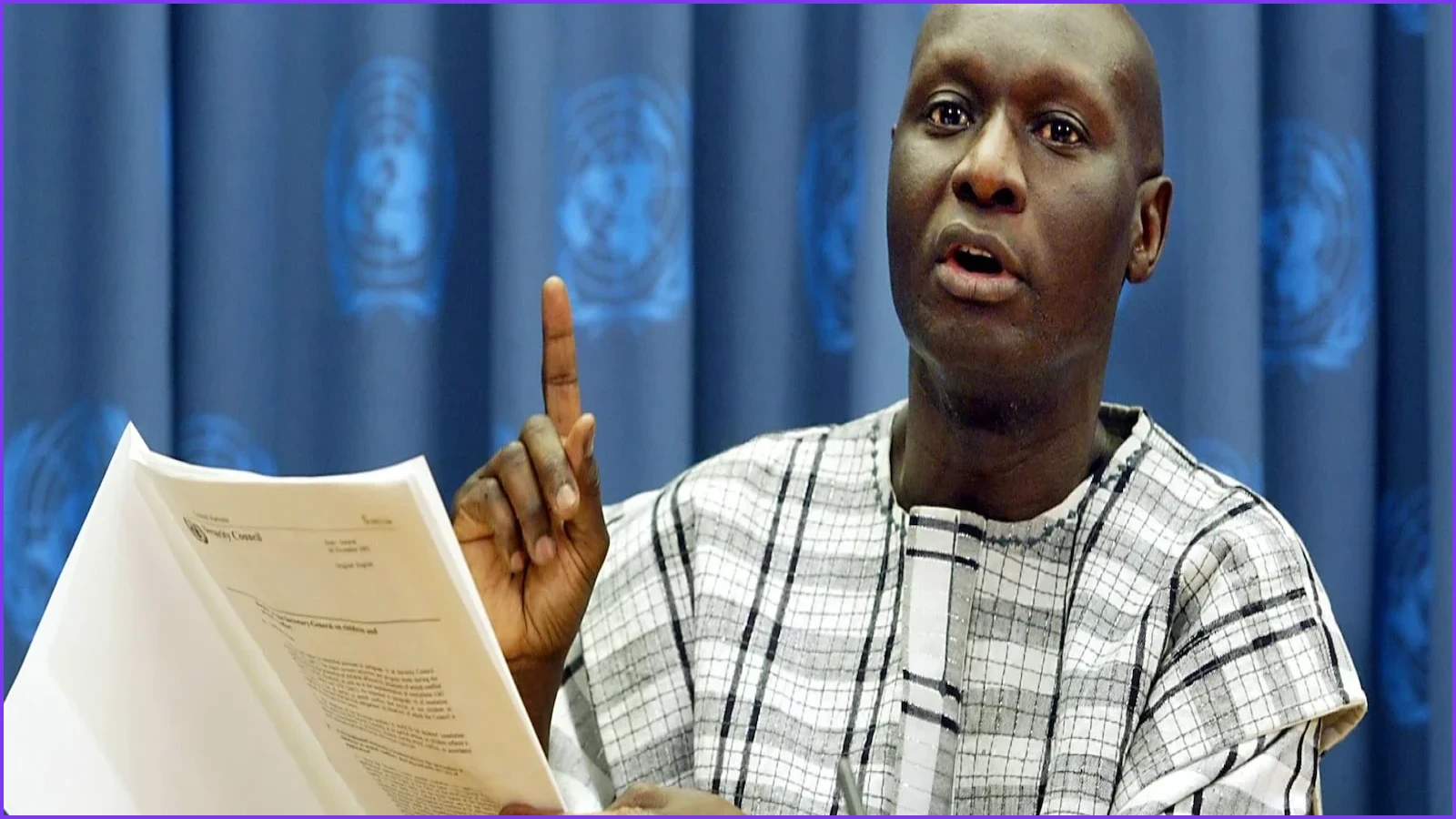
Olara Otunnu, a 75-year-old veteran of the United Nations system, has officially entered the race to become the next secretary-general of the United Nations. Adonia Ayebare, Uganda’s permanent representative to the U.N., confirmed that Otunnu is currently in New York to engage in dialogue with the U.N. Security Council and the General Assembly. To facilitate his travel, Otunnu required visa assistance due to current restrictions barring Ugandans from entering the U.S. as part of Ebola prevention measures.
Otunnu’s path to the nomination is marked by a complex history with his home government. While he is now being backed by the state, he was previously at odds with President Yoweri Museveni’s administration. In 1997, he was considered a favorite for the secretary-general role, but his candidacy was blocked by the same Ugandan authorities who are now supporting his bid. He later unsuccessfully contested the Ugandan presidency in 2011 and has remained in retirement since.
An alumnus of Oxford and Harvard Law School, Otunnu served as Uganda’s representative to the U.N. from 1980 to 1985, a period that included a one-year term as president of the Security Council. He also held the position of Uganda’s foreign minister during the 1980s. During his time at the Security Council, he developed the "Otunnu Formula," a system of straw balloting still utilized in U.N. selection processes today.
Regarding his candidacy, Otunnu emphasized that peace and security remain the most critical mandates for the United Nations. While he is viewed by some as a "dark horse" candidate, analysts suggest he could serve as a viable alternative should a consensus on a Latin American candidate fail to emerge. Although there is a tradition of regional rotation—with this cycle favoring Latin America—there are no formal barriers preventing candidates from other regions from seeking the role.
The selection process is overseen by the 15-nation Security Council, which includes permanent members with veto power: the United States, Russia, China, the United Kingdom, and France. Final approval must come from the 193-member General Assembly. Otunnu joins a field of contenders that includes Macky Sall of Senegal, Michelle Bachelet of Chile, Rafael Grossi of Argentina, Rebeca Grynspan of Costa Rica, Maria Fernanda Espinosa of Ecuador, and Carolyn Rodrigues Birkett of Guyana. The successful candidate is slated to assume the position on January 1.