Turkey’s parliament officially commenced debate on Monday regarding a draft bill that proposes a conditional amnesty for thousands of Kurdish militants. The legislative move is designed to provide a pardon-like mechanism, serving as a pivotal component of the government's ongoing peace initiative with the Kurdistan Workers’ Party, or PKK.
The insurgent group, which has engaged in an armed campaign against the Turkish state since 1984, declared a decision to disarm and disband last year following a call from its imprisoned leader, Abdullah Ocalan.
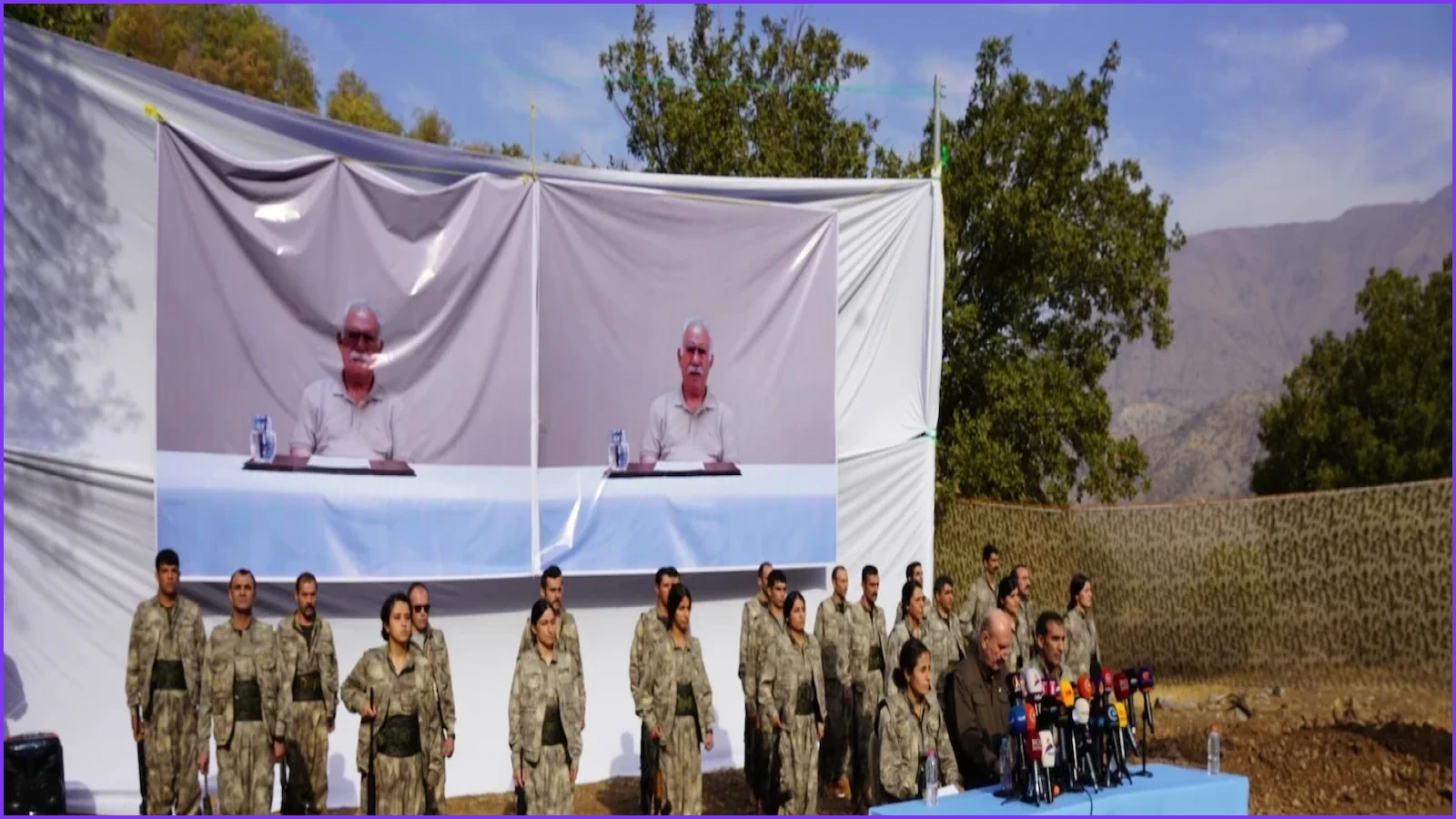
Following that directive, the PKK held a symbolic disarmament ceremony in northern Iraq, where it maintains its base, and announced the withdrawal of fighters from key territories within Turkey. The proposed 12-article legislation establishes the necessary procedures for the group’s disarmament and the subsequent rehabilitation of its members. The measure is viewed as a significant step toward resolving a conflict that has resulted in tens of thousands of deaths and has had spillover effects in Iraq and Syria.
Furthermore, the bill could potentially bolster ties between Turkey and Iraq, and assist the Syrian government in integrating regions previously controlled by the Kurdish-led Syrian Democratic Forces, an organization affiliated with the PKK.
The bill includes specific exclusions, notably for militants convicted of intentional killings and those who received life sentences prior to 2005. Consequently, the provisions do not apply to Ocalan or other senior PKK figures. The legislation also mandates the creation of ministerial and parliamentary committees to oversee the disarmament process.
These measures are contingent upon confirmation from Turkey’s National Security Council that the group has fully disbanded and surrendered its weaponry. Once the council’s decision is published in the official gazette, individuals seeking to benefit from the law will have a six-month window to apply.
The legislation is expected to benefit exiled PKK members as well as those currently residing in Iraq and Syria. However, the response from the PKK has been mixed. A statement from the group, carried by the PKK-linked ANF news outlet, described the bill as a “beginning” while simultaneously highlighting “serious shortcomings and deficiencies.” The group explicitly called for the release of Abdullah Ocalan, who has been imprisoned since 1999, arguing that the peace process can only succeed if he is permitted to live and work freely.
Furthermore, the PKK raised concerns that the bill fails to address broader demands for democratic reforms and Kurdish rights, warning that fighters would not return to Turkey if they face prosecution for their political views or associations.
Within the Turkish parliament, Gulistan Kilic Kocyigit of the pro-Kurdish Peoples’ Equality and Democracy Party (DEM) acknowledged the proposal's flaws but emphasized the opportunity to consolidate peace. Conversely, Musavat Dervisoglu, leader of the center-right nationalist Good Party, expressed opposition, claiming the bill serves to extend President Erdogan’s time in power. Despite these criticisms, the bill is expected to pass with support from the ruling party, their nationalist allies, the DEM, and the New Party.
While the current proposal does not address Ocalan's release, media reports suggest his prison conditions may be improved to allow for broader communication. The PKK remains designated as a terrorist organization by Turkey, the United States, and the European Union, and previous efforts to resolve the conflict, including a 2015 attempt, have failed.
“Of course, the proposal has shortcomings, and we now have a responsibility to address these shortcomings,” she added, in an apparent reference to demands for greater rights for Kurds and for democratic reforms.
Media reports have suggested however, that Ocalan’s conditions in his island prison off Istanbul will likely be improved, giving him broader visiting conditions and communication with the outside world.