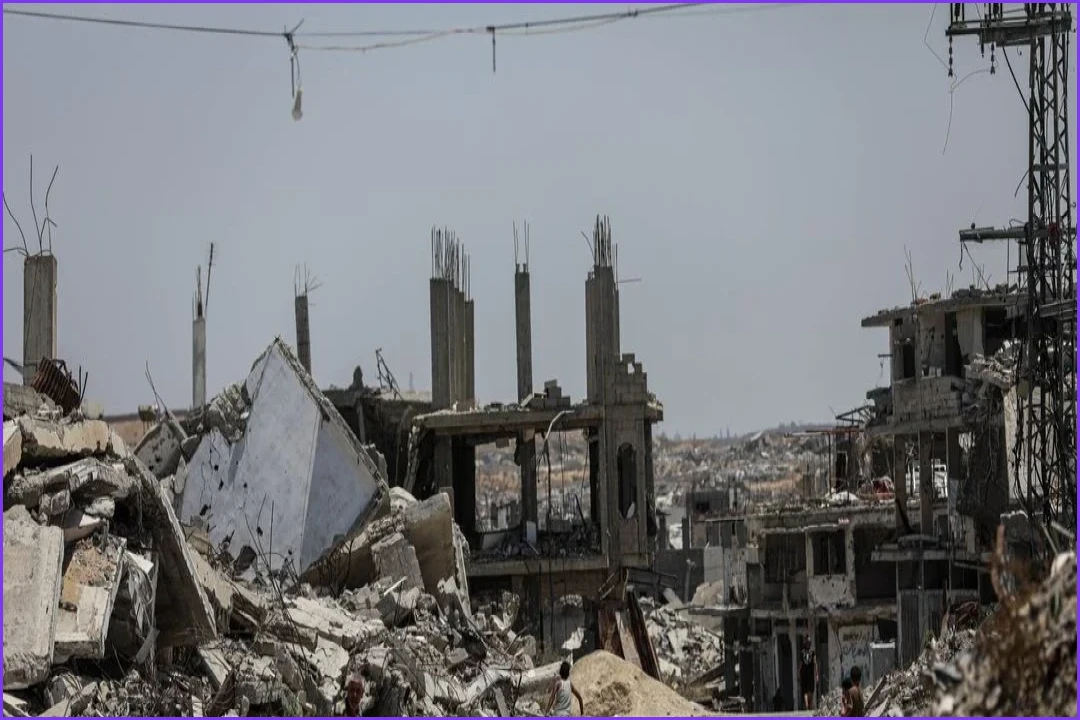
Israel's actions have intentionally disrupted Gaza's transportation and freight networks, significantly damaging trucks and warehouses and thereby restricting the flow of essential supplies and humanitarian aid into the enclave, according to the Euro-Med Human Rights Monitor. The group stated on Sunday that damage to transport, storage, and distribution infrastructure means that even when aid trucks are permitted entry, their cargo may not reach those in need.
Nahed Shuhibar, head of Gaza’s Private Transport Association, informed Euro-Med that the enclave possessed approximately 1,200 trucks before the conflict, used for transporting food, medicine, fuel, animal feed, and construction materials. Shuhibar indicated that only about 400 trucks are still operational following Israeli attacks and destruction. An additional 100 trucks are out of service due to difficulties in obtaining spare parts, tires, oils, and batteries, making repairs challenging. This leaves an estimated 300 trucks functioning, representing roughly one-quarter of Gaza's pre-war fleet. Euro-Med also noted that several newly imported trucks have been rendered unusable, further diminishing the capacity to move supplies across Gaza.
The Euro-Med Human Rights Monitor cited Justin Brady, head of the UN Office for the Coordination of Humanitarian Affairs in Palestine, warning that Gaza is facing a severe food emergency. This situation could escalate to Phase 5 of the Integrated Food Security Phase Classification if aid deliveries continue to decline. The monitor reported that approximately 212,000 people, nearly 10% of Gaza's population, could remain under Phase 4 food emergency conditions, the second-worst level on the classification scale.
Euro-Med emphasized that Israel is obligated under international humanitarian law to protect civilians and civilian infrastructure, safeguard humanitarian workers and their vehicles, and facilitate rapid, unimpeded humanitarian relief, irrespective of existing coordination mechanisms. The group cautioned that any further decrease in aid deliveries could rapidly worsen the already fragile humanitarian situation in Gaza.