Iran has declared that it will not engage in direct negotiations with the United States as long as Washington remains in violation of the bilateral agreement reached between the two nations in June. This diplomatic standoff comes as President Donald Trump revealed to Axios that he is "low-keying it" and only semi-negotiating with Tehran. Meanwhile, the conflict on the ground continues to intensify, highlighted by a recent attack on an oil facility in southwestern Saudi Arabia, for which Iran-backed Houthi rebels have claimed responsibility.
These developments underscore the deep influence of Iran and its allied non-state armed groups, collectively known as the "Axis of Resistance." According to Peter Salisbury, a professor at Columbia University’s School of International and Public Affairs, this network has successfully complicated and reshaped the war in the Middle East. Writing in a provocative article for Foreign Affairs Magazine this month, Salisbury highlights the resilience and ongoing danger posed by groups such as the Houthis in Yemen, Hezbollah in Lebanon, and various Iran-backed Iraqi militias.
The Axis of Resistance represents a network of non-state armed groups that Iran has spent the last 20 to 40 years investing in and building up. Today, these groups in Lebanon, Yemen, and Iraq possess the capability to launch drones and missiles at various adversaries. In particular, the Houthis and Iraqi militias have demonstrated the ability to conduct cross-border missile and drone strikes against Saudi Arabia and commercial shipping lanes in the Red Sea. This operational capacity has created severe difficulties for the United States and its allies.
While these groups remain closely tied to and heavily reliant on Tehran, the power dynamics within the Axis have evolved. Rather than operating under a strict, top-down structure controlled entirely by Iran, these groups have increasingly developed their own autonomous capabilities, independent supply lines, and direct connections with one another. Salisbury describes this structure less as a traditional network and more as an interconnected ecosystem. This decentralized model has allowed the groups to pool knowledge, reconstitute themselves, and continue posing a significant threat even after facing numerous military strikes by the United States and Israel over recent years.
A key factor in this resilience is the sophisticated training system Iran has established. Around 20 to 25 years ago, Tehran began moving beyond its long-term investment in Hezbollah and its loose 1990s connection with Hamas to build a comprehensive military curriculum. This educational pipeline ranges from basic military tactics to advanced technical training. Operatives are instructed on how to operate and manufacture sophisticated drones and missiles. This training occurs not only at specialized sites within Iraq, Lebanon, and Yemen but also at technical and higher institutes of learning inside Iran itself. Consequently, Iran does not merely supply weapons and instructions; it transfers deep technical knowledge.
This transfer of expertise has coincided with a transformative shift in military technology, specifically the rise of cheap and highly accessible drone technology. A decade and a half ago, the United States and other Western powers were largely able to restrict access to advanced weaponry by controlling the global flow of critical parts and intermediate goods. Today, however, many of the components used to build Houthi, Hezbollah, and Iranian drones are manufactured cheaply and on a massive scale in China.
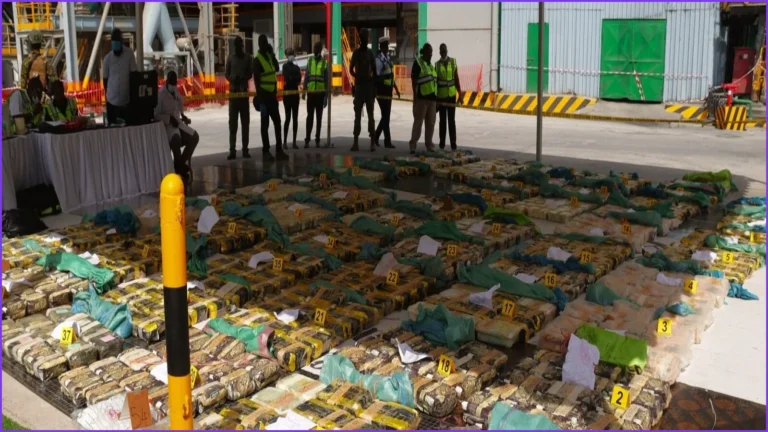
To acquire these parts, the various groups have established their own sophisticated international supply chains. They coordinate with traders and business networks in China, across the globe, and in the Gulf region. These materials are shipped and then smuggled through the "last mile" into territories controlled by the groups. This system represents a fundamental shift from previous decades, when the groups relied almost exclusively on direct shipments of completed weapons from Iran.
This decentralized reality has undermined the military strategies previously employed by the United States and its allies. Past approaches, including the Trump administration's "maximum pressure" campaign and operations under the assumption of "Epic Fury," relied on the premise that the capabilities of these groups were concentrated in specific locations. Western strategists believed they could disrupt the network by killing key personnel who held specialized knowledge, destroying specific manufacturing warehouses, and imposing economic sanctions to constrain their resources.
However, the pool of knowledge required to source parts, assemble drones, and launch them is now highly diffuse and widely distributed. While Israel previously compared Iran and the Axis of Resistance to an octopus with centralized tentacles, Salisbury suggests a different analogy. The network functions less like an old-fashioned telephone exchange where all communications must route through a single, central hub. Instead, it operates like the internet, where data and operations flow through hundreds of different nodes simultaneously.
This highly decentralized and diffuse structure makes uprooting these groups an exceptionally difficult task for the United States and its allies. In an interview, Schmitz remarked, "That's really interesting," and asked, "How are the U.S. and its allies fighting these types of groups, knowing this type of power structure?"
Furthermore, the implications of this decentralized warfare model extend far beyond the Middle East. Similar dynamics and technology are increasingly shaping conflicts around the world, from Ukraine to Sudan and Ethiopia. Salisbury warns that managing this distributed network of armed non-state actors will remain a growing challenge for powerful nations and global security in the coming years and decades. Salisbury concluded the interview by saying, "Thanks so much for having me."
SALISBURY: I mean, it's been transformative, frankly. Maybe 10, 15 years ago, the U.S. and other Western powers were able to limit access to advanced weapons because they controlled most of the technology, most of the parts – what are known as intermediate goods – that were flowing around the world. Fast-forward a deca