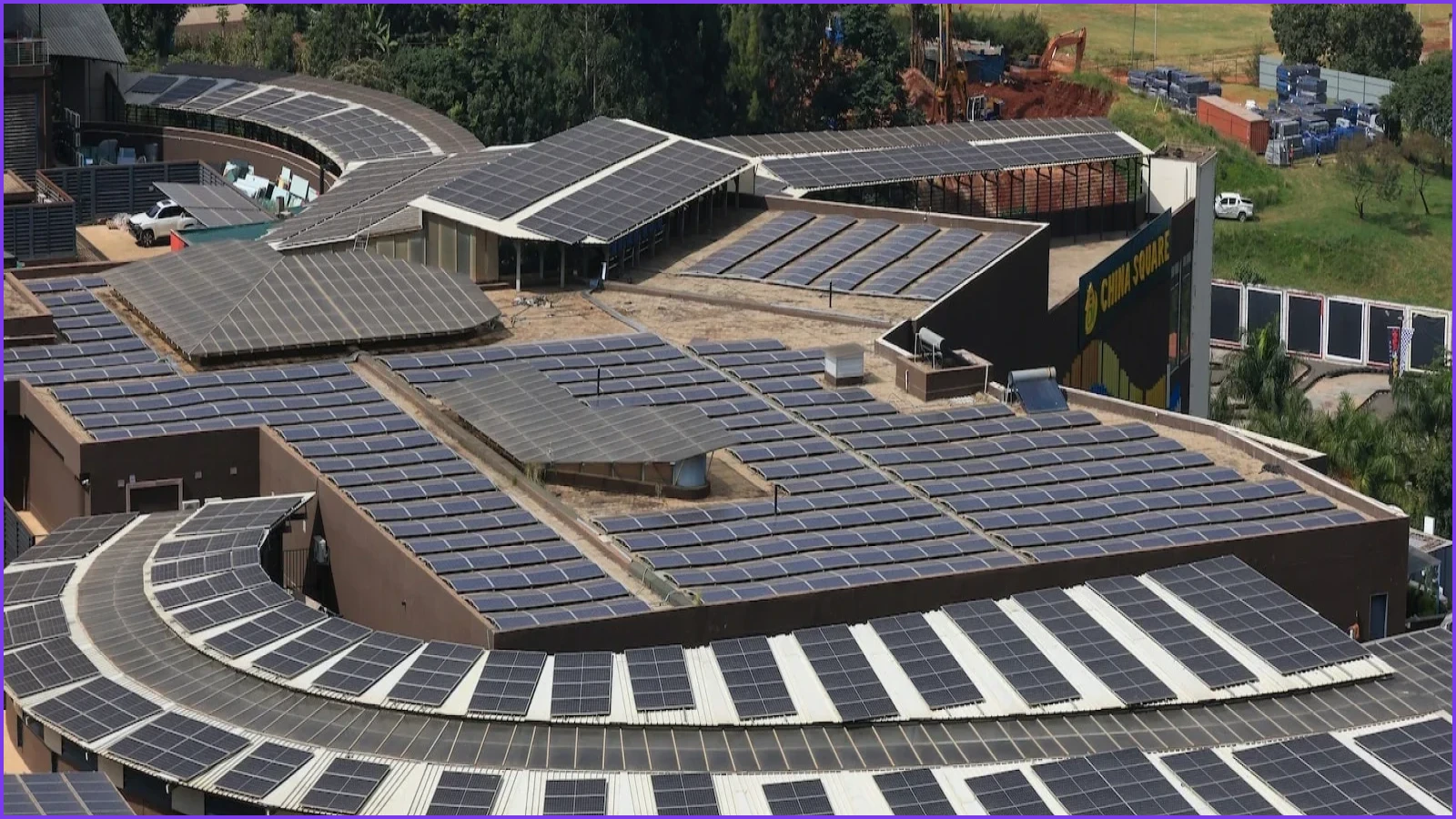
Major economies across Africa are accelerating efforts to bolster domestic solar manufacturing capacity, a strategic shift that industry experts attribute to both industrial ambition and a growing desire to reduce reliance on the Chinese imports that currently dominate the global market. Countries including Ethiopia, South Africa, Morocco, and Nigeria are actively working to localize the production of solar equipment, ranging from module assembly to more sophisticated manufacturing processes.
Despite this push for self-reliance, analysts suggest that China is poised to maintain its dominant global role in producing solar cells and other essential components. Global exports of this equipment have surged, partly driven by a significant supply glut within China. Olena Borodyna, a senior geopolitical risk advisor at a London-based think tank, noted that the combination of growing African economies, recent energy shortages in nations like Zambia, and the ongoing need to serve underserved populations makes the continent an ideal market for China to channel its excess industrial capacity.
Structural changes in regional power markets are fueling this homegrown manufacturing movement. In South Africa, the rise of rooftop and distributed solar systems has reduced demand on the national grid, prompting utilities to diversify their interests. Eskom, the national utility, is planning a 1-gigawatt solar manufacturing facility to capture more value from the expanding market and adapt to shifting electricity demands. South Africa remains the continent's largest importer of solar equipment, bringing in over 3 gigawatts annually, primarily from China.
Nigeria is also seeing rapid expansion, with local assembly capacity climbing from roughly 120 megawatts to approximately 300 megawatts over the last two years. Benjamin Clarke, policy director at the Africa Solar Industry Association, described this increased interest as a significant shift, even if total manufacturing capacity remains limited. He noted that countries pursuing these efforts, such as Morocco—which has doubled production to about 1 gigawatt annually—and Egypt, already possess industrial foundations and strong domestic demand. According to Clarke, local solar manufacturing has moved from being barely on the agenda to becoming a recognized pillar of industrial policy and green economic development.
The demand for renewable energy continues to climb, with the industry group GOGLA estimating that over 10 million solar kits were sold across Africa in 2025, serving roughly 148 million people. This represents a 10% increase over 2024, with growth concentrated in East and West Africa. However, the continent lacks commercial-scale solar cell manufacturing, forcing emerging plants to continue relying on imported Chinese components. Clarke emphasized that most new facilities focus on assembly rather than producing high-value upstream materials, leaving the region dependent on foreign technology for the most sophisticated parts of the supply chain.
Some experts view this relationship as a potential bridge for technology transfer. Borodyna stated that China's expertise in scaling technologies provides a vital opportunity for job creation and skill building. Meanwhile, trade restrictions in the United States and Europe have encouraged Chinese companies to increase investments in Africa and Southeast Asia. The Rhodium Group notes that Ethiopia has become a favored destination, with more than half of its announced investments since 2018 originating from China. In contrast, projects in South Africa, Nigeria, and Morocco are largely driven by domestic companies or joint ventures.
As major Chinese manufacturers like Longi and Jinko face losses due to market oversupply, shifting production overseas has become a strategic necessity. Estimates from the Net Zero Industrial Policy Lab suggest Chinese firms pledged as much as $250 billion in overseas green manufacturing projects between 2011 and the first half of 2025. According to Li Shuo, director of the Asia Society Policy Institute’s China Climate Hub, China remains the undisputed leader in this sector, and its dominance is expected to be further cemented in the coming years.
Chinese solar exports doubled in March reaching a new monthly record, as 50 countries set all-time records for Chinese solar imports in a single month, according to Ember, a think tank.
Chan reported from Hong Kong. Associated Press journalist Anton L. Delgado contributed from Bangkok.