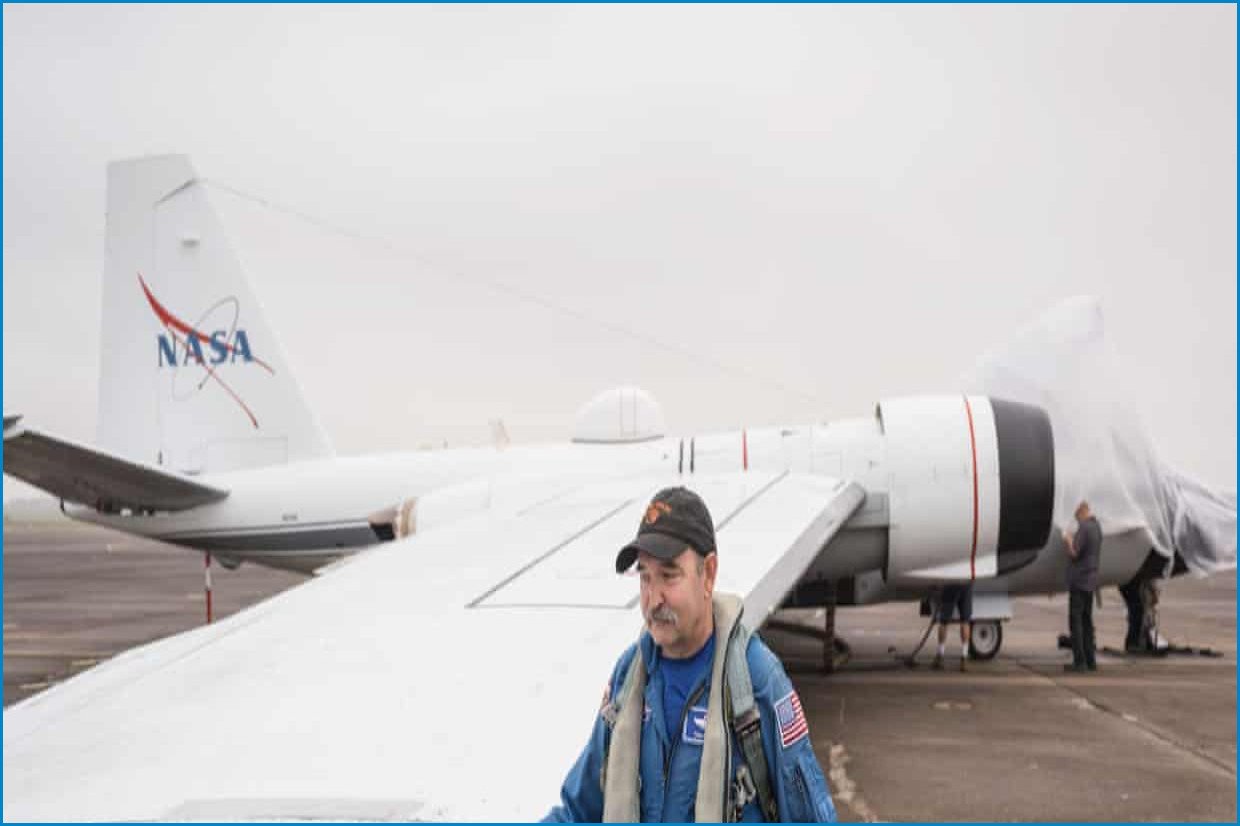
A pair of Nasa aviators is preparing for a unique mission departing from Keflavik airport in Iceland. Following lunch this Wednesday, the team will pilot a research aircraft north toward Greenland before banking south along a path roughly 40 miles off the Icelandic coast. Their goal is to intercept the moon's shadow as it travels across the ocean at speeds exceeding 2,000mph.
While the shadow moves rapidly, the plane will cruise at 50,000ft at a speed of 460mph. By flying along the path of the eclipse, the pilots aim to extend the duration of totality from the standard 2 minutes and 18 seconds to nearly 3 minutes. This extended window provides researchers with a crucial opportunity to observe the sun during its peak obscuration.
Cary Klemm, a sensor equipment operator from Nasa’s Johnson Space Center in Houston, noted the dramatic experience of flying at high altitude during an eclipse. He described the sudden transition as being hit by a "slam of shadow," noting that the cockpit environment shifts from bright, cloudless sunlight to an eerie, wrapping darkness that necessitates the use of instrument lights and causes a noticeable temperature drop.
The mission utilizes a WB-57 aircraft, a descendant of the English Electric Canberra bomber, which is equipped with four cameras hidden in its nose cone. These devices are designed to capture dozens of images per second in various light wavelengths. By blocking the sun's glare, scientists hope to record large plasma ribbons known as prominences and magnetic explosions called nanoflares.
Dr. Amir Caspi, the mission's principal investigator from the Southwest Research Institute in Boulder, Colorado, highlighted the importance of these observations. Despite their name, nanoflares release energy equivalent to thousands of atomic bombs. Studying these events is essential to solving the mystery of why the sun's outer atmosphere, or corona, reaches temperatures over 1,000,000C, while the surface remains at approximately 6,000C.
Aircraft remain highly effective for this research as they operate above clouds and atmospheric interference that hinder ground-based cameras, while avoiding the data transmission limitations of space-based instruments. Understanding these solar processes is vital for predicting space weather, which poses risks to satellites, power grids, and astronauts. Beyond the scientific data, Caspi emphasized the profound nature of witnessing a total solar eclipse, describing it as a rare connection to the solar system that reminds humanity of its place in the universe.
Their mission can be described as chasing an eclipse, but in reality the eclipse is chasing them. As the plane cruises at 50,000ft (15,000 metres), the shadow of the moon will race up from behind, crossing the ocean below at more than 2,000mph (3,200km/h). The pilot will aim to reach the point of greatest eclipse, when the largest fraction of the sun is obscured by the moon, at the moment the shadow catches up with them.
“You feel the temperature drop off; you’ll notice that you need more light from your instruments, and it’s kind of a weird, eerie shadow that you’re surrounded by. It wraps around the view in the cockpit,” he added.