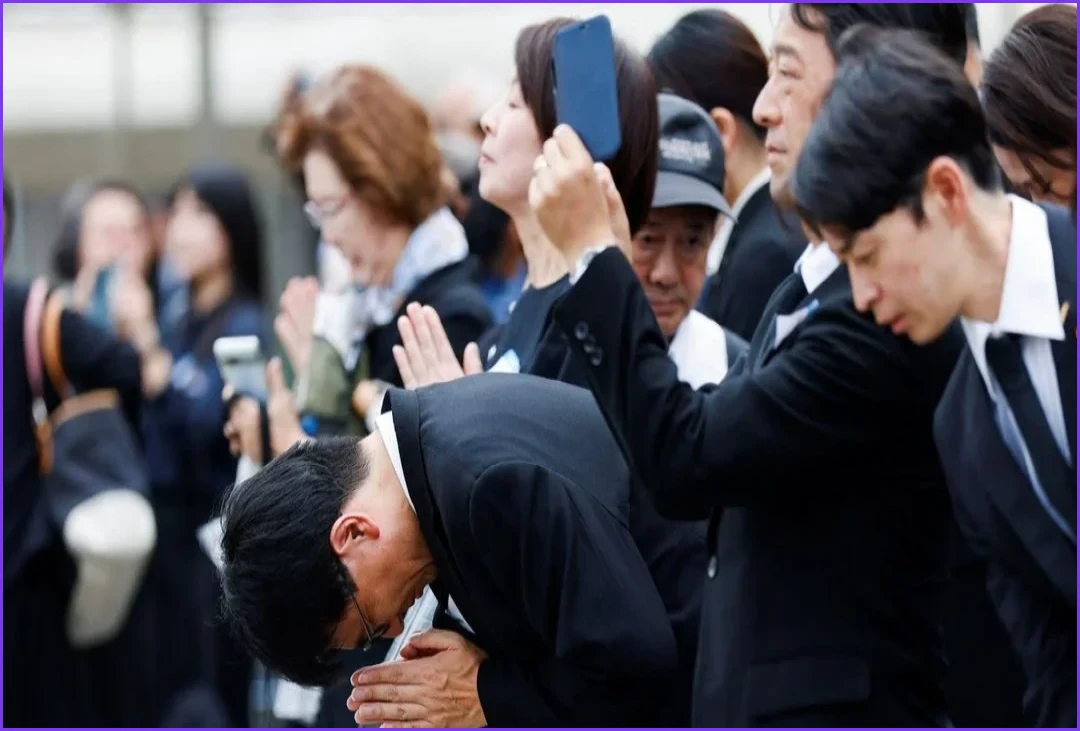
Nagasaki held its annual memorial ceremony on Sunday to mark the 81st anniversary of the US atomic bombing of the city. The event took place during a period of heightened geopolitical instability, with the ongoing Russia-Ukraine war and conflicts in the Middle East fueling concerns about the potential use of nuclear weapons. A solemn moment of silence was observed at 11:02 am local time, the exact moment the plutonium device, codenamed "Fat Man," detonated over the city during the final days of World War II.
Addressing the assembly, Nagasaki Mayor Shiro Suzuki delivered a Peace Declaration in which he condemned nuclear weaponry. "Nuclear weapons are not a 'necessary evil' but an 'absolute evil,' and can never coexist with humanity," Suzuki stated. He further warned that more than 12,000 nuclear warheads remain in existence globally, highlighting the precarious nature of international security, particularly in regions where nuclear-armed powers like the US and Russia are currently involved in conflicts.
Prime Minister Sanae Takaichi reaffirmed Japan's commitment to its three non-nuclear principles—which prohibit the production, possession, or allowance of nuclear weapons within the country. Takaichi emphasized that as the only nation to have suffered the horrors of nuclear warfare, Japan remains dedicated to "realistic and practical" efforts toward global nuclear disarmament. She noted that it is increasingly vital for the world to maintain an accurate understanding of the realities of the atomic bombings.
The ceremony occurred as Japan faces an internal debate regarding its pacifist stance and non-nuclear policy. Last month, Defence Minister Shinjiro Koizumi suggested that Tokyo should initiate a discussion on nuclear weapons, citing the growing interest in nuclear deterrence among certain European nations. Historically, the Hiroshima bombing on August 6, 1945, resulted in approximately 140,000 deaths by the end of that year, while the Nagasaki bombing three days later claimed an estimated 74,000 lives. These events led to Japan's surrender on August 15, 1945, effectively ending World War II.