One of the most significant collections of UK Jurassic fossils ever assembled has been sold to a museum in Abu Dhabi, a move that British experts have described as a major loss for the nation. The collection was sold after UK museums, facing severe budget constraints, were unable to afford the eight-figure sum required to purchase it.
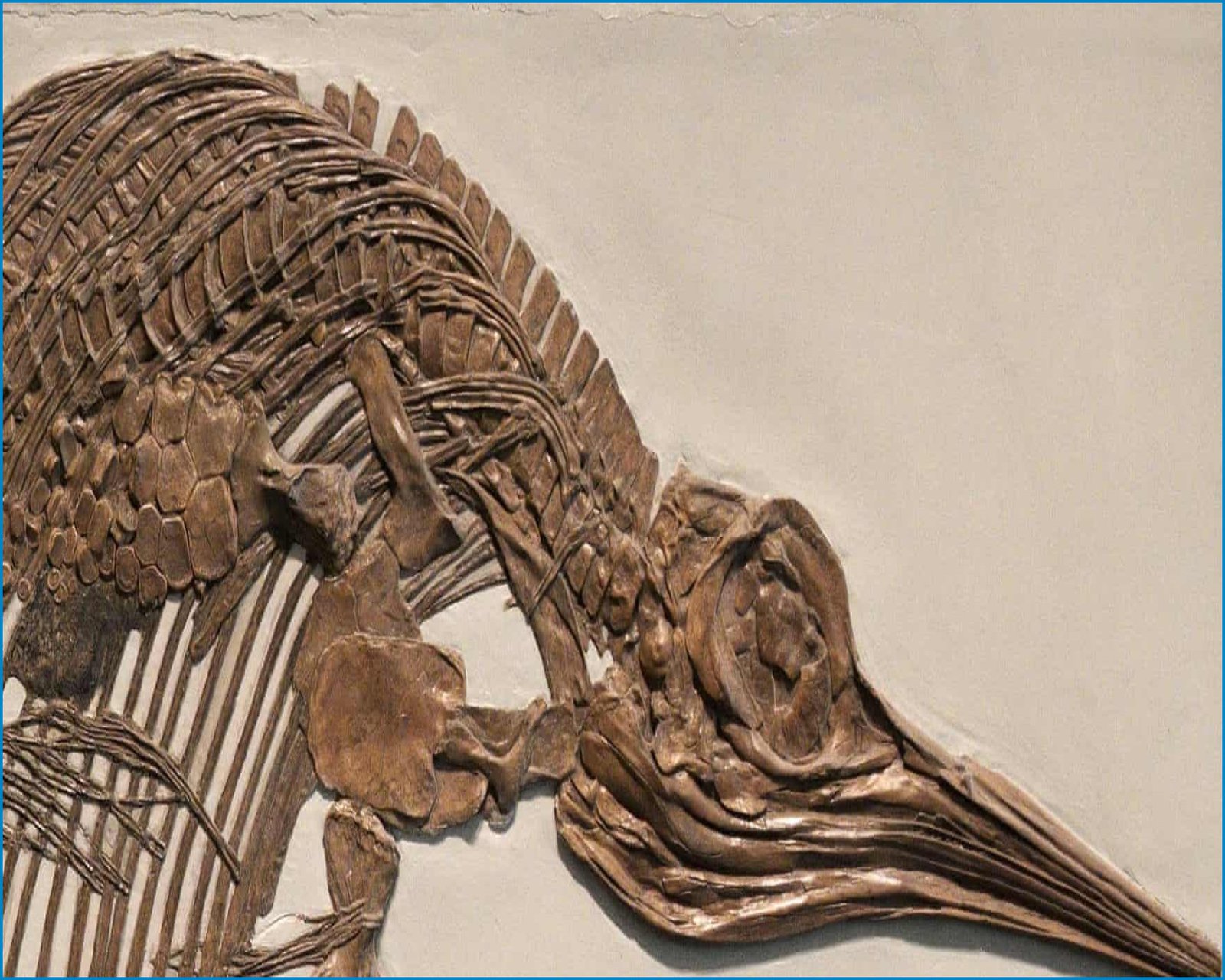
Amassed by private Dorset-based collector Chris Moore, the collection consists of 318 specimens, including ichthyosaurs, fish, and crustaceans. Some of these specimens are believed to represent entirely new species. The fossils were initially offered for sale to the Natural History Museum (NHM) in London and to Amgueddfa Cymru (Museum Wales). However, neither institution could secure the necessary funding. An email exchange indicated that the London museum had "no money at all" for acquisitions.
A curator noted that while there had been a strong desire to keep the collection in the UK, acquiring it would have also presented significant practical challenges, including storage space, curatorial time, and packaging materials. "I don’t blame the collectors at all. That’s all they can do. They can’t sit on these things forever," the curator said, warning that similar situations will likely recur as private collectors age and seek homes for their life's work. "Whose responsibility is it to fund our heritage and the preservation of our heritage? Because otherwise it could get lost," the curator added.
The extensive collection was sourced from the Lower Lias rock sequence in Lyme Regis, Charmouth, and other areas of south-west England. This region forms part of the Jurassic Coast, a Unesco World Heritage Site rich with fossils dating back 145 million to 200 million years. Private fossil collecting has a deep history in the area, famously exemplified by Mary Anning, the pioneering 19th-century palaeontologist who discovered the first complete plesiosaurus skeleton in 1823.
Unlike countries such as Mongolia and Brazil, which claim state ownership over all fossils discovered within their borders, the UK does not have such laws. Modern collectors along England's Jurassic Coast are encouraged to follow voluntary codes, such as the west Dorset fossil collecting code and the Undercliffs national nature reserve code. While fossils initially belong to the landowner, legal ownership is typically transferred to collectors who adhere to these codes. Furthermore, unlike valuable archaeological finds that must be reported as treasure within 14 days, fossils—even those designated as highly scientifically important "category 1" specimens—are not classified as treasure. This allows collectors to legally sell them to private individuals or overseas buyers.
The market for high-value fossils has surged dramatically. In 2020, a T. rex skeleton named Stan was sold for a record-breaking $31.8 million (£23.6 million) and is now housed at the Natural History Museum Abu Dhabi. In July, another T. rex skeleton named Gus was sold at Sotheby's for $50.1 million. Such prices place these specimens far beyond the budgets of public museums, often leading them to be purchased by wealthy individuals and celebrities, including actors Leonardo DiCaprio, Nicolas Cage, and Russell Crowe. Cage famously returned a rare dinosaur skull to Mongolia after it was revealed to have been taken illegally from the country.
Many experts support the current UK system, arguing that banning fossil sales could spark a black market and prevent many important specimens from being discovered in the first place. Phil Davidson, a palaeontologist at the Charmouth Heritage Coast Centre in Dorset, emphasized that the priority is keeping scientifically important specimens in public collections where international experts can study them. Most scientific journals do not allow the description of specimens held in private collections. "All the researchers I have talked to have said the same thing: the location of where the museum collection is housed is secondary," Davidson said, adding that keeping the Moore collection intact was key. "This heritage is for everyone and not limited to lines on a map."
The Natural History Museum Abu Dhabi confirmed it purchased the collection from Moore, and a large majority of it went on public display in its Mesozoic Gallery in November 2025. A spokesperson for the museum explained that the Lower Jurassic rocks of the UK preserve some of the best examples of marine life from a time when the Dorset coast was at a similar latitude to North Africa. "If we are to tell a 4.2bn-year story of the evolution of life on Earth, all museums must travel both spatially and temporally with their collections," the spokesperson said. Another expert, Maxwell, noted that other options exist for countries where fossils are not state property, while another commentator remarked that "the loss is somewhat offset by the fact that these fossils are going to a museum rather than into the collection of a wealthy individual."