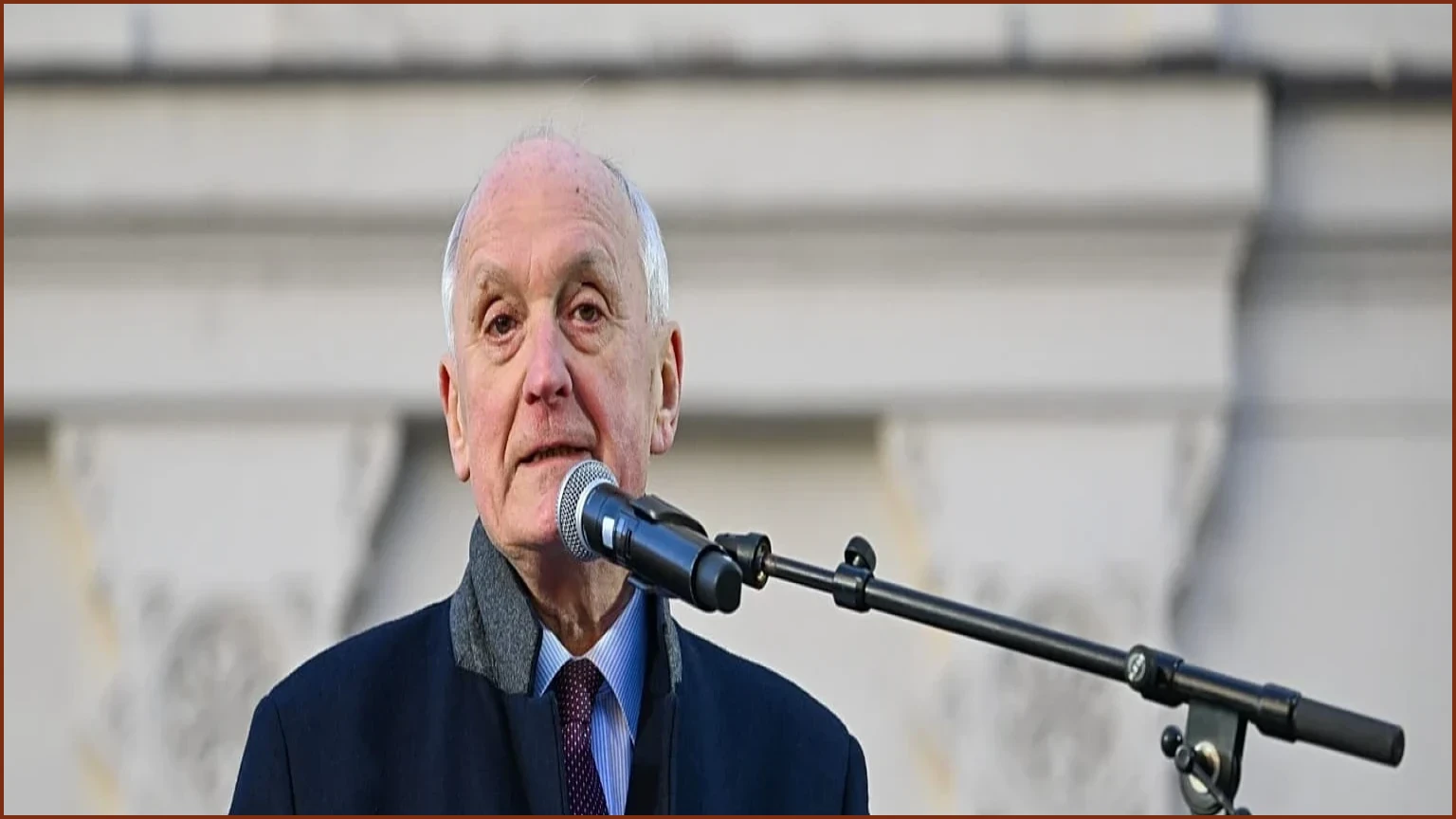
The Tisza Party has officially announced the nomination of András Baka as its candidate for the presidency of Hungary. Baka, an internationally recognized legal scholar, was chosen from a shortlist of three potential candidates. The other two individuals considered for the nomination were historian Ignác Romsics and independent lawyer Botond Fülöp, who publishes under the pseudonym Vidéki Prókátor and was notably responsible for bringing to light the pardon case that ultimately forced the resignation of former President Katalin Novák.
Baka’s professional background is extensive, beginning at the Institute for Legal Studies of the Hungarian Academy of Sciences before he served as the director general of the College of Public Administration. His international judicial career reached its height during his two terms as a judge at the European Court of Human Rights (ECtHR) in Strasbourg, spanning from 1991 to 2008. Upon his return to Hungary in 2009, he was elected by parliament to serve as the president of the Supreme Court. However, his tenure was interrupted when the second Orbán government, which took power in 2010 with a constitution-making majority, removed him from his post by renaming the Supreme Court as the Curia. This move effectively created a new institution, allowing the government to appoint a new head. Baka subsequently won a legal challenge against the Hungarian state at the ECtHR, which determined that his rights to a fair trial and freedom of expression had been violated.
Tisza Party leader Péter Magyar had signaled prior to the elections that if the party secured a constitution-making majority, it would move to replace most high-ranking public officials appointed by Fidesz, with the notable exception of central bank governor Mihály Varga. Magyar contended that these officials have acted as loyal Fidesz party foot soldiers who failed to uphold their constitutional duties and would likely obstruct the work of a future Tisza-led government. Furthermore, the party has stated its intention to adopt a new constitution within this parliamentary term and is actively considering the possibility of electing the president of the republic directly.
While the Hungarian president primarily holds a ceremonial role with limited independent political room for maneuver, the office has functioned in close cooperation with the government under Fidesz rule. Since 2010, the presidency has seen significant turnover. János Áder, a political veteran, was the only individual to serve two full terms. László Sólyom, who had been elevated by Fidesz while in opposition, was not elected for a second term. His successor, Pál Schmitt, resigned following a plagiarism scandal, and Katalin Novák, who was intended to present a more Western-facing image of the party, stepped down following a pardon scandal. Her successor, Tamás Sulyok, was removed via a short sentence inserted into the 17th constitutional amendment, which he signed himself, ending his mandate prematurely.
Baka is characterized as an independent-minded, old-school lawyer, a profile that has been seen in previous Hungarian presidents. However, his capacity to embody national unity may be complicated by his history as an outspoken critic of the Orbán system, both domestically and internationally, as he has remained a consistent voice on rule-of-law issues.