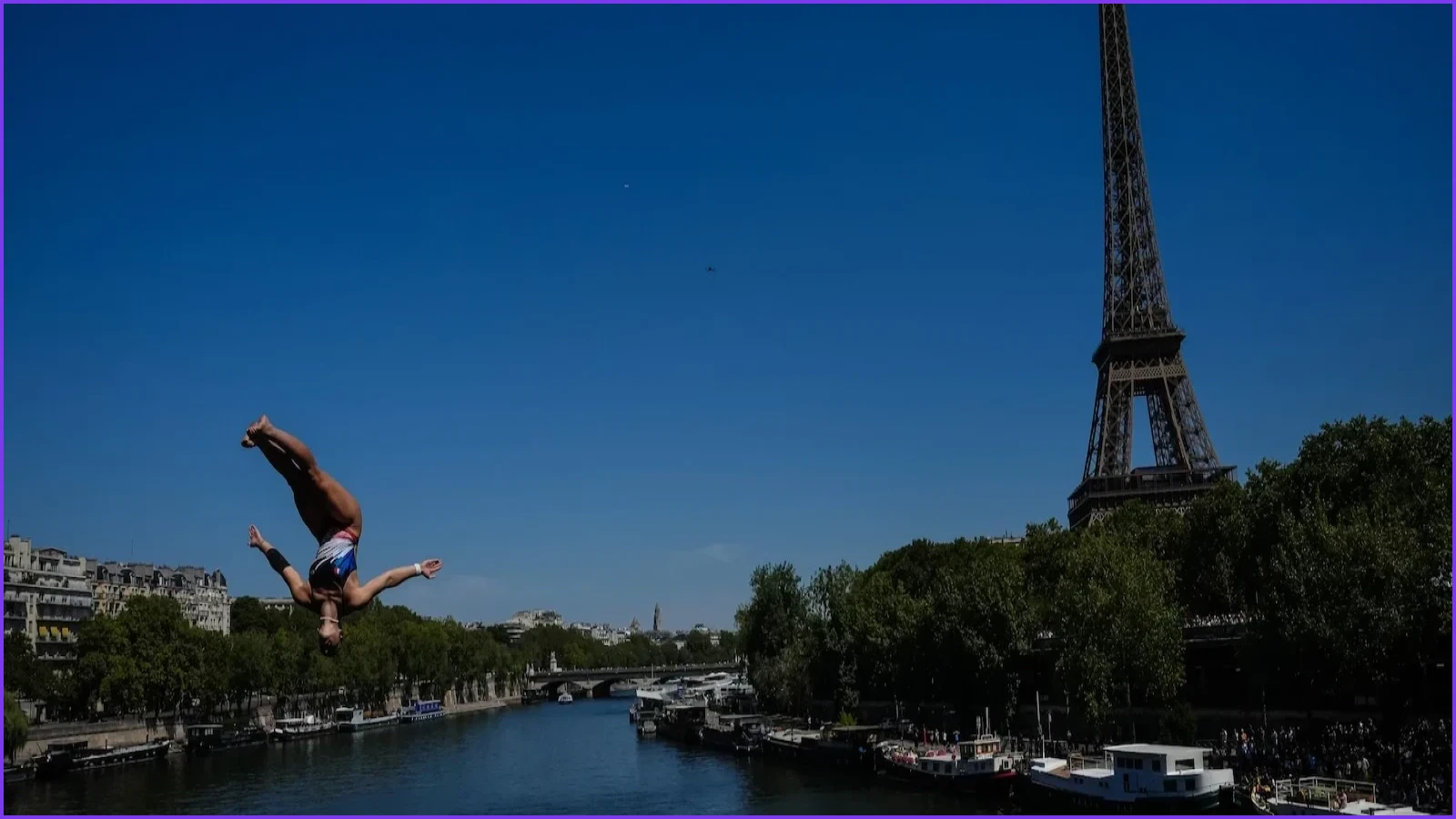
Paris is currently staging its inaugural high-diving competition in the Seine, a spectacular event that sees athletes launching themselves from a 20-meter platform positioned in front of the Eiffel Tower. This competition, held on the Bir-Hakeim Bridge, serves as a significant new test of the city’s long-term ambition to reclaim its river for sporting use. The event is part of the 38th European Aquatics Championships, which run from July 31 through Aug. 16, marking the centenary of the inaugural championships held in Budapest in 1926. Paris last hosted this event in 1931.
The ambition to use the river for such high-profile sports has faced challenges, highlighting the fragility of the project. Organizers were forced to suspend training on Thursday after traces of hydrocarbons were detected upstream. However, by Friday, the French Swimming Federation confirmed that the affected area had been successfully treated, allowing athletes to return to the water and the competition to proceed as planned. The high-diving event is scheduled to conclude on Saturday with the final two rounds and medal ceremonies.
Maxime Sauvage, the Paris deputy mayor in charge of sports, sports facilities, and equal access to sport, addressed the complexities of the project. He noted that while there are uncertainties linked to any outdoor activity, the city has maintained control through massive investments made prior to the 2024 Olympic and Paralympic Games. These efforts included extensive work to prevent sewage from flowing directly into the Seine and significant improvements to stormwater management. Sauvage acknowledged that while a small risk always exists, it is part of what makes outdoor events special, adding that when they work, the result is magical.
Hundreds of spectators gathered along the riverbanks on Friday to witness the divers. Some were locals who stopped during their lunch breaks, while others were tourists who happened upon the competition by chance. Rebecca Kapogiannis, a 45-year-old visitor from London, Ontario, who was in Paris to celebrate her daughter’s graduation, expressed her surprise at the event. She noted that she had not expected to see a competition in the river but found it to be a cool use of the water running through the city. Similarly, Cynthia Matz, visiting with her husband, Sean, remarked that the public setting was a major draw, noting that the accessibility of the event allowed anyone to stop and enjoy the spectacle.
The ability for the public to encounter elite sport in the heart of the city reflects a broader transformation that Paris officials have been pushing for years. The goal is to evolve the Seine from a waterway associated primarily with commerce, tourism, and transport into a space where people can swim, play, and compete. More than 1,000 athletes are currently competing across five disciplines: swimming, diving, artistic swimming, open-water swimming, and high diving. The river is hosting both open-water swimming and high diving, placing it back at the center of international sport two years after the Paris Olympics.
Swimming in the Seine had been officially banned in 1923 due to pollution and the dangers posed by river traffic. Public swimming only returned in 2025, following a 1.4 billion euro mobilization by Paris and its partners to make the river swimmable, an effort that was significantly accelerated by the Olympics. For many, the dream of a clean river seemed distant, especially following former President Jacques Chirac’s 1988 pledge to clean the Seine when he was mayor. However, since the 2024 Olympics, images of athletes and residents in the river have become increasingly familiar. According to Paris City Hall, approximately 70,000 people used the city’s designated Seine swimming areas in July alone, compared to nearly 100,000 during the entire summer last year, indicating growing public interest.
Under the administration of Mayor Emmanuel Grégoire, who was elected in March, the mission remains to make the city increasingly favorable to physical activity. Sauvage emphasized that the aim is to add a new identity to the river without erasing its history of tourism and logistics. He stated that Paris is not just a postcard image but a magnificent sporting venue, intended to be experienced by bike, through running, and through swimming, ensuring the city remains a place to be actively experienced.