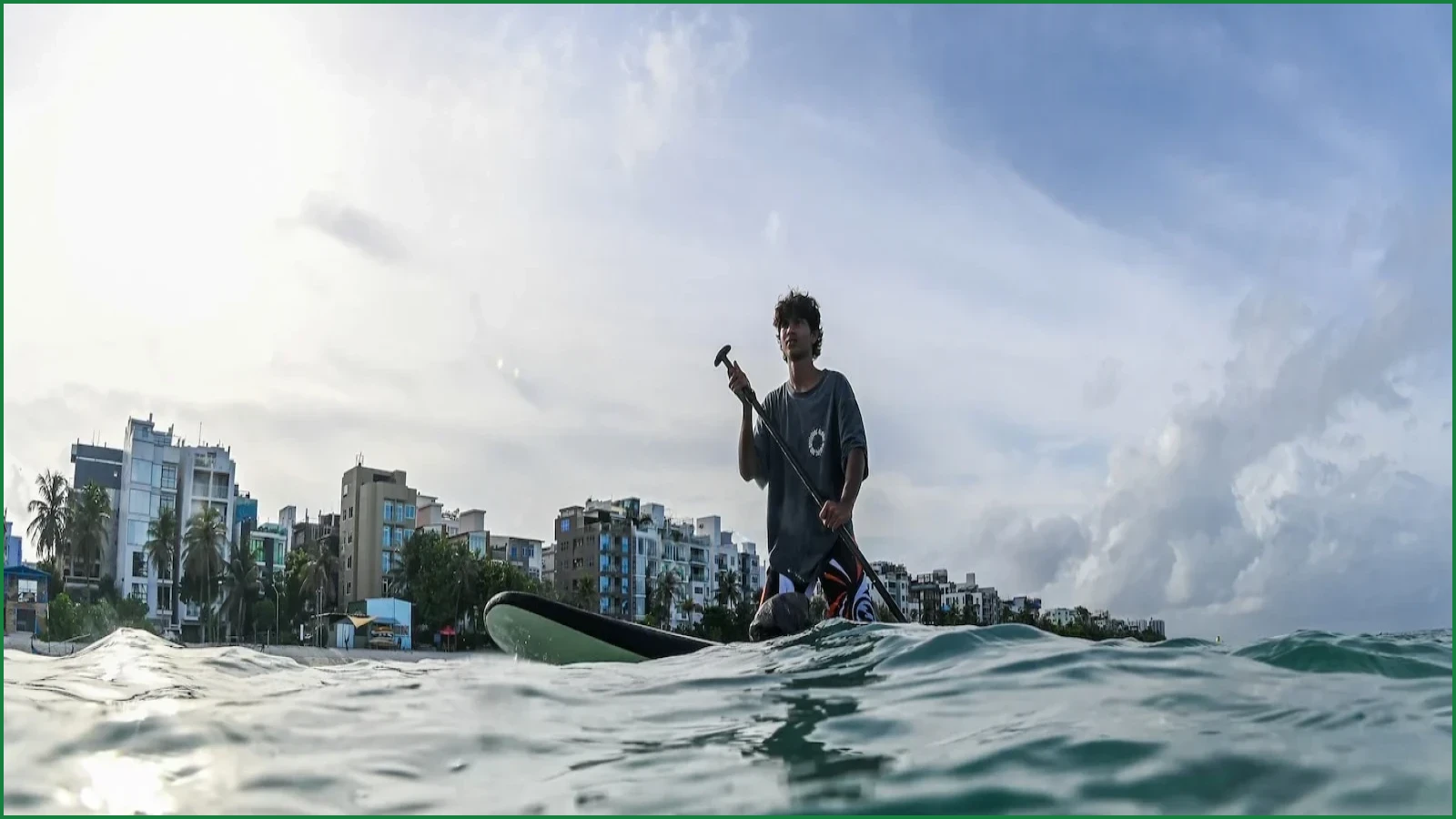
In the Maldives, a burgeoning movement of young people is stepping up to combat the environmental crises threatening their island nation. Recent protests have seen activists paddling kayaks to confront land reclamation projects that disturb protected mangrove wetlands within a UNESCO biosphere reserve, with some participants going so far as to spray-paint the word "ECOCIDE" on reclaimed land to signal their opposition to the damage.
These efforts are spearheaded by groups like Project ThimaaVeshi, whose name translates to "self and surroundings." The organization represents a growing wave of local youth addressing immediate threats, including severe coastal erosion, ecosystem destruction, and pervasive plastic pollution. In the southern region of Addu City, activists are actively documenting the negative impacts of overdevelopment on vital reefs and wetlands. Meanwhile, in the capital city of Male, other youth groups are tackling the accumulation of plastic waste that clogs streets, public hangouts, and swimming areas.
By collaborating with surfers and local community members, these activists conduct regular cleanups, removing discarded fishing lines from coral reefs and collecting piles of water bottles. Beyond physical labor, these groups prioritize educating their peers about the fundamental right to a healthy, clean environment. For this generation, climate change is no longer a distant concern but an urgent daily reality. Scientists have warned that the low-lying nation, situated south of India and Sri Lanka, could face significant challenges, with approximately 80% of its landmass expected to be uninhabitable within the next 50 years due to rising sea levels.
Yameen Maumoon, a 21-year-old co-founder of Project ThimaaVeshi, noted that the movement began as a collection of friends with shared hopes and dreams. Alongside co-founder Mishal Mushahid, Maumoon transitioned from student leadership roles within the Addu City council to establishing a registered nonprofit. Similarly, the group Ripple emerged in Male and Hulhumale after friends began joking about starting a social media movement to address local trash buildup. What started as a casual conversation while playing Minecraft quickly evolved into a dedicated organization that now coordinates weekly cleanup campaigns and plastic recycling initiatives.
The newest group seeking formal registration, Barnacles, focuses on youth leadership and climate education, with co-founder Yania Hussain Ishan highlighting how the constant discourse around the climate emergency can leave their generation feeling powerless. Despite their dedication, these activists have faced skepticism from older generations, including government officials who have dismissed their efforts as naive or ignorant. Ali Shareef, the country's minister of climate change, previously suggested at a public forum that youth should not be trusted with decision-making due to their emotional approach.
The activists reject the notion that their work is pointless, arguing that waiting for larger systemic changes is not a viable option. Their goal is to foster a generation that understands its rights and accepts responsibility for the future. As Ishan stated, they are actively deciding what kind of ancestors they will be, defending their home, heritage, and the right of future Maldivian children to experience the same security and wonder that currently defines their island life.
The activists said they know they cannot solve Maldives's problems alone.
“We are defending our home, our heritage and the right of every Maldivian child yet to be born to stand on these shores, look out at the sea and feel the same wonder and security that defines who we are.”___The Associated Press’ climate and environmental coverage receives financial support from multiple private foundations.