Abdul El-Sayed's narrow victory in Michigan's August 4 Democratic primary for a pivotal U.S. Senate seat has ignited significant alarm and mixed reactions within the state's Jewish community. As Michigan Democrats prepare for a unity rally in Detroit on August 7 to launch their general election campaign, many Jewish voters are expressing widespread agreement that El-Sayed needs to do more to secure their support.
Joe Tigay, a 44-year-old financial advisor and self-identified progressive Democrat from Bloomfield Hills, articulated his deep concern in an August 5 telephone interview. He described El-Sayed's win not as a progressive triumph, but as a victory for radicalism and the normalization of rhetoric he believes endangers Jewish people. "It is just a scary time right now," said Tigay, who has three young children. He likened his reaction to El-Sayed's win to his feelings after Donald Trump's 2016 victory, when he felt Republicans should have challenged Trump's rhetoric.
Tigay stated that Democrats should not compromise their morals for a win. For him to consider supporting El-Sayed, Tigay said, "If he says Israel has a right to exist, that would be great." Without such a change, Tigay indicated he would "very likely to vote for Mike Rogers," the Republican nominee for U.S. Senate.
Concerns were echoed by Starr, who, in an August 6 telephone interview, expressed outrage over El-Sayed "platforming" Hassan Piker. Starr drew a parallel, stating, "if a right-wing politician were to platform a member of the Ku Klux Klan, we would be outraged. In the same way, when Dr. El-Sayed platforms Hassan Piker, we are outraged.” Starr noted that El-Sayed's primary win comes amidst "a tremendous amount of fear and anxiety because of the rapid rise of Jew hatred around the world and locally."
This sentiment is so pronounced that Michigan Attorney General Dana Nessel, who is Jewish and has received numerous death threats, has publicly stated she does not feel safe attending the Michigan Democratic Party nominating convention on August 29 in Lansing. At a July 30 roundtable with the Anti-Defamation League of Michigan, Nessel cited what she perceives as rising antisemitism on the political left and concerns about potential harassment or being "booed off the stage." Nessel declined an August 5 interview request through a spokeswoman.
Starr also voiced that he and many members of his congregation are "very concerned about Dr. El-Sayed’s false statements about Israel and his misunderstanding of the situation in the Middle East," and "how the rhetoric he uses foments hate and maybe even violence." He added, "At the same time, we hope that his comments about desiring to protect the American Jewish community are honest and we hope that all candidates for public office are seeking to bring down and lower the temperature on the vitriol and the rhetoric of division."
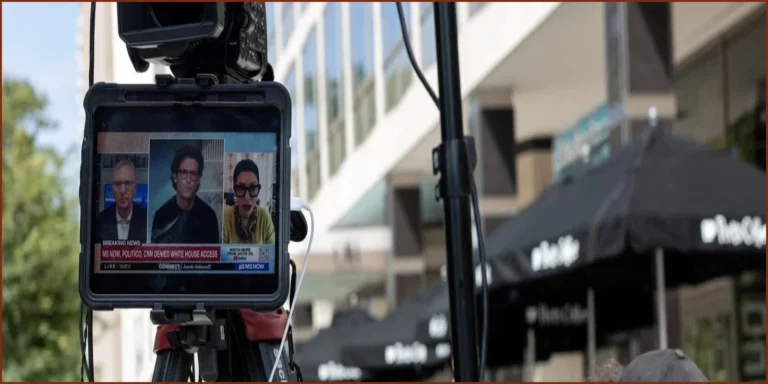
El-Sayed, for his part, attempted to de-escalate tensions in his August 5 victory speech delivered outside Detroit City Hall. Addressing the Jewish community, he said, “To my Jewish sisters and brothers, one of the most indelible memories of this campaign will have been the opportunity to break bread with you at seder, to worship with you at shul, to be embraced by you." Appearing on CNN that same night, El-Sayed affirmed Jewish safety as a priority, stating that as a Muslim, "I don't want anyone discriminated against for how they pray." Regarding Nessel's concerns about the convention, El-Sayed expressed hope that she would attend and feel safe, noting, "Up until recently, we had a great relationship" with her.
He differentiated between antisemitism and criticism of foreign governments' actions, suggesting, "I think that's the place that the attorney general and I might disagree." The El-Sayed campaign did not immediately respond to an August 6 email seeking responses to the criticism.
Bernie Porn, president of the Lansing-based EPIC-MRA polling firm, commented in an August 6 interview that Jewish voters, traditionally a significant and reliable Democratic voting bloc, could influence what is expected to be a close election against Republican nominee Mike Rogers, a former member of Congress from White Lake Township. "I think El-Sayed has an uphill battle to try to convince Jewish voters to support him," said Porn, who is not Jewish.
He added, "He needs to make the case and it will be a tough case to make. There are a lot of Jewish voters who have talked to me who have said they will have a tough time voting for El-Sayed." Porn suggested that if he were advising El-Sayed, he would tell him to "throw him under the bus" concerning Piker.
While acknowledging that concerns about El-Sayed's views on Israel extend beyond Jewish voters, Porn noted that Michigan has approximately twice as many Muslim or Arab voters as Jewish ones, and El-Sayed is also expected to benefit from a stronger youth vote than Stevens would have garnered. Conversely, Stevens performed significantly better with Black voters, according to Porn.
State Representative Noah Arbit, a Jewish Democrat from West Bloomfield, shared in an August 6 text message that primary numbers showed Stevens winning his district by a 2:1 margin over El-Sayed. Arbit expressed his hope to meet with El-Sayed soon to convey his "deep concerns about some of the rhetoric of his campaign and the impact it has had on members of the Jewish community I represent and that he hopes to represent."
Further political opposition comes from the American Israel Public Affairs Committee (AIPAC), which had supported Haley Stevens in the primary. AIPAC released a statement indicating it would continue to oppose El-Sayed in the general election. The New York Times reported on August 5 that AIPAC is considering a major financial campaign in support of Mike Rogers.
However, Michigan's Jewish community is not monolithic. Clare Molnar, a Jewish mother of three from Ferndale, expressed her enthusiastic support for El-Sayed in an August 6 phone interview, having also backed him during his 2018 gubernatorial campaign. Molnar stated she felt he "was speaking to voters and not to special interests," and voiced dissatisfaction with Stevens' public positions and a personal interaction. She strongly supports El-Sayed's core campaign themes: Medicare for all, removing big money from politics, and increasing financial well-being for people. Molnar believes El-Sayed "has good intentions" and that "we do not have to agree on every issue."
Molnar also shared her evolving perspective on the term "genocide," initially finding it difficult to apply outside the Nazi Holocaust. However, after learning more about Israeli military actions in Gaza, she concluded the word is appropriate to describe the conduct of the Israeli government. Regarding criticism of El-Sayed's statement after the attack on Temple Israel, Molnar argued the criticism was inaccurate. She highlighted El-Sayed's video statement: "Antisemitism has no place in our communities. Ever. Full stop," and "there is never a justification for attacking innocent people or houses of worship.
Never." Molnar found his subsequent comments about the cycle of violence appropriate and not an attempt to excuse the attacker. She views questions about Israel's right to exist as "gotcha" questions and "honestly admire his refusal to engage" with them. On the matter of campaigning with Piker, Molnar noted Piker later apologized for a controversial statement about the 9/11 attack, and she generally prefers to extend grace and the benefit of the doubt. Nevertheless, she conceded, "it would be best if he campaigned less with Piker. I'm not sure it's worth it."