A team of UK scientists has achieved a significant milestone in medical research by successfully trialling a vaccine that does not require refrigeration. Currently, the global health sector faces a major challenge as the World Health Organization (WHO) estimates that approximately half of all vaccines are wasted annually. This widespread disposal is largely attributed to failures in the "cold chain," where vaccines become unusable after being exposed to temperatures that are either too hot or too cold during storage and transportation.
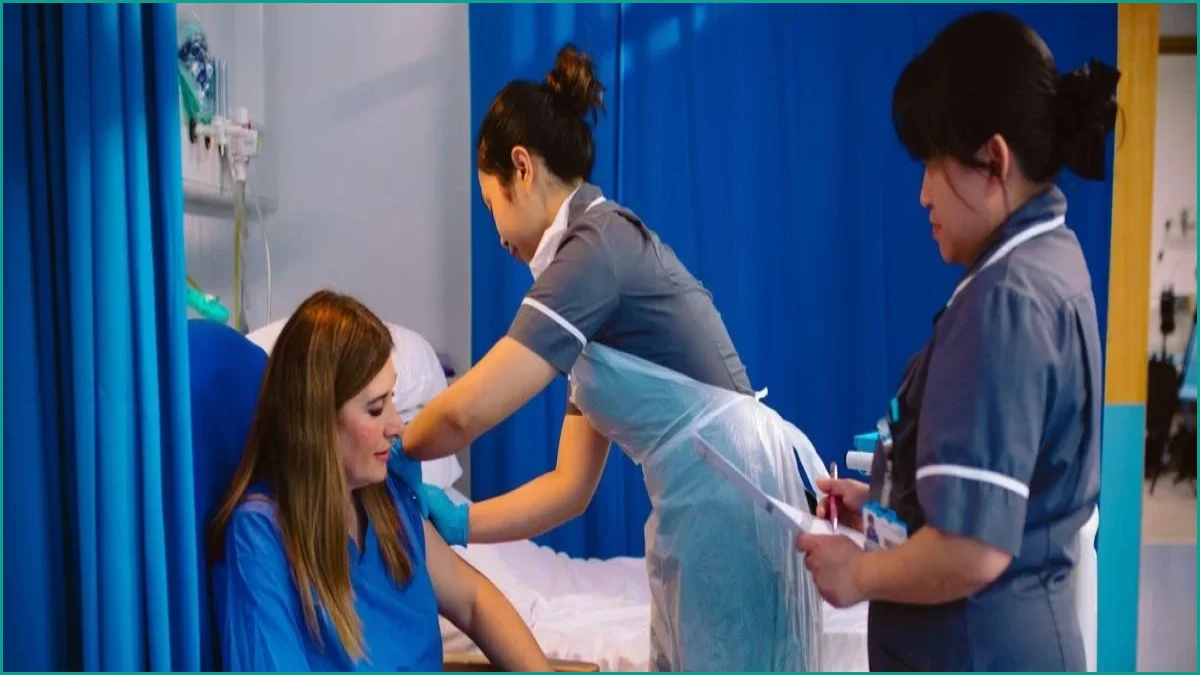
The clinical trial, which involved 60 volunteers, was conducted with support from the UK's National Institute for Health and Care Research (NIHR). The company Stablepharma led the development, converting a standard liquid tetanus-diphtheria vaccine into a "fridge-free" version. This was achieved by keeping the vaccine as a dry powder for a year at room temperature before it was mixed with water and injected into the participants.
The technology is inspired by "resurrection plants," which appear dead during droughts but spring back to life when it rains. These plants produce a sugar called trehalose to stabilize their cells, and researchers utilized this same sugar to protect the vital components of the vaccine during the drying process.
Prof Saul Faust, the director of the NIHR Clinical Research Facility in Southampton, reported that the vaccine produced "equivalent" immune responses to the conventional version. He confirmed that the vaccine was "safe and well tolerated" during these early-stage studies. Prof Faust noted that this technology has the potential to eliminate cold chain dependence, significantly reduce wastage, and improve access to life-saving immunizations in the poorest and most remote parts of the world, or in conflict zones where electricity and refrigeration are often unreliable.
A larger trial involving 160 people is scheduled to begin in the coming months. Because the original vaccine is already approved and licensed, this next phase is expected to be the final stage of research, as there is no requirement to perform the large-scale trials typically needed for a novel vaccine. The studies are designed to meet the WHO's goal of a vaccine that can survive at 30C and 75% relative humidity.
Furthermore, the research team reported that separate data shows the vaccine components can survive cycling between temperatures of -20C and +40C. This capability could ensure the vaccine remains viable even after being transported in a cold aircraft hold followed by transit in the back of a truck in extreme heat.
Prof Sir Jonathan Van-Tam, the former deputy chief medical officer for England and an advisor to Stablepharma, highlighted the practical impact of this research based on his own experience in remote field clinics. He recalled the constant anxiety of transporting vaccines in cool boxes across inhospitable roads, where it was impossible to predict if the cold chain could be maintained long enough to reach waiting children.
While the current approach cannot be applied to mRNA vaccines, it could be used to stabilize many other existing vaccines and medicines, such as monoclonal antibodies, which currently require refrigeration.
Prof Tuck Seng Wong, director of the UK-Southeast Asia Vaccine Manufacturing Research Hub, who was not involved in the study, described the development as a "significant breakthrough in UK science." However, he noted that several areas still require further investigation, including how stable the vaccines remain during regular temperature fluctuations and how well they perform in larger, more ethnically diverse groups. The findings have been published in the journal eClinicalMedicine, part of the Lancet group.
Ephrem Tekle Lemango, the associate director of immunization at Unicef, stated that this innovation could help vaccinate more children and pave the way for a future of fridge-free vaccines. Dr. Bruce Roser, the founder of Stablepharma, echoed this sentiment, calling the development a potential "game-changer for global health" that could make immunization programs more sustainable, reliable, and equitable for future generations.