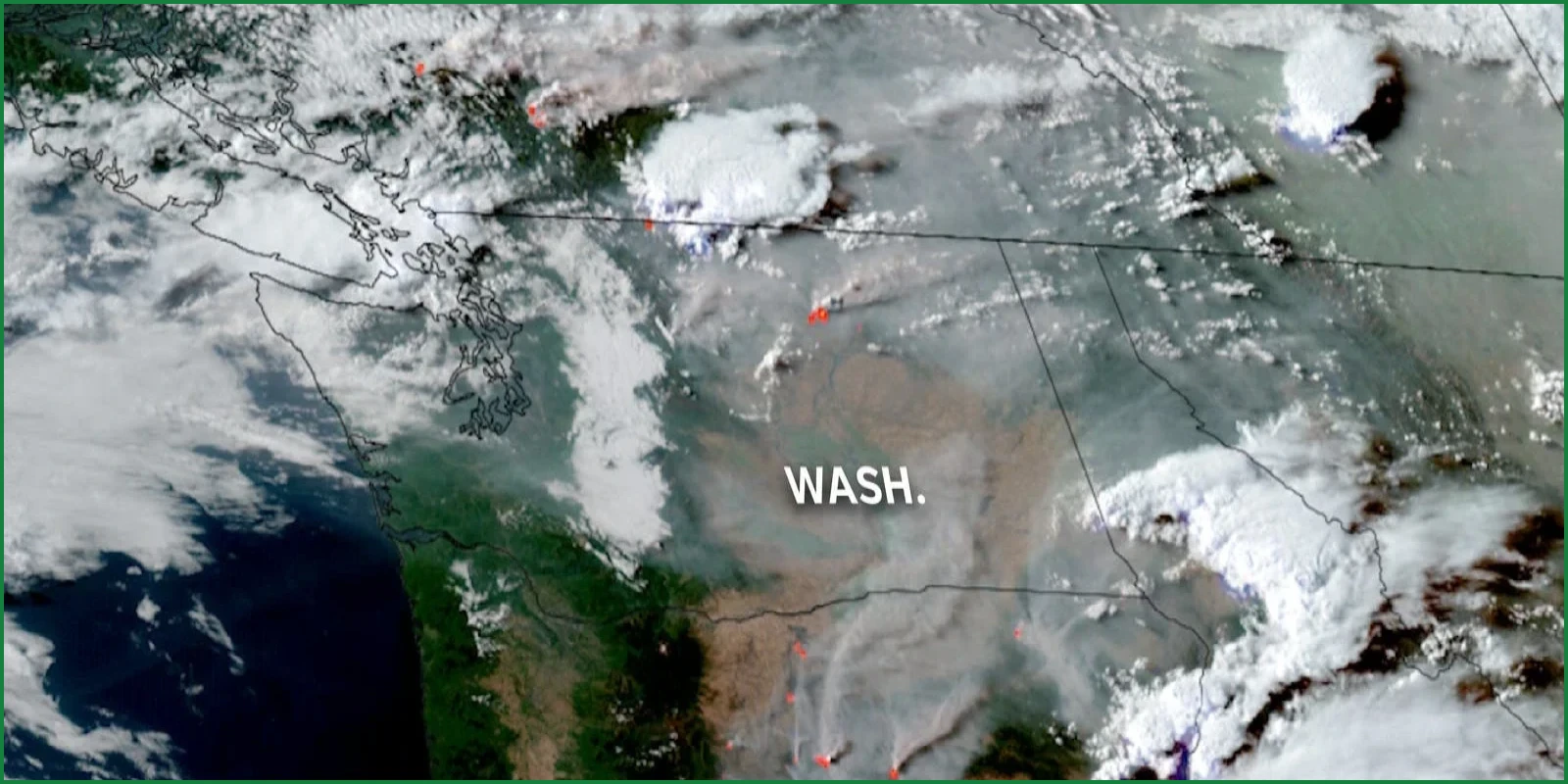
Major wildfires across the Pacific Northwest have caused widespread devastation, displacing more than 65,000 residents and consuming over 250,000 acres of land throughout Washington and Oregon. As of August 3, more than 700 structures, including both homes and businesses, have been destroyed by the blazes. In the Spokane area of eastern Washington alone, authorities confirmed that at least 600 structures were lost, forcing the evacuation of 60,000 people.
Firefighting efforts are currently being stretched to their limits. More than 900 personnel, including crews brought in from outside the state, are battling the flames. In Washington, the Spokane Area Fire—a collection of three separate blazes—has burned over 7,700 acres and remains at 0% containment as of August 3. These fires scorched approximately 8 square miles in and around the Spokane region over the weekend, joining a larger nationwide trend of intense wildfire activity.
Nationally, 2026 has seen 44,722 wildfires burn more than 5.15 million acres. This year-to-date figure is the third highest on record for this point in the season, trailing only 2017 and 2022. Oregon has been hit particularly hard, with its fires accounting for nearly 30% of all U.S. wildfire acreage this year, totaling approximately 1.8 million acres. The 10-year average for this period is significantly lower, at 3.7 million acres burned from 35,039 fires.
The 2026 wildfire season in the Pacific Northwest has reached the 2 million-acre mark well before the historical August peak. This early surge is driven by a combination of severe lightning events, dry conditions, and prolonged heatwaves. Hazardous conditions are expected to persist throughout the week, with high temperatures and gusty winds fueling the spread of fires. Millions of residents are expected to be affected by smoke and haze, while the risk of further wildfire activity remains exceptionally high across the northwestern United States.
Unable to view our graphics? Click here to see them.
Even as wind speeds gradually decrease in the days ahead, wildfire danger is expected to stay exceptionally high across much of the northwestern United States. Areas farther east, including sections of the northern Plains, will continue to face a moderate risk, Accuweather says.