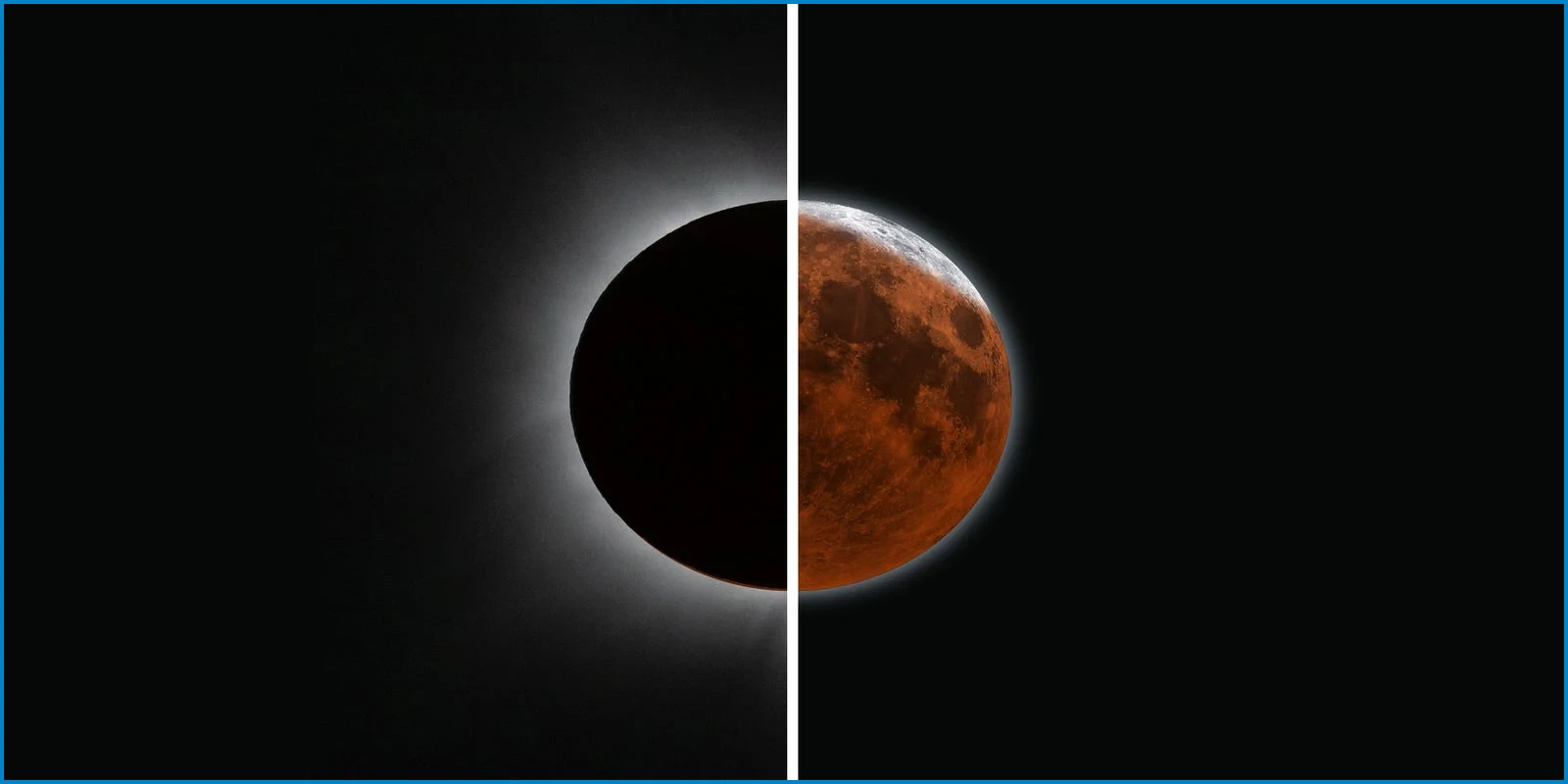
Skywatchers are preparing for a double celestial treat this August as both a solar and a lunar eclipse are set to occur within a short window. According to NASA, eclipses take place globally about four to seven times each year. Due to the specific alignment of the Sun, Earth, and Moon, these events can occur in pairs during a brief timeframe known as an "eclipse season." EarthSky notes that solar eclipses happen two to five times per year, whereas lunar eclipses occur zero to three times annually. The most recent occurrence of both solar and lunar eclipses within the same season took place in February of this year.
The first of the two events is a solar eclipse on August 12. Viewers in parts of the Northern Hemisphere, including a stretch of the northern United States from Alaska to North Carolina, will have the opportunity to see a portion of the Sun obscured. NASA reports that a partial solar eclipse will also be visible across most of Canada, much of Europe, and northwestern Africa. Meanwhile, the path of totality—where the Moon completely blocks out the Sun—will cross Greenland, Iceland, northern Russia, Spain, a small portion of Portugal, and parts of the Atlantic Ocean.
For observers positioned along the path of totality, the Moon will entirely block the Sun, turning the daytime sky into a twilight darkness. This phenomenon exposes the Sun's outer atmosphere, or corona, occasionally revealing stars and planets as local temperatures temporarily drop. If local weather or geographical limitations prevent you from viewing the event in person, NASA will host a live broadcast of the solar eclipse starting at 1:15 p.m. EDT on August 12 via its official website.
Safety remains a critical priority for anyone looking to view the solar eclipse. The American Optometric Association warns that staring directly at the Sun without proper protection can expose eyes to damaging ultraviolet rays, potentially causing "eclipse blindness" within seconds. To view the event safely, individuals must use certified eclipse glasses. The American Astronomical Society and NASA recommend purchasing glasses from certified manufacturers that feature the International Organization for Standardization (ISO) icon along with the ISO reference number 12312-2.
Later in the month, a partial lunar eclipse will take place overnight on August 27–28. Unlike the solar eclipse, this event will be visible across the entirety of the United States. According to NASA, this will mark the first lunar eclipse visible from the Americas since September 2024. Data from TimeandDate indicates the entire eclipse will span 5 hours and 38 minutes, with the darkest phase, known as the umbral phase, lasting for 3 hours and 18 minutes.
During a partial lunar eclipse, the Sun, Earth, and Moon do not align perfectly, meaning only a portion of the Moon enters the Earth's inner shadow. This alignment casts a dark, reddish shadow across a section of the lunar surface while the rest remains lit. Approximately 96.2% of the Moon's surface will be shrouded in darkness, leaving only a thin sliver of light outside the shadow and giving the Moon an eerie red glow.
Unable to view our graphics? Click here to see them.