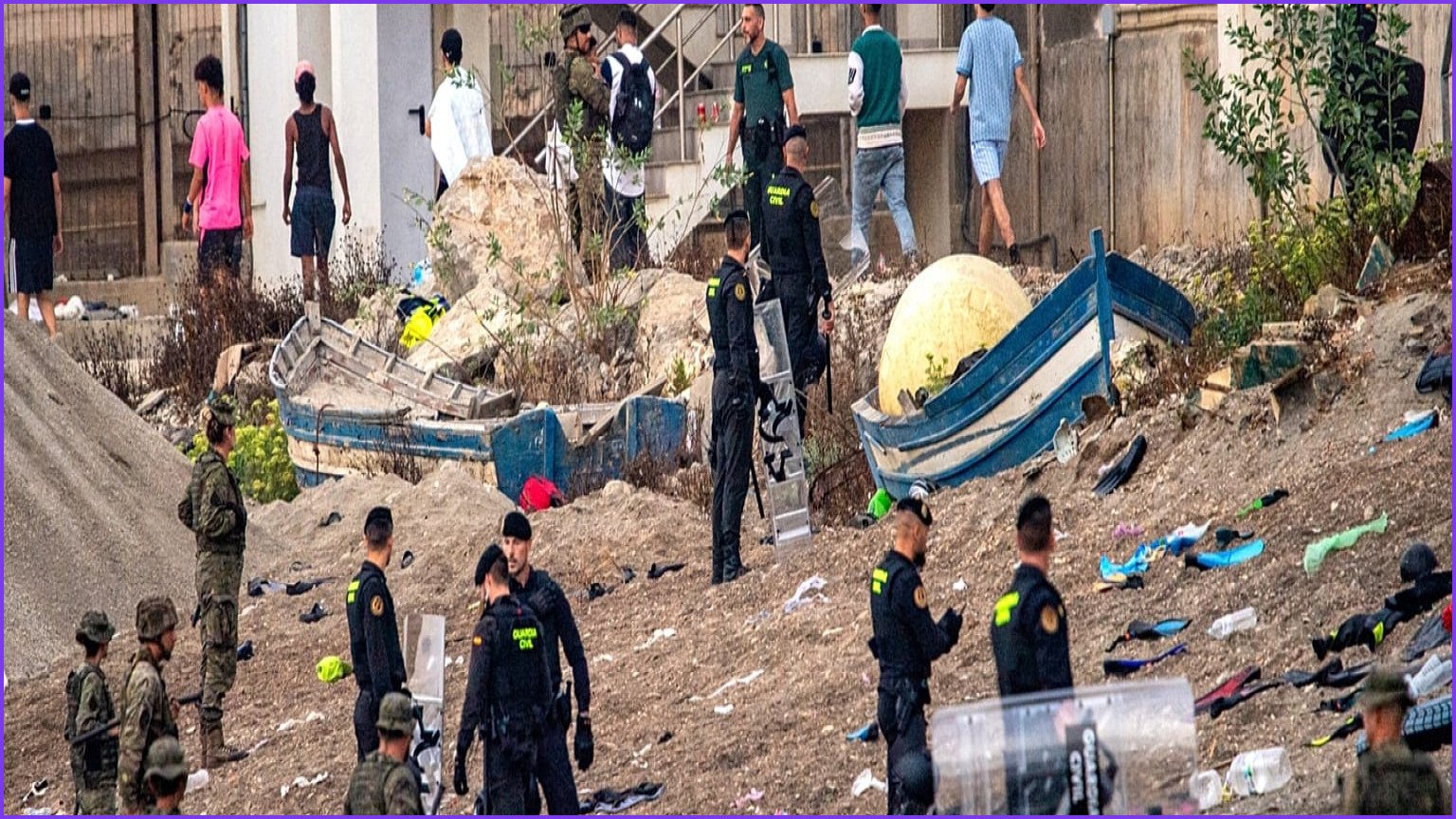
A group of 22 European Union nations has formally requested an emergency meeting to address the bloc's collective response to the recent surge of migrants in the Spanish exclave of Ceuta. According to reports, the initiative for this urgent letter was led by Italy and Denmark, with the signatories calling for an extraordinary videoconference of the Ministers of the Interior to treat the matter as an issue of immediate urgency.
The request was directed to European Commission President Ursula von der Leyen, European Council President António Costa, and Irish Prime Minister Micheál Martin, whose country currently holds the presidency of the Council of the European Union. Notably absent from the list of signatories were French President Emmanuel Macron, Portuguese Prime Minister Luís Montenegro, and Luxembourg Prime Minister Luc Frieden.
While the government in Madrid has confirmed that nearly all of the approximately 50,000 migrants who entered Ceuta from Morocco on Thursday have since been returned, the 22 leaders expressed serious concerns regarding the event. They emphasized the need for a common assessment of the situation and an agreement on a coordinated European strategy. The signatories warned that allowing uncontrolled mass crossings or the instrumentalization of migration as a hybrid threat risks undermining confidence in the common migration policy. They stated that they would consider all necessary measures, including the reinforcement or reintroduction of temporary internal border controls, to mitigate such risks.
The letter also suggested that Spanish policies granting legal status to certain unauthorized migrants may have acted as a pull factor, a claim that Madrid has contested. Spanish Prime Minister Pedro Sánchez addressed the situation in a letter to von der Leyen on Saturday, describing the response from some EU states as asymmetric. While acknowledging support from many partners, Sánchez criticized those who have attacked Spain and suggested its temporary exclusion from the Schengen Area, an apparent response to calls from the administration of Italian Prime Minister Giorgia Meloni.