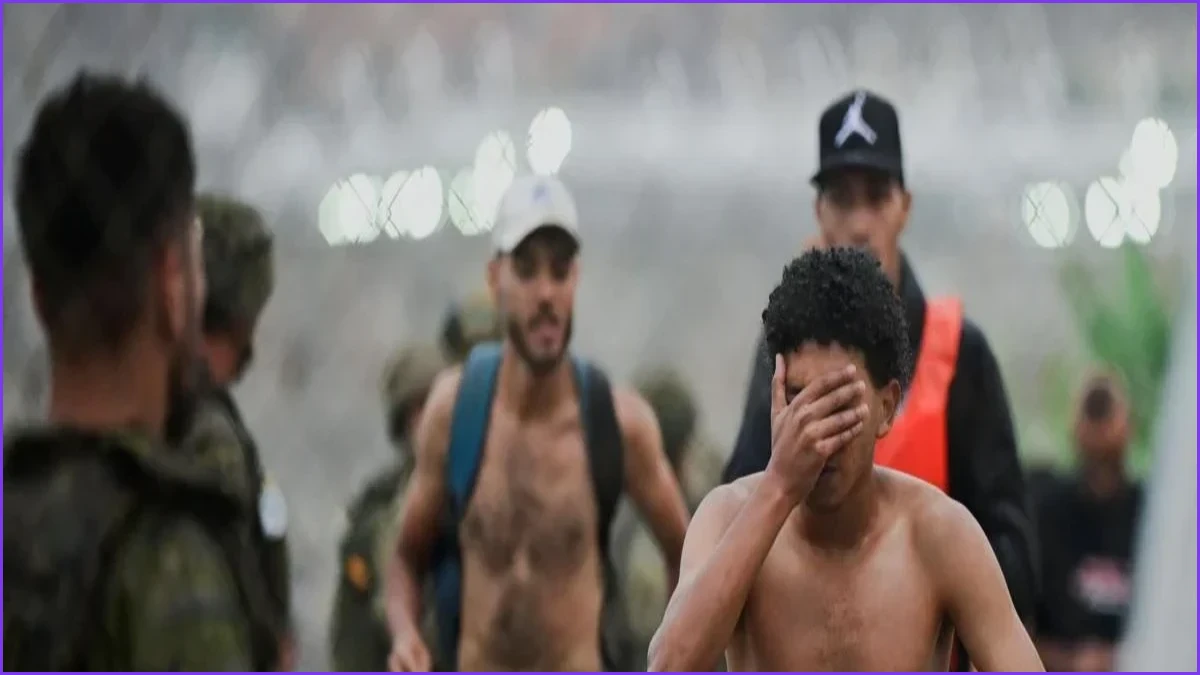
Approximately 49,000 migrants have entered Spain's North African territory of Ceuta from Morocco in the past 24 hours, crossing via land and sea, according to officials. The influx has resulted in at least 24 deaths among those attempting to reach the territory, with some drowning while swimming.
The situation intensified after Spain's Supreme Court ruled this month that migrants intercepted at sea en route to Ceuta or Melilla, another Spanish exclave, cannot be immediately returned to Morocco. Prime Minister Pedro Sánchez described the events as an "attack" on Spain's territorial integrity and stated the government was working to return all illegal migrants to Morocco "as soon as possible." Several European leaders have voiced concerns and some have pledged to tighten border controls.
Ceuta, situated on Morocco's northern coast, is separated from mainland Spain by the Strait of Gibraltar and has historically been a key destination for migrants seeking to reach Europe. Local officials had requested assistance from Madrid due to a recent surge in attempted crossings. Chaotic scenes unfolded on Thursday as border controls appeared to falter, with thousands of people seen swimming into the city. Media reports indicated crossings continued into Friday.
In response, Spain has deployed its armed forces to reinforce security in Ceuta and its sister city Melilla, where between 300 to 400 crossings were also reported overnight. During a visit to Ceuta on Friday, Prime Minister Sánchez condemned the crossings, reiterating his view that it constituted an attack on Spain's territorial integrity. He suggested that criminal networks were exploiting the Supreme Court's recent ruling, spreading misinformation that facilitated the surge.
Sánchez indicated that Moroccan authorities were cooperating with plans to repatriate those who entered illegally. Ceuta and Melilla, which have been Spanish territories since the 15th century and possess limited self-government since 1995, represent the European Union's only land borders with Africa. They are a point of contention in diplomatic relations between Spain and Morocco.
Many of the recent arrivals are young men, though women, children, and infants are also present. Officials estimate at least 7,000 of those who crossed illegally in the last 24 hours are minors. Typically, migrants swim several kilometers from further up the coast to reach Ceuta, but many were able to approach the border fence with ease this time. Some were seen walking along rocks near the jetty, while most had to swim around to reach the beaches. The whereabouts and actions of Moroccan border guards during these crossings remain unclear.
One migrant told Reuters news agency, "It's not good at all, and it's not fun either. I mean, people are dying here. I beg you, please, if you haven't come yet, don't come. Don't do it." Local media reported widespread chaos in Ceuta since Thursday, with residents expressing fear. A hospital security guard described the situation as "stronger and more aggressive than what we've experienced before."
The last significant surge in arrivals, though on a much smaller scale, occurred in 2021 when Moroccan authorities allowed approximately 8,000 people to cross following a diplomatic dispute with Madrid over the sovereignty of the Western Sahara. This dispute has recently resurfaced after Prime Minister Sánchez visited Algeria, which supports independence for the region.
Italy's Prime Minister Giorgia Meloni called the images from Ceuta "shocking" and described the situation as a security threat to Europe due to "uncontrolled immigration." She suggested Italy might consider suspending the Schengen zone agreement with Spain regarding free movement, though the practical implications are unclear. Italy's foreign ministry later clarified this call was for suspension at the Italy-Spain border, not for Spain's exclusion from Schengen. Spanish Foreign Minister José Manuel Albares deemed Meloni's remarks "improper" for a European partner and summoned the Italian ambassador to Madrid.
EU chief Ursula von der Leyen stated the images from Ceuta were "unacceptable" and must "stop immediately." Finland's Interior Minister Mari Rantanen supported Meloni's proposal, asserting Spain had failed to protect its border. German Chancellor Friedrich Merz urged Morocco to "take back illegal migrants immediately." The Schengen Area comprises 29 European countries that have abolished internal border controls.
"Nobody is going out on the street. They're afraid.