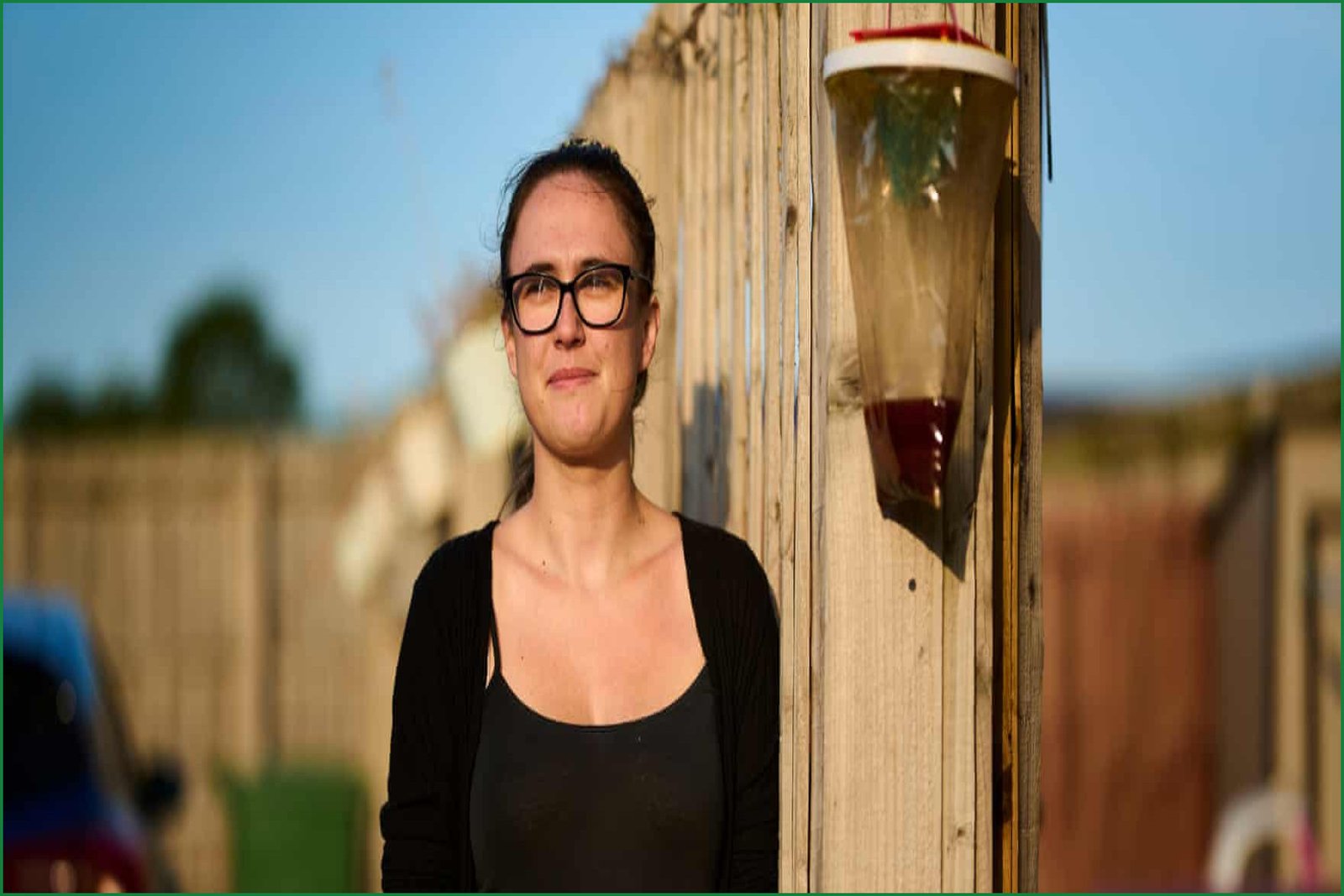
Households in various parts of the UK, ranging from Leicestershire to Carmarthenshire, are currently struggling with persistent waves of houseflies. In the West Heath suburb of Congleton, Cheshire, residents like 27-year-old Francesca Davies and her husband, 29-year-old maintenance engineer Alex Andrew, are dealing with swarms that have made their home environment increasingly difficult to manage. Despite purchasing their new-build property in 2019 through a shared ownership scheme, the couple reports that the issue worsens every summer. The infestation has forced the family to keep doors and windows shut, install fly nets, and utilize an industrial-grade fly killer in their kitchen.
The impact on the community is significant. Davies has launched a petition that has garnered over 1,000 signatures, urging local authorities and the Environment Agency to prioritize the wellbeing of residents. Neighbors, including Bryan Stahl, have also been heavily affected. Stahl, a 54-year-old teaching assistant, estimates he has spent approximately £500 on fly screens and a gazebo to create a protected space in his garden. He notes that the constant presence of insects leaves homeowners feeling as though their properties are unclean. Other local residents have reported similar battles, with some resorting to ordering daily takeaways to avoid cooking, while others have draped mosquito nets over their children's cots.
Local residents have pointed to a nearby recycling plant operated by Tandom as a potential source of the problem. In response, Tandom issued a statement confirming they have implemented additional precautionary measures and are working constructively with the Environment Agency, Cheshire East council, and independent pest control specialists. However, the company maintained that there is currently no evidence that flies are breeding on their site. A spokesperson for the Environment Agency confirmed they are in contact with Tandom and have instructed the company to take immediate steps to address the infestation, warning that they will not hesitate to pursue enforcement action if necessary.
While the frustration of residents is clear, experts emphasize the broader ecological role of flies. Andrew Whitehouse, head of operations at the charity Buglife, notes that flies are essential pollinators and vital for nutrient recycling in the soil. In addition, “loads and loads of other animals eat flies”, Whitehouse says. “Spiders spring to mind, but lots of vertebrates as well. So birds and bats and amphibians and reptiles and fish all feed on either adult flies or their larvae. And they’re a really important food source for lots of these animals.” Erica McAlister, a curator at the Natural History Museum and fly expert, points out that there are more than 7,000 species of flies in the UK. She argues that houseflies are often unfairly maligned, noting that they are clean animals forced into dirty environments by human activity. She suggests that rather than relying on inhumane pest control methods, communities should look for underlying environmental perturbations or waste events that may be triggering the surge in fly populations.
McAlister encourages a shift in perspective, viewing flies as wild animals that are indicators of environmental health. It is all the more important to think positively about flies given that insects as a whole, including flies, are largely in decline. Although some migrant species are bucking the trend, the UK’s local species that rely on specific host plants or locations are “suffering badly” as the country becomes less accommodating to wildlife, McAlister says. “We need our politicians to really work at encompassing all of their decisions with an ecological framework,” she believes. And that’s in order to protect our own future, not just the future of flies: “If we die, insects won’t care,” McAlister says. “But if insects die, we are pretty much on a very downward spiral very quickly” – because of our reliance on their pollination services. Perhaps it’s humans, then, not flies, who are the true pests.