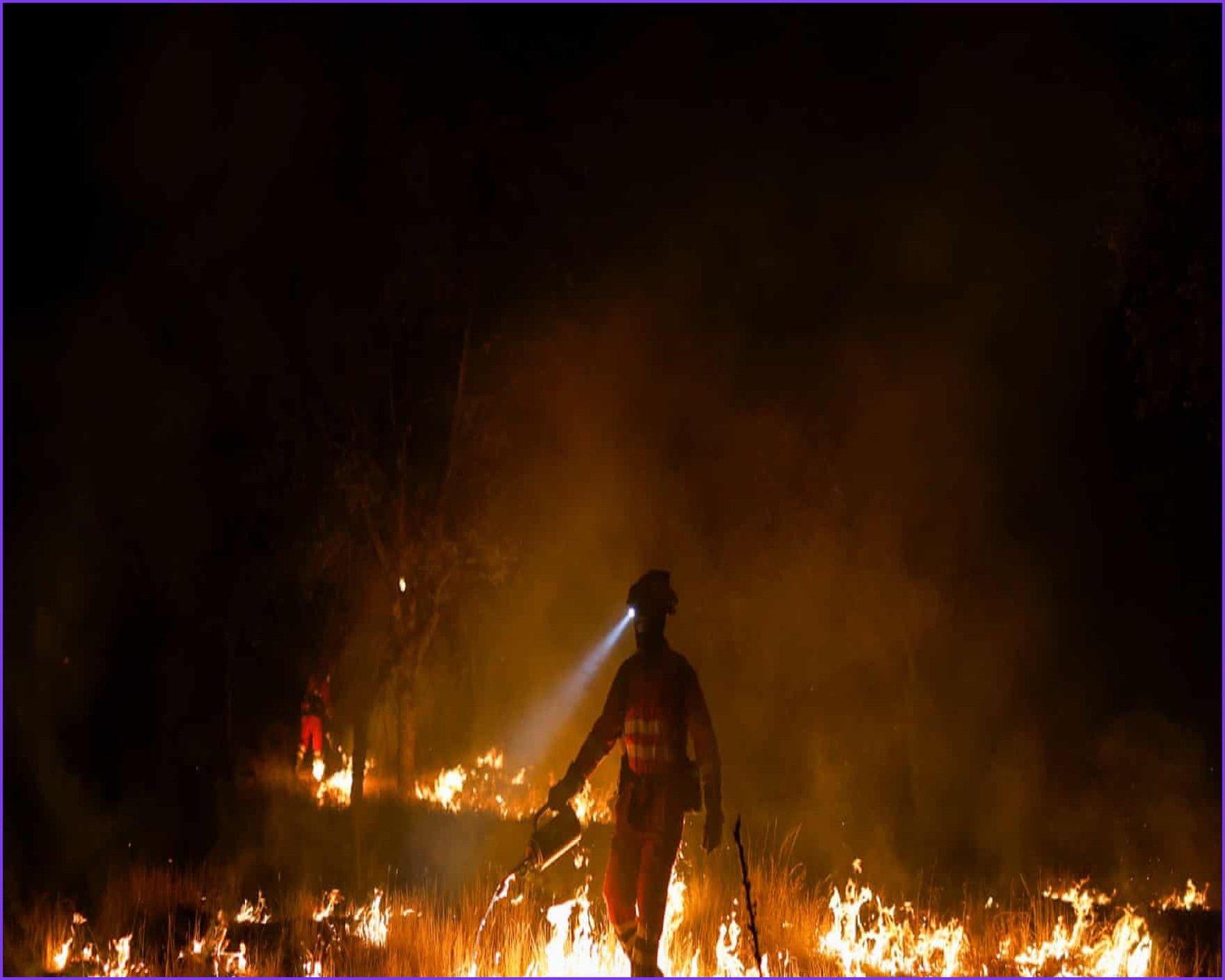
Three Greek firefighters have died while battling wildfires on the island of Crete and in the south of the mainland, the Greek fire department announced. The fatalities occurred as extreme heat and strong winds continue to fuel devastating blazes across southern Europe, making containment efforts increasingly difficult.
The widespread fires, stretching from the Atlantic to the eastern Mediterranean, have alarmed experts due to their intensity and proximity to populated areas. In France, temperatures reached 38C in Bordeaux, where firefighters worked to prevent a large blaze in nearby pine forests from reaching suburban areas. Spain's interior minister, Fernando Grande-Marlaska, reported that the country's largest wildfire on record, located west of Madrid, had been "technically stabilised" after dozens of ground crews contained it overnight, despite temperatures reaching 37C in the capital.
Spanish Prime Minister Pedro Sánchez described the situation near Madrid as improving but noted it was the first time in Spanish history that a wildfire had been elevated to "operational level 3," requiring national government intervention. "I believe the next 12 hours will be very important," Sánchez stated from the Navalcarnero command centre. "They are going to be decisive in consolidating the work done by the national civil protection system."
The current heatwave, the fourth in western Europe this summer, is accompanied by strong winds that firefighters warn make blazes harder to control and increase the risk of reignition. New fires in Greece prompted evacuations, with authorities confirming two firefighters "fell heroically in the line of duty" on Crete. Turkey also reported new fires leading to evacuations.
In France's Gironde region, authorities reported that 126 firefighters had been injured since the start of the fire, though the burned area remained stable at 42,000 hectares (104,000 acres) as of Wednesday morning. French authorities benefited from a calm night that allowed flare-ups to be extinguished but cautioned about developing weather conditions that could hinder progress.
Data from the European Forest Fire Information System indicates that wildfires have burned a record-breaking area in France, with both France and Spain experiencing an unprecedented number of fires for this time of year. More than 330,000 people across southern Europe have been forced to flee their homes and hotels. While evacuation orders were being lifted in some areas near Bordeaux, Madrid, and Valencia on Tuesday, some residents returned to find their homes destroyed.
José Fernández, a 74-year-old pensioner, recounted returning to his home in Pelayos de la Presa, Community of Madrid, to find it reduced to "total ruin," with "no money, no documents, no home."
The European Union's crisis management team anticipates difficult weeks ahead, with fears of further wildfires in Italy and Greece later in the summer. Ursula von der Leyen, President of the European Commission, expressed gratitude to firefighters and highlighted European solidarity, noting that Romania and Greece were extending their support missions, and Poland would join efforts from Saturday. The EU has mobilised resources, including planes and personnel from various member states and partner countries, to assist affected regions.
Maria Zuber, a senior official at the EU's emergency response coordination centre (ERCC), described the coming days as "very difficult" for France and anticipated further challenges in Greece. Moisés Galán Santano, a wildfire expert at the ERCC, stressed the need for long-term prevention strategies beyond emergency response, stating, "The [emergency] response is not only the answer. It’s the last answer. But it’s not all the answer. We need to focus on prevention."
Scientists attribute the intensifying and lengthening wildfire season in Europe to climate change, with the continent heating twice as fast as the global average. Repeated heatwaves have dried vegetation, turning forests into tinderboxes. Rapid analyses suggest that recent heatwaves would have been "virtually impossible" without climate breakdown, and the current level of soil dryness in western Europe was made five times more likely. These heatwaves are estimated to have caused at least 10,000 deaths and €2bn in lost crops for grain farmers.
Vula Tsetsi, co-chair of the European Green party, urged European institutions to take decisive action, noting the delay in the European Commission's heating and cooling plan. "Climate-driven heatwaves and wildfires are already claiming lives, destroying homes and ravaging forests at a record pace," she stated. "There is a widening gap between the scale of Europe’s heatwaves – literally hitting every EU country – and the absence of decisive European action."
Dozens of ground crews had managed to contain the Madrid fire overnight, emergency services for the region said on Wednesday morning, but a separate fire near València, where temperatures will peak at a cooler 32C, is still out of control.
Earlier this week, the European Commission said it had sent France seven planes and four helicopters from countries as far away as Sweden and Turkey, while in Spain, it said it had mobilised six planes from Greece, Italy and Turkey, along with 134 personnel and 41 vehicles from Portugal. A Super Puma helicopter from Se