The battlefield involving Iran is expanding, and Ukraine has emerged as a new player in this crisis following its long-range strikes on targets that Kyiv asserts are linked to the transfer of Russian military equipment to Iran. These developments have added new dimensions to the ongoing tensions between Tehran and Washington, while simultaneously tying the confrontation between those two nations to the war between Russia and Ukraine, placing Moscow's role in supporting Iran under intense scrutiny.
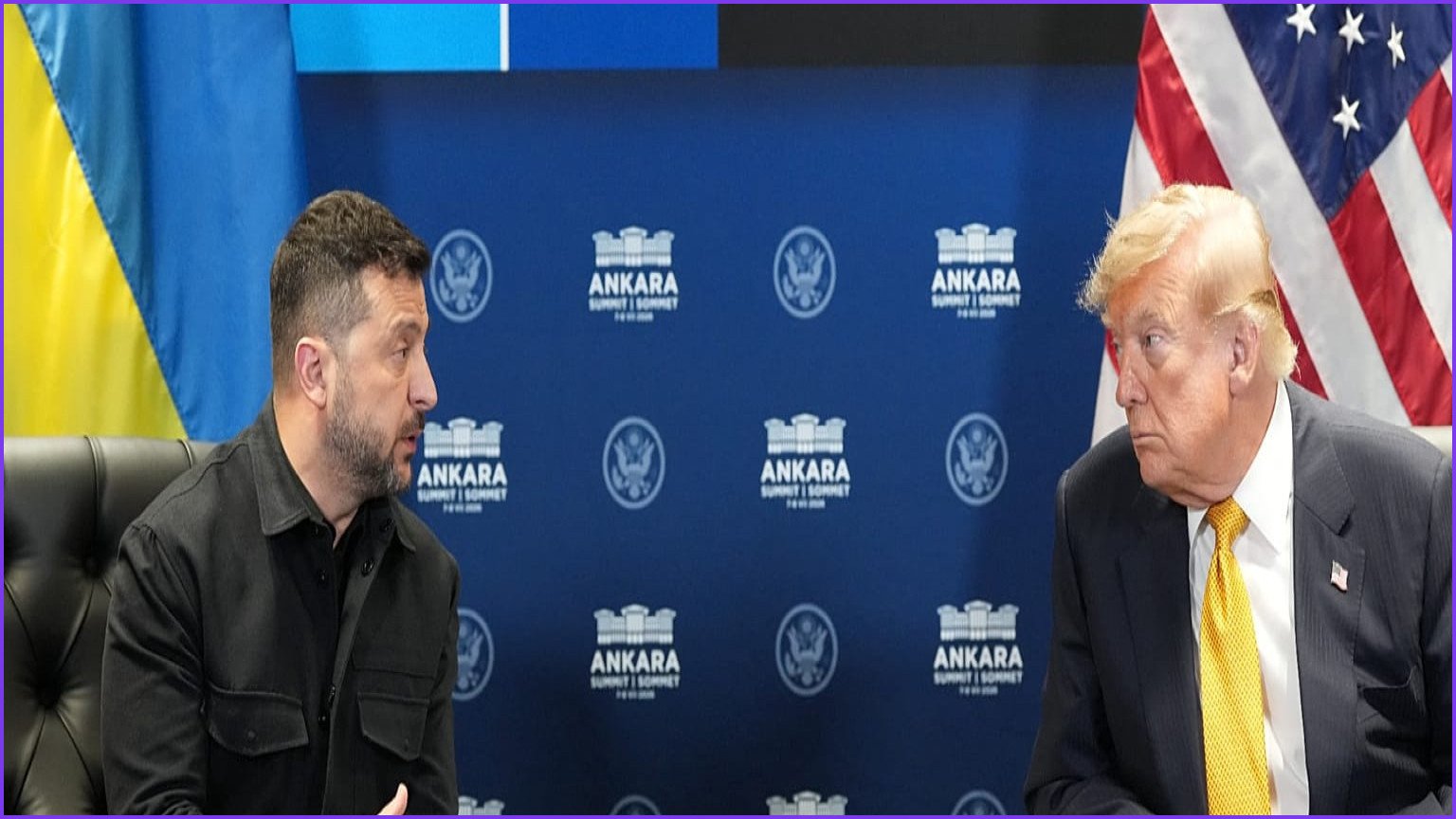
Ukrainian President Volodymyr Zelenskyy has alleged that Russia is actively assisting Iran by providing satellite information, which he claims has helped Tehran target United States military facilities in the Middle East. In a post on X, the Ukrainian leader stated that since the beginning of July, Russian satellites have been monitoring Gulf states and US military facilities in the region, with the resulting images being handed over to Iran.
According to Zelenskyy, there is a clear correlation between Russian satellite imagery and Iranian attacks, noting that images were captured both before attacks during preparation phases and afterwards to assess damage.
He specifically claimed that on 19 and 20 July, four air bases—two in Bahrain, one in Jordan, and one in Kuwait—were within the observation range of Russian satellites. Zelenskyy emphasized that this reality must not be ignored, stating that forces of evil are seeking to worsen the situation and widen the scope of the crisis. He further asserted that Russia must be stopped and that pressure on the aggressor state must be effective.
On Saturday, Ukraine announced that its long-range attacks had targeted vessels in the Caspian Sea, which Kyiv claims were being utilized to transport military cargo between Iran and Russia. Iran confirmed that one of the targeted vessels was an Iranian commercial ship, reporting that one sailor was killed and several others were injured during the strike.
In response, Tehran summoned Ukraine’s acting chargé d'affaires to the foreign ministry to lodge an official protest. According to IRNA, Iran stressed during the meeting that the Islamic Republic will firmly defend its security and national interests and will not leave attacks on the lives and property of its citizens unanswered.
As Iran's foreign ministry reiterated its right to respond, public sentiment on Iranian social media has seen users calling for retaliation, specifically suggesting the use of Kheibar Shekan ballistic missiles. Some users criticized the Foreign Ministry's approach as weak, with one widely shared comment stating that as long as this weak diplomacy remains in government, every fox will see itself as a lion against them.
Other users argued that Tehran should demonstrate its deterrence capabilities. Former Iranian lawmaker Nezameddin Mousavi also reacted to the strike, stating that the response to this fireworks display in the Caspian Sea should be delivered in the Black Sea. He added that the incident should prompt Iran to reconsider its self-imposed 2,000-kilometre limit on the range of its ballistic missiles.
Additionally, Iran's foreign ministry reported that Foreign Minister Abbas Araghchi condemned the attack during a phone call with EU Foreign Chief Kaja Kallas, calling for a response from the UN Security Council, the European Union, and the international community. This diplomatic exchange occurred just two days after the European Union imposed a new round of sanctions on Iran for human rights violations.
On 24 July, Kallas had announced on X that the EU introduced new restrictive measures against Iranian judges responsible for serious human rights violations, including the persecution of political opponents and religious minorities.
Zelenskyy’s allegations regarding Russian satellite support came a day after US President Donald Trump claimed that Russia and China would not supply arms to Iran. In a post on Truth Social, Trump wrote that Chinese President Xi Jinping had assured him during a recent meeting in Beijing that China would not give or sell weapons to the Islamic Republic under any circumstances, a policy he said also applied to Chinese companies.
Trump further stated that Russian President Vladimir Putin had provided similar assurances that Moscow would not sell weapons to Iran.
Trump added that in his view, the two countries often discussed in relation to their role with Iran are not involved in this matter. He warned, however, that if Russia or China were to take such a step, it would be very bad for them and not in their interests. Trump’s remarks contrast with the claims made by Zelenskyy, and as of now, Moscow and Beijing have not issued an official response to the Ukrainian president's allegations.