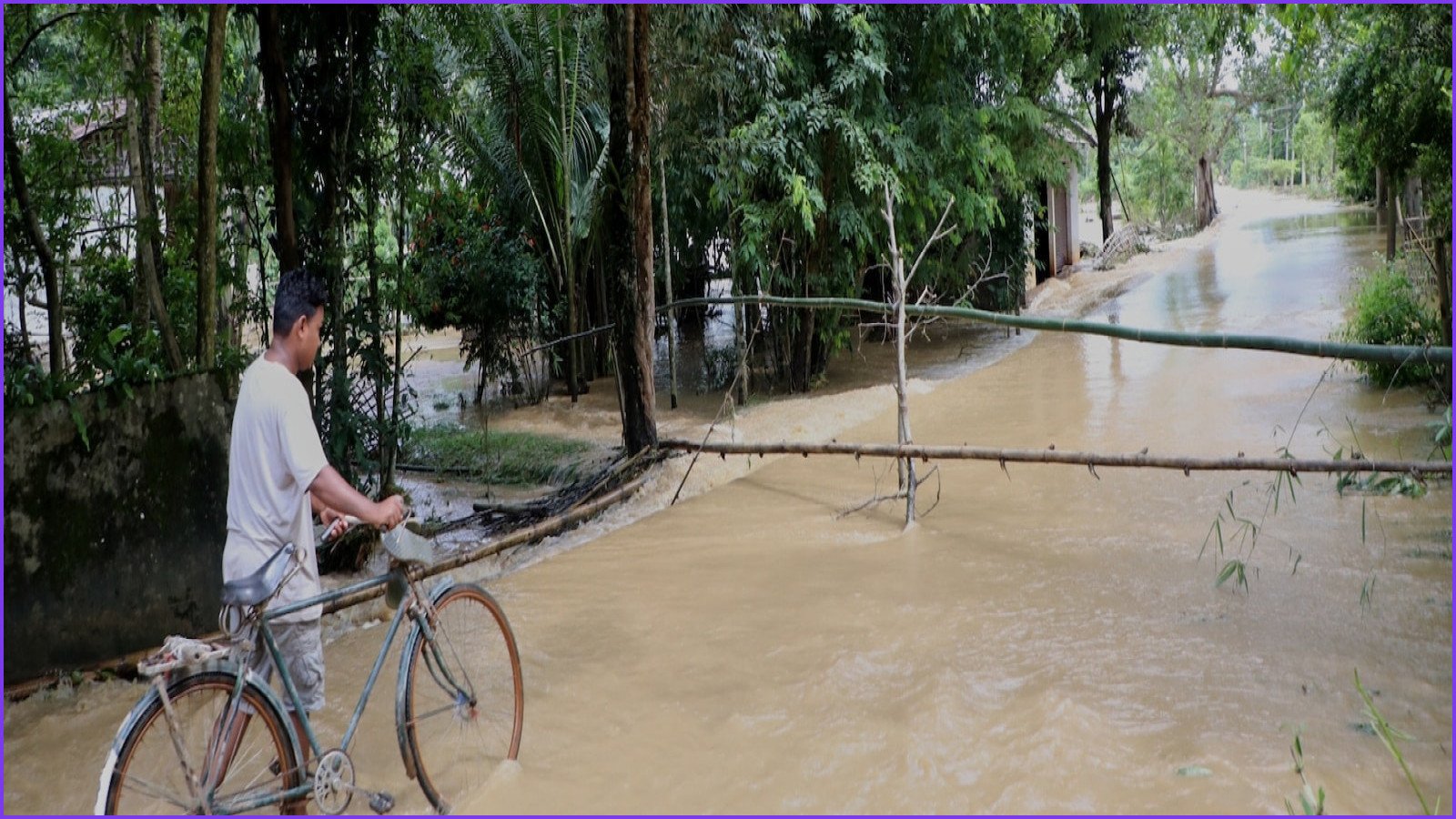
Heavy monsoon rains in India’s northeastern state of Assam have resulted in a humanitarian crisis, with officials confirming on Friday that at least 50 people have lost their lives. The severe weather has led to widespread flooding, displacing approximately 700,000 residents from their homes.
The catastrophe was triggered by the overflowing of the Brahmaputra River, a major waterway that travels 900 kilometers (560 miles) through the region after originating in China’s Tibet. As the river surged, it inundated nearly 900 villages, destroyed numerous homes, and left more than 7,000 households without electricity. Assam Chief Minister Himanta Biswa Sarma stated that the government has mobilized relief efforts, including providing food supplies and conducting airdrops via helicopters to assist those trapped by the rising waters.
Disaster response teams, police, and local volunteers are currently engaged in rescue operations to reach stranded communities. The impact of the flood is widespread; nearly 300,000 individuals have been forced to seek refuge in government-operated relief camps. Among those affected is Jatin Gogoi, a 52-year-old farmer from Nazira, who reported that the floodwaters destroyed his bamboo-walled home and killed his livestock, leaving his five-member family to take shelter with relatives.
The flooding also reached Guwahati, the state capital, on Thursday evening, disrupting life for its 2 million residents. Commuters faced significant delays as roads became submerged, some reaching waist-deep levels. Sudip Mazumdar, a local journalist, noted that he was forced to remain overnight at his office due to the impassable road conditions.
Experts attribute the severity of the situation to human-caused climate change, which is intensifying South Asia’s monsoon season. While the rains typically occur between June and September and again from October to December, they have become increasingly unpredictable, characterized by erratic bursts of extreme rainfall followed by dry spells.