A joke has evolved into a major political protest movement in India, posing a significant challenge to the Hindu nationalist government of Prime Minister Narendra Modi. Young Indians, who have adopted the name “Cockroaches,” are channeling their deep-seated anger over systemic failures in the education sector into a broader campaign for government accountability. This movement represents one of the most visible public challenges to the current administration in recent years, driven by a generation seeking to reform the established political structure and address the damage they believe the government has inflicted on their future.
The movement’s origins trace back to May, when India’s Supreme Court Chief Justice Surya Kant, during an unrelated court hearing, compared some unemployed young people to “cockroaches.” This remark triggered an immediate and widespread online backlash. Boston University student Abhijeet Dipke responded by launching the Cockroach Janta Party, or Cockroach People’s Party. Many young Indians embraced the term, adopting the cockroach as an emblem of resilience. The campaign gained massive traction on social media, attracting more than 21 million Instagram followers within just a few days. Supporters utilized the platform to share memes, mock campaign slogans, and satirical commentary targeting the Modi government over issues such as high unemployment, limited job opportunities, and intense economic pressures.
The immediate trigger for the public protests was widespread anger regarding alleged leaks of some of India’s most competitive entrance examinations for medical colleges and government jobs. These exams are considered a vital pathway to stable employment and upward social mobility for millions of citizens. The recurring possibility that these exam papers have been shared in advance often forces authorities to cancel or repeat tests, leaving students in a state of extreme uncertainty and resulting in months or years of lost preparation. The movement has since demanded the resignation of Education Minister Dharmendra Pradhan, comprehensive reforms to the examination system, and financial compensation for the families of students who died by suicide following the leaks.
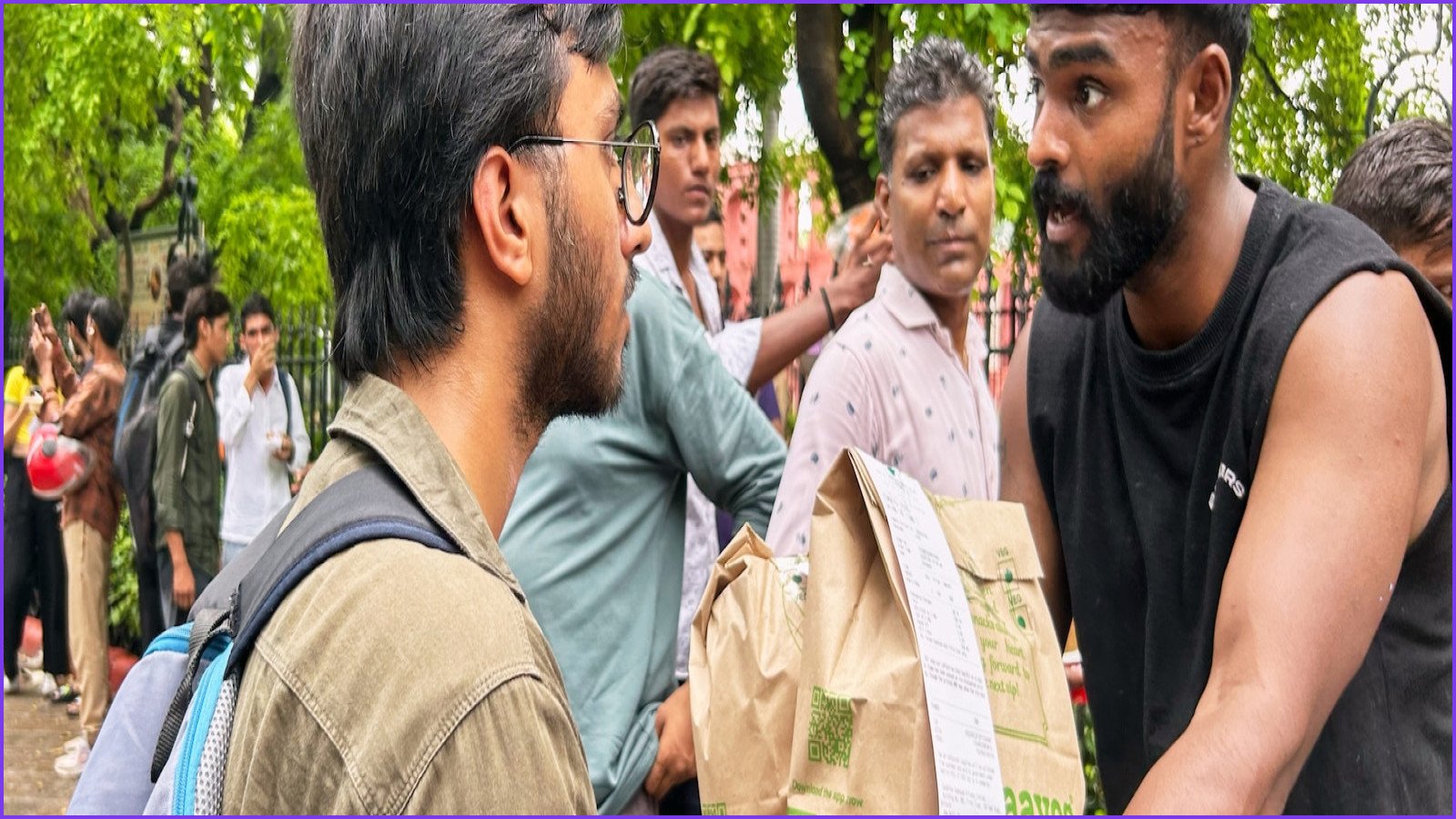
The movement transitioned to the streets in June when Dipke returned to India from the U.S. and began organizing protests across various cities and university campuses. A planned sit-in at Jantar Mantar, a prominent protest site in New Delhi, gained nationwide attention. While the sit-in initially drew only a few hundred daily protesters, the turnout quickly grew into the thousands. The movement gained further momentum when prominent activist Sonam Wangchuk joined the demonstration and began a hunger strike that lasted more than three weeks, until police forcibly transferred him to a hospital over the weekend.
As the protests have expanded, they have come to embody broader frustrations regarding government accountability and the prospects for young people. Many protesters express a profound loss of trust in national institutions, including the education system, political leadership, the judiciary, and the media. The movement’s appeal has widened significantly, partly due to its lack of a traditional political party structure. Organizers state that volunteers and supporters fund their own travel to protests and rely entirely on social media for mobilization.
The government initially rejected demands for dialogue. Education Minister Dharmendra Pradhan accused the protesters of working against the country’s interests and claimed the government had resolved the crisis by ordering fresh examinations. However, the official stance began to shift as the movement escalated. On Monday, as lawmakers returned for the monsoon session, thousands of demonstrators attempted to push through security barricades during a march to Parliament. Police responded by using tear gas and batons, a crackdown that led to further public anger. A government minister later met with representatives of the movement in the first visible outreach, but the talks failed to ease the underlying tensions.
Pressure on the government also mounted after opposition leader Rahul Gandhi staged a sit-in outside the residence of Prime Minister Modi on Tuesday, thrusting the “Cockroaches” to the center of India’s political debate. Under this mounting pressure, Pradhan stated that the government was committed to “addressing every genuine concern of our youth” during the ongoing Parliament session, though he did not indicate whether he would resign, which remains a core demand of the protesters. The movement’s rapid spread beyond student groups highlights growing frustration among young Indians and mirrors a broader trend across South Asia, where youth have played a central role in anti-government movements in recent years. While India’s opposition parties remain divided and the political space for criticism has shrunk under Modi, the ruling government now faces the unusual challenge of a decentralized movement of young people rather than established political organizations. Opposition parties and rights activists have backed the campaign, framing it as a broader fight for democratic accountability and the right to peaceful protest. The movement has provided India’s opposition with a potent platform to broaden its appeal among young voters, who represent a crucial voting bloc of hundreds of millions, including millions of first-time voters whose frustration could have significant implications for future elections.
With hundreds of millions of voters under 35, including millions of first-time voters, India’s youth are a crucial voting bloc. Their growing frustration could have wider political implications ahead of future elections.