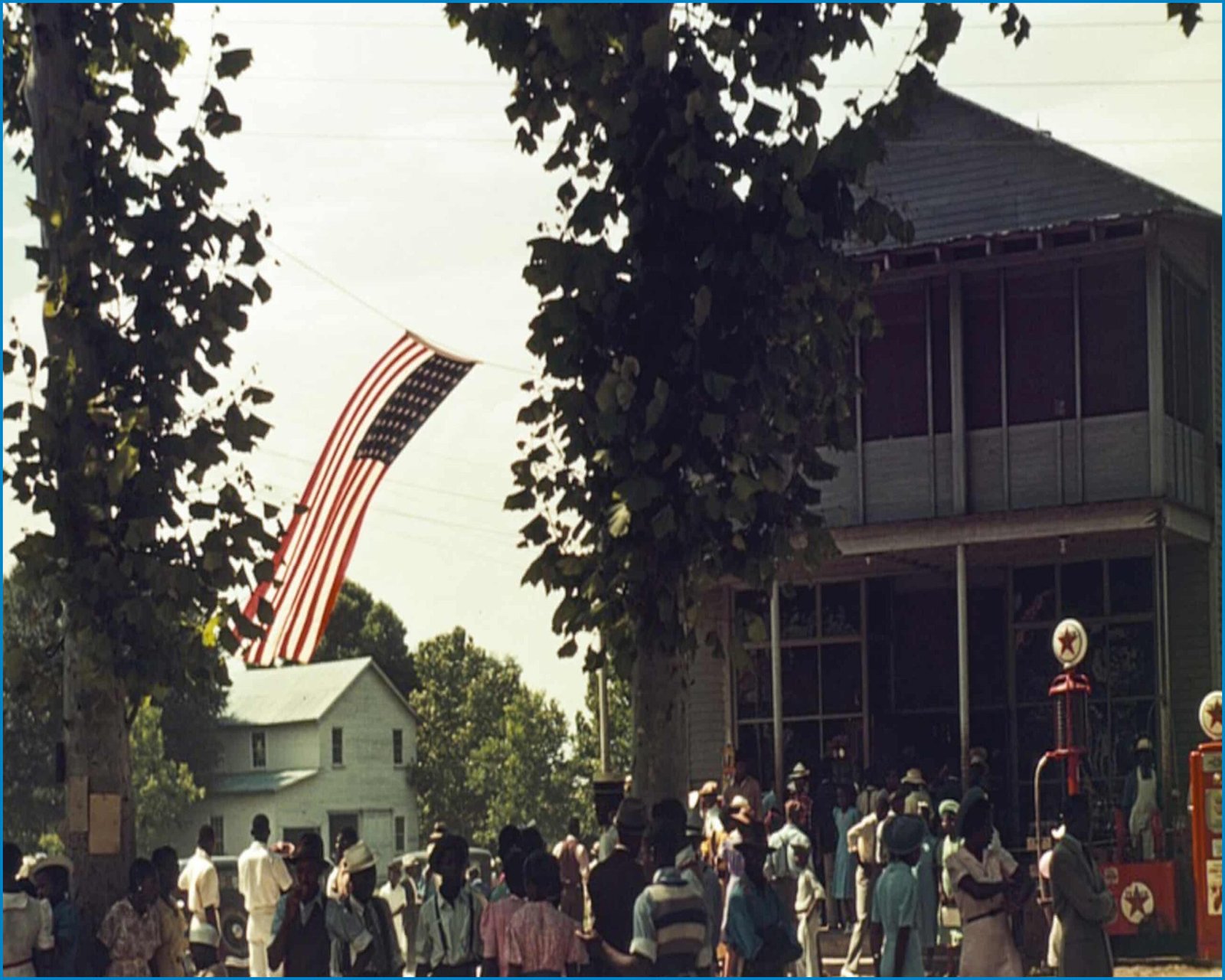
A scholarly push is underway to dismantle the long-standing narrative that Gullah Geechee communities remained insulated from the mainland United States. A new book, Gullah-Geechee Diasporas: Knowledge, Culture, and Black Lowcountry Legacies, features eight essays by prominent historians and scholars who argue that the static, isolated view of this culture denies Gullah Geechee people the credit they deserve for their significant contributions to the American South and the nation at large. Edited by Muhammad Fraser-Rahim and Elizabeth J. West, the collection explores the breadth of Gullah Geechee influence through religion, music, and language. The editors noted that even prior to the US Civil War, Gullah influences were evident in regions as far-flung as the Caribbean, Mississippi, and Texas, demonstrating a history of migration rather than seclusion.
The project originated from a collaborative dialogue between Fraser-Rahim and West, sparked a decade ago during the Spoleto arts festival. The pair recognized a gap in recent research concerning the past and future of these communities. West, who has shifted her focus from traditional literature to archival research, noted that her work consistently traced the descendants of enslaved people back to the Lowcountry. She observed that when tracking families, the evidence frequently points toward South Carolina. Addressing the geographic misconception, Fraser-Rahim emphasized that the Gullah Geechee Heritage Corridor spans from North Carolina to Florida, extending 30 to 60 miles inland. He noted that these interior communities have been vital in spreading cultural identity. The editors argue that the American South is a sacred space where these traditions were preserved, yet the narrative often ignores how Gullah Geechee identity intersected with other Black and Creole communities through marriage and migration.
The book also challenges the idea that enslaved Africans lacked a sense of place or identity. West noted that we always have these conversations as if African Americans were these kind of dissociated beings who were just managed like pieces on a chessboard; that they just got moved around as white people got moved around and that they had no sense of place and identity. That’s absolutely not true. In the first essay, Ras Michael Brown goes all the way back to pre-Middle Passage Africa and talks about how Africans themselves moved and migrated across the continent and established a sense of home and belonging. It helps us understand that Africans were not just located in a single place, having never seen anything else throughout their history. That’s not the history of Black Americans either. He lays out how Africans brought over these traditions and ways of understanding the world and their belonging as they settled new places.
The book also looks at the expansion of religious and spiritual identity beyond Christianity. Fraser-Rahim pointed to Charleston, South Carolina—known as the Holy City—as a hub of diverse spiritual traditions, including French Huguenots, the oldest reformed Jewish synagogue, and the presence of enslaved African Muslims like Omar ibn Said, who arrived in 1807. The contributors also explore the cultural impact of the Gullah Geechee, such as Karen Chandler’s research on the impact of Gullah Geechee culture on jazz. West found this particularly fascinating, noting that as someone from Mississippi, she always thought all points directed to New Orleans.
One of the things that I found most brilliant about the book is how it exemplifies the longevity of what we now know as Black American culture. West hopes the book gives readers a much deeper insight into the through lines and continuities of African American culture. The book captures that dynamic of Black culture and requires us to appreciate the way certain central practices and concepts have been maintained. The exciting thing is the opportunity to bring the book to readers outside our world. We have to do a better job of helping the public understand the significance and the reach of the kind of work that we do. This is not just a typical academic book where academics are talking to each other. We anticipate that everyday readers who are interested are going to find the book relevant. This helps to give a much rounder picture of how we need to be thinking about Black families and communities throughout the history of Blacks in the south.
Fraser-Rahim: This started because me and Elizabeth met maybe 10 years ago on a project that was leading up to the Spoleto arts festival. They were doing this series of talks and lectures about Omar ibn Said [the author of the only known narrative by an enslaved person written in Arabic], Gullah Geechee community, ensl
There’s a lot of good work on Gullah Geechee communities, but there’s limited work in the more recent 10, 20 years on Gullah Geechee communities, and what this means both for the past and the future.