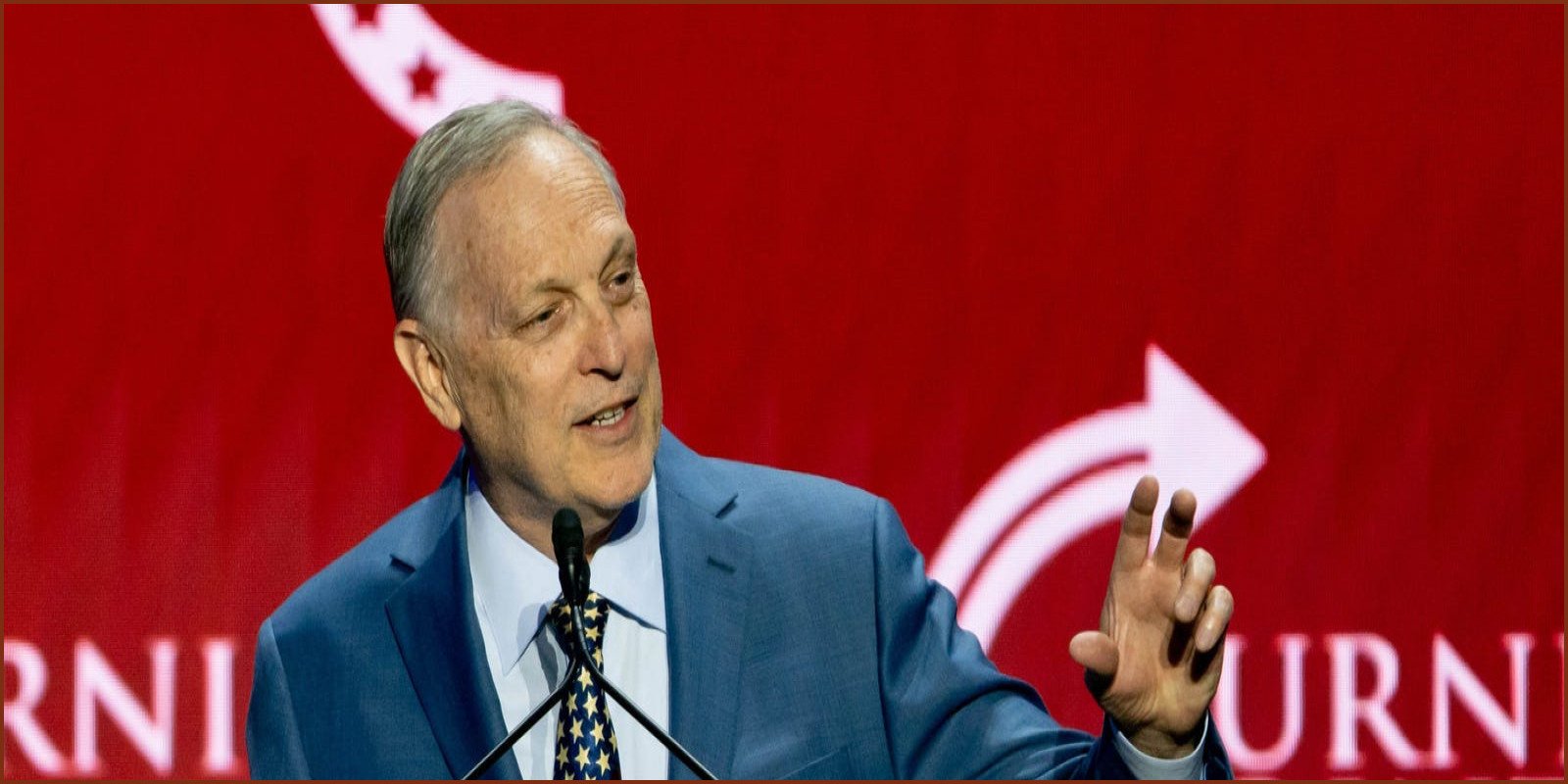
Rep. Andy Biggs has secured the Republican nomination for governor of Arizona following the July 21 primary elections. This victory further cements President Donald Trump's highly successful endorsement record throughout the 2026 GOP primaries. Biggs, a five-term conservative congressman and former chairman of the House Freedom Caucus, now faces the challenging objective of defeating incumbent Democratic Governor Katie Hobbs in the upcoming general election. To succeed in one of the nation's most closely watched swing states, Biggs must appeal to independent voters without alienating his core conservative base.
The gubernatorial race, previously classified by political analysts as a "toss-up," has recently shifted to "leans Democratic" due to Biggs' highly polarizing political stances. These include his skepticism regarding the legitimacy of the 2020 presidential election, in which he voted against certifying the results, and his involvement in the fake elector scheme. Some of Biggs' Republican peers have expressed concern that his positions may be too extreme to unseat Hobbs. Furthermore, Biggs has supported several of Trump's more controversial initiatives, such as initiating a conflict with Iran that led to increased domestic gasoline prices, which critics expect will be heavily scrutinized during the general election campaign.
In response to his primary victory, Biggs has attempted to pivot toward moderate voters. "I do have a record of reaching across the aisle and working with people to get important things done," Biggs stated. His campaign issued a strategy memorandum asserting that Governor Hobbs remains highly vulnerable, pointing to her exceptionally narrow victory margin in the 2022 election. Meanwhile, Hobbs remains confident in her reelection strategy. "I know this race is going to be close no matter what, because Arizona is a swing state," Hobbs remarked. She emphasized her commitment to earning every vote by focusing on non-partisan priorities such as reducing living costs, securing the border, and fostering high-paying employment opportunities.
Trump has been a vocal supporter of Biggs' gubernatorial ambitions. During an April rally in Phoenix organized by Turning Point USA, Trump expressed mixed feelings about Biggs leaving federal office. "I hate to lose him from Congress. You know, I'm sort of torn with that," Trump told the crowd. "I hate to lose him, but he'll be a great governor." Biggs entered the gubernatorial primary after defeating fellow Republican Representative David Schweikert, whose congressional seat is now a major target for Democrats.
Beyond the governor's mansion, the primary results highlighted the Republican Party's shift toward election skepticism. State Representative Alex Kolodin of Scottsdale captured the Republican nomination for secretary of state. Kolodin has drawn national attention for his persistent claims that American elections, particularly those in Arizona, are unfair and "rigged." As an attorney, Kolodin was part of the legal team that attempted to invalidate mail-in ballots and block Arizona's 11 electors from voting for Joe Biden in 2020, actions that resulted in sanctions against him by the state bar in 2023. As a legislator, Kolodin has championed restrictive voting measures, including the abolition of the state's early-voter list.
Kolodin will face Democratic incumbent Adrian Fontes in November. Fontes, who secured his office in 2022 by defeating Trump-aligned candidate Mark Finchem by more than four percentage points, has positioned himself as a "democracy defender." Throughout his tenure, Fontes has vocally opposed Trump's focus on the 2020 election results and has resisted federal efforts to access Arizona's voter registration databases. The secretary of state position is expected to be a crucial battleground ahead of the 2028 presidential race, as the officeholder oversees election administration and database maintenance.
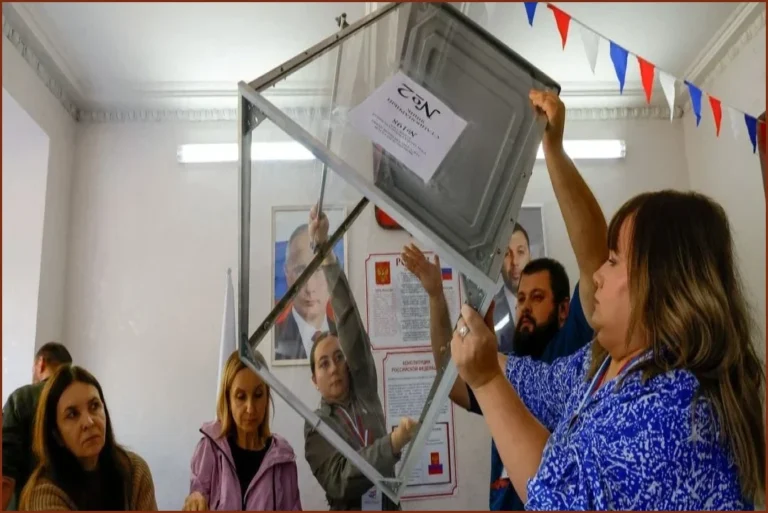
The primary election took place amid heightened federal scrutiny. On July 21, the Department of Justice deployed federal election monitors to polling locations across three Arizona counties to watch for potential fraud. Assistant Attorney General for Civil Rights Harmeet Dhillon announced the deployment on social media, stating, "All citizens and only citizens should get out and vote in federal races today, feeling confident that the government is here to help."
The presence of federal monitors drew contrasting reactions from political observers. Christopher Weber, director of the Voter Project at the University of Arizona, characterized the Justice Department's decision to send monitors during an active primary as "highly unusual." Conversely, Bill Gates, executive director of the Mechanics of Democracy Laboratory at Arizona State University, argued that the move was routine. "Their presence has been a routine part of elections under administrations of both parties and has been intended to help ensure compliance with federal voting rights laws," Gates explained. Local election officials reported that voting proceeded smoothly, describing the day as "business as usual" with no significant irregularities.
This federal intervention aligns with similar actions taken during the Biden administration, which sent monitors to four Arizona counties during the 2024 presidential election. However, the current deployment occurs amid deep Democratic anxieties regarding Trump's calls for comprehensive election overhauls before the midterm elections. In a prime-time address earlier this month, Trump made several inaccurate assertions regarding voting system vulnerabilities, including exaggerated claims about Chinese interference in the 2020 election. Trump utilized the address to lobby Congress to pass the SAVE America Act, a legislative proposal requiring documentary proof of citizenship for voter registration.
Arizona is currently the only state requiring proof of citizenship for local and state election registration, a policy enacted via a 2004 ballot initiative. Tension over voter eligibility escalated on July 7 when Dhillon sent a letter to Arizona's secretary of state threatening federal prosecution for any election official who "knowingly retains noncitizens" on voter lists.
These political battles are unfolding against a backdrop of declining public approval for the president. A recent Economist/YouGov survey revealed that only 36% of Americans approve of Trump's job performance. Despite this, Democrats face a competitive national landscape; a Washington Post-Ipsos poll from July indicated that Democrats hold a narrow 48% to 45% advantage over Republicans in generic congressional preferences.
Control of the U.S. House of Representatives may ultimately run through Arizona, where Democrats are targeting three Republican-held seats. In Arizona's 1st Congressional District, which covers northeastern Maricopa County, the race is wide open following Schweikert's departure. Trump won this district by three percentage points in 2024, while Biden won it by 1.5 percentage points in 2020. The Republican nominee is Jay Feely, a former NFL Pro Bowl kicker endorsed by Trump, who defeated former State Representative Joe Chaplik and businessman John Trobough.
On the Democratic side of the 1st District primary, former state legislator Amish Shah holds a leading position, outpacing Marlene Galán-Woods, a former television news anchor endorsed by the Democratic Congressional Campaign Committee. With approximately 76% of precincts reporting, Shah maintained a lead of roughly 10 percentage points over Galán-Woods.
Democrats are also targeting Arizona's 6th Congressional District, currently represented by Republican Representative Juan Ciscomani. Trump won this district by less than one percentage point in 2024. JoAnna Mendoza, a Marine Corps veteran, ran unopposed in the Democratic primary and will challenge Ciscomani in November.
In Arizona's 2nd Congressional District, represented by Republican Representative Eli Crane, Democrats hope to mount a competitive challenge with candidate Jonathan Nez, a former Navajo Nation president. While Trump carried this district by 15 percentage points two years ago, analysts note that Nez previously outperformed Kamala Harris in the region, keeping Democratic hopes alive.
Finally, in the Democratic primaries, moderate four-term Representative Greg Stanton easily defeated progressive challenger Kai Newkirk. Newkirk's campaign focused heavily on opposing local data centers, a stance that drew significant opposition from well-funded artificial intelligence advocacy groups.