Tamara Harvey’s latest production of Anton Chekhov’s final play, The Cherry Orchard, is currently running at the Swan Theatre in Stratford-Upon-Avon. Despite boasting a high-profile cast, the production has been met with criticism for its woolly meaning and a soft-edged tone that mutes the play's inherent force.
The production features Helen Hunt as the aristocratic matriarch Madame Ranyevskaya, with Bill Pullman portraying her brother, Gaev, and Kenneth Branagh taking on the role of their nemesis, Lopakhin. In this version, scripted by Laura Wade and based on a translation by Helen Rappaport, Lopakhin is depicted as a shopkeeper’s son who represents the rising forces against the ossified elites of pre-revolutionary Russia. However, the production suffers from a lack of a magnetic centre, failing to convey the story’s complications regarding love and stinging loss.
The directorial choices have drawn scrutiny, particularly the inconsistent use of accents. While the two aristocratic siblings, Ranyevskaya and Gaev, speak with American accents, Lopakhin and the servant Yasha, played by Julian Moore-Cook, are given Northern Irish accents. This decision leaves the production feeling disconnected and unclear in its intent. Although Chekhov originally viewed the play as a comedy with farcical elements, and Harvey does lean into this in certain scenes—highlighted by Michael Elwyn’s performance as the doddering servant Firs—it does not compensate for the overall lack of emotional depth.
One of the few moments of genuine dramatic tension occurs when Branagh’s Lopakhin reveals he is the new owner of the estate following the auction. While this scene provides a brief flash of intensity, the character quickly reverts to a more benign, joshing manner. Similarly, Helen Hunt’s portrayal of Ranyevskaya is described as featureless, lacking the necessary complexity for a character facing the loss of her family home. Esther Smith, playing the adopted daughter Varya, does manage to develop some emotional resonance in her yearning for a marriage proposal from Lopakhin.
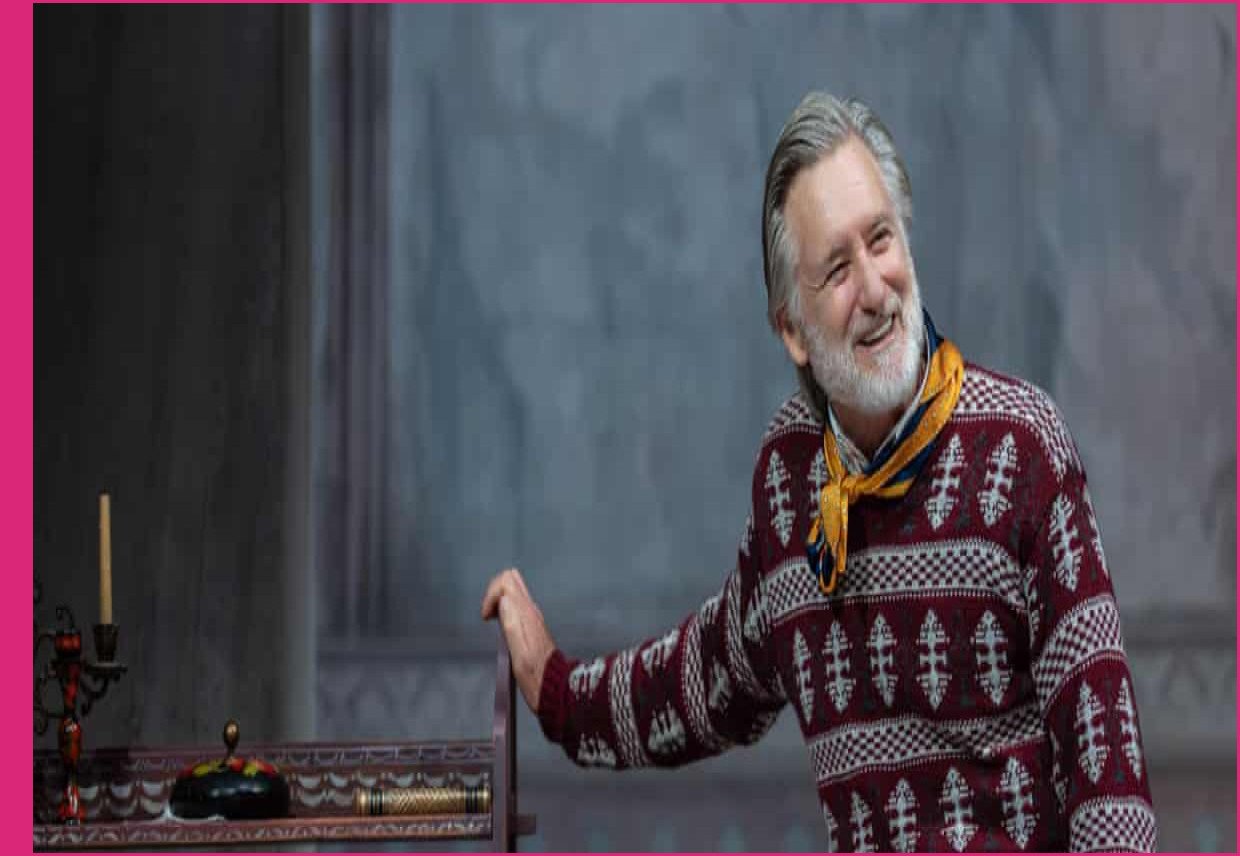
The set design by Anna Fleischle utilizes faded grandeur, featuring lace coverings and chandeliers, with bare branches symbolizing the cherry orchard itself. While the sound design effectively incorporates birdsong and the grinding noise of trees being felled, the production as a whole fails to capture the social discontent inherent in the 1903 text. Alfred Enoch’s performance as the socialist student Trofimov comes across as a likable prig rather than a firebrand, and the stage movement feels overly busy, lacking the characteristic Chekhovian longueurs and ennui.
But for such a starry cast Tamara Harvey’s production has a disappointing lack of sparkle. You do not feel the story’s charge, its complications around love and its stinging losses. The tone is too soft-edged, almost endearing, and the cast such an ensemble that there is no magnetic centre to hold you.
Like Branagh’s good-natured, sometimes joshing Prospero, his Lopakhin is amenable, lacking the sharp-pronged anger of Adeel Akhtar’s in Benedict Andrews’ astonishing version of the play at the Donmar Warehouse two years ago. When his class rage comes, after the auctioning of the estate, when he reveals that he is its owner, it is the most arresting moment of the night. But the drunken outburst melts away as abruptly after this scene, back to benign neutrality.