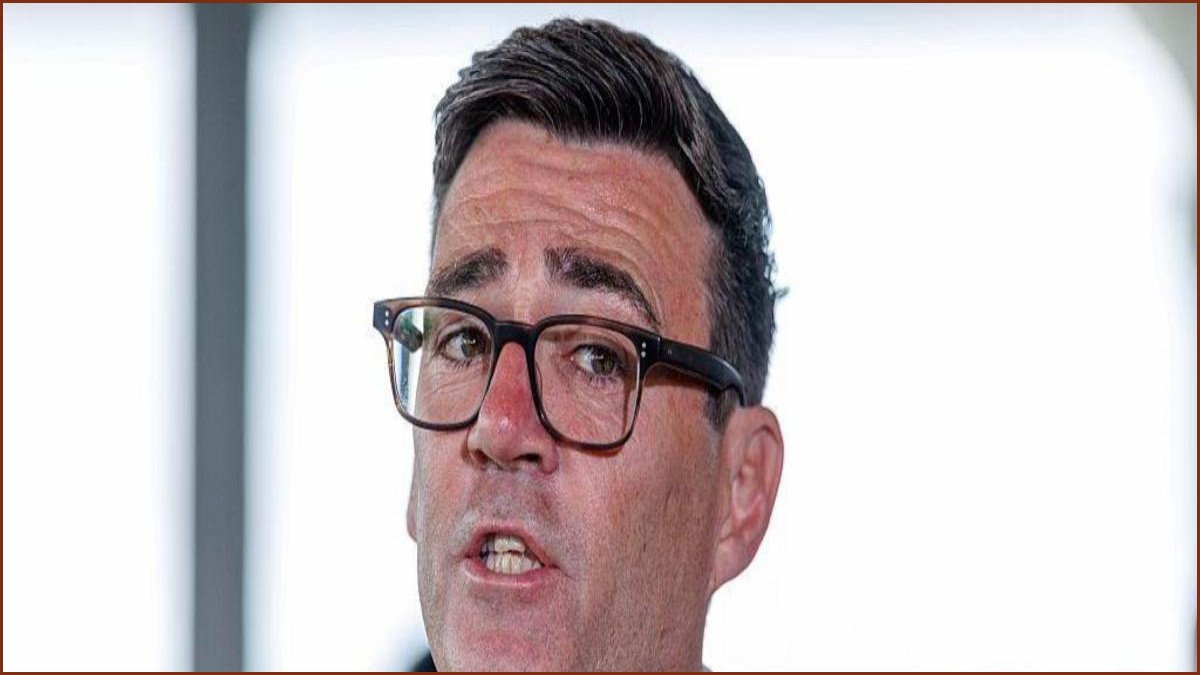
Incoming Prime Minister Andy Burnham will completely scrap plans for a government-issued digital ID for all British adults when he takes office on Monday. According to his office, the decision represents a major shift in focus toward addressing the daily challenges facing people across the country, specifically prioritizing cost-of-living relief over expensive national government programs.
Under the previous leadership of Sir Keir Starmer, the government had already scaled back the proposals, which initially aimed to introduce a mandatory digital ID for workers in the United Kingdom. By abandoning the project entirely, Burnham's spokesperson stated that the time and resources previously allocated to the national ID scheme will now be redirected to where they are most urgently needed, such as helping families cope with rising living costs. The spokesperson added that this reprioritization of public resources signals a clear change in direction, focusing on improving everyday life and bolstering local economies rather than pursuing costly national administrative schemes.
The decision to drop the digital ID coincides with another major policy update. Upon taking office on Monday, Burnham is also expected to announce plans for new oil and gas drilling in the North Sea. Although the Labour Party's 2024 manifesto pledged not to issue new drilling licenses while honoring existing ones, the incoming prime minister is expected to uphold this commitment by accelerating development on previously approved licenses that have remained undeveloped in recent years.
The digital ID program was first championed by Sir Keir Starmer ahead of last year's Labour conference. Starmer argued that a mandatory ID system for workers would make it easier to crack down on illegal employment and modernize state infrastructure. He suggested that a digital ID would allow citizens to quickly verify their identity to access key public services, eliminating the need to search for physical documents like utility bills. However, the proposal faced immediate financial scrutiny. Last November, the Office for Budget Responsibility estimated the project would cost £1.8 billion over three years, though Downing Street disputed that figure.
Public opposition grew rapidly, culminating in a parliamentary petition signed by nearly three million people. In response, the government altered its strategy in January, removing the compulsory element and relaunching the digital ID as a voluntary "one stop" app designed to help citizens manage childcare and file tax returns. Despite the adjustments, the launch faced harsh criticism. Dame Karen Bradley, chair of the Home Affairs Committee, supported the concept of a digital ID but condemned the government's execution. In a committee report, she described the launch and subsequent policy shifts as "nothing short of a fiasco" that stoked public anxiety over government overreach into private lives.
As Burnham prepares to meet King Charles III on Monday to formally assume office, his team emphasized that the new administration's immediate priority is to address urgent public needs. However, the policy reversal has drawn sharp criticism from political opponents. Conservative shadow technology secretary Julia Lopez accused Burnham of political posturing, claiming he is trying to act as a savior after Labour wasted millions of pounds on the project. Lopez noted that pressure from the Conservatives had already effectively removed mandatory IDs from the table, demanding that Burnham clarify whether those previous claims were untrue or if he is simply taking credit for a decision that had already been made.
Liberal Democrat MP Lisa Smart welcomed the cancellation, stating that citizens would be immensely relieved that they will no longer be forced to surrender their personal data to go about their daily routines. Smart remarked that her party had long argued the massive sums set aside for the digital ID would be a colossal waste of taxpayer funds, expressing relief that Burnham has finally acknowledged the issue.
Meanwhile, Conservative leader Kemi Badenoch criticized Burnham's broader governing vision. In an interview with Laura Kuenssberg on Sunday, Badenoch dismissed his plans as "airy fairy," accusing the incoming prime minister of being out of touch with the country's actual priorities and lacking the resolve to make the difficult decisions required of a leader.
Ruthless plotter? Flip-flopper? Dad dancer? Insiders reveal the real Andy Burnham
Who is the frontrunner to be the UK's next chancellor?