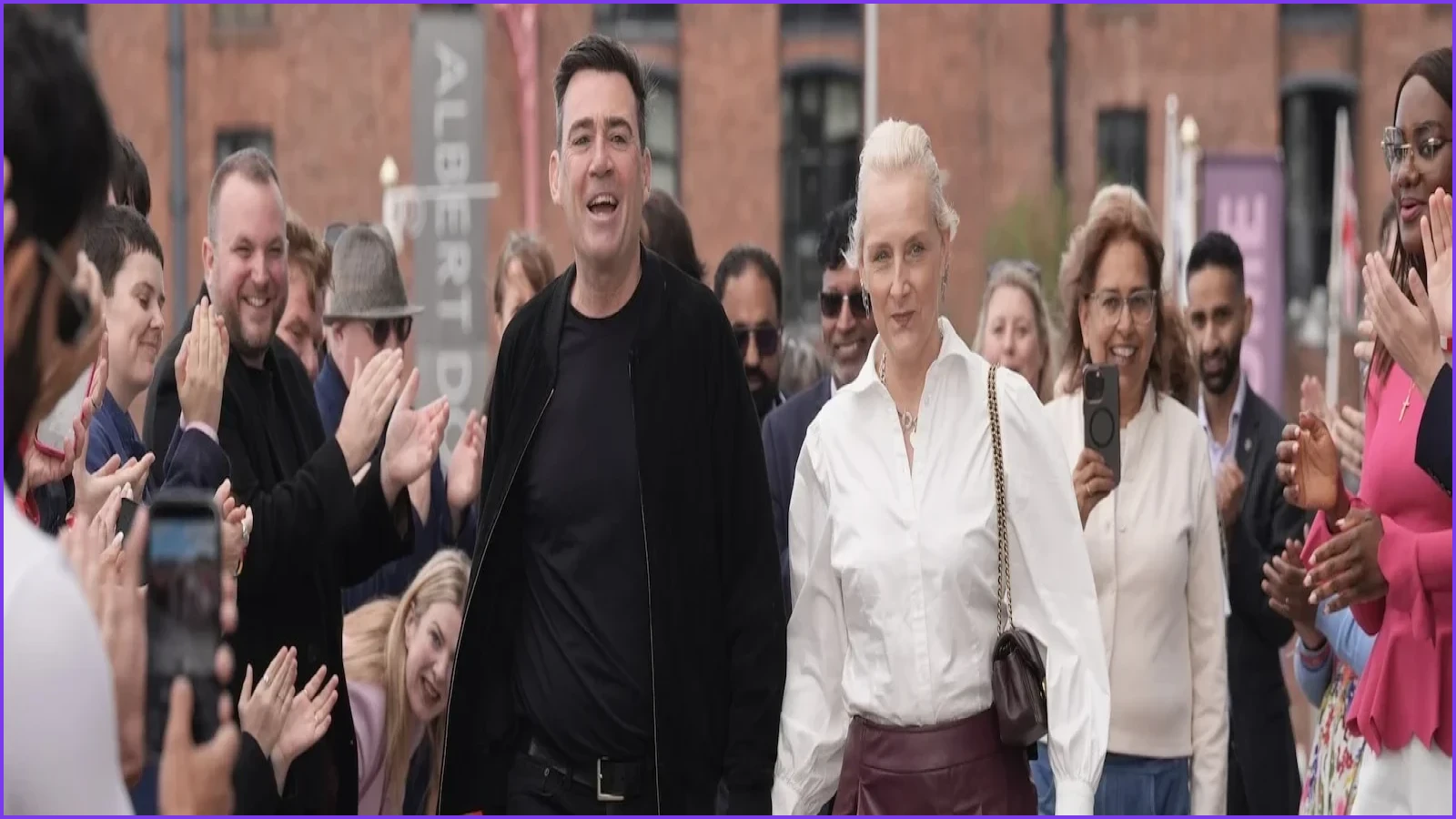
British Prime Minister Andy Burnham has been in office for two months, and for the time being, his party is not demanding his resignation. In the current political climate, that is considered a significant accomplishment. The governing Labour Party is set to open its annual conference on Sunday beside the River Mersey in Liverpool, where Burnham intends to turn the page on a decade of economic and political turmoil. As the seventh prime minister since the 2016 vote to leave the European Union, Burnham plans to center his keynote speech on Tuesday around the theme that it is time for Britain to have hope again.
Speaking upon his arrival in Liverpool on Saturday, Burnham noted that the country has endured a decade of drift and division since Brexit, and that it is necessary to draw a line under that period. His message is aimed at both the British public and a center-left party that remains hopeful but nervous, as members are ready to embrace his promise of better times but are simultaneously worried about the economic damage rippling out from conflict in the Middle East. University of Manchester political science professor Rob Ford observed that Burnham faces the difficult task of winning over a skeptical electorate that is eager for change, all while operating within the constraints of a very difficult economic and fiscal situation. Ford summarized the challenge by asking how a leader can serve people a bowl of cold porridge and convince them it is a pepperoni pizza.
Political conferences in Britain, held throughout September and October, serve as a mix of policy forums, social gatherings, and pep rallies that set the agenda for the year. Last year’s Labour gathering was defined by gloom, as members despaired over the deep unpopularity of then-Prime Minister Keir Starmer, just over a year after he won power in a landslide. The party also faced the seemingly unstoppable rise of the anti-immigration opposition party Reform UK. These tensions reached a breaking point months later when a panicky party forced Starmer’s resignation, leading to his replacement by Burnham in July.
Currently, Labour is experiencing a so-called “Burnham bounce,” fueled by the new leader’s upbeat rhetoric and modest actions to put money in voters' pockets, such as capping bus fares and cutting taxes on electricity bills. Meanwhile, Reform UK is dealing with its own parliamentary and police investigations into its finances, even though it recently received 72 million pounds ($95 million) from two cryptocurrency billionaires. Burnham has already outlined several priorities, including the devolution of power to local leaders to generate good growth in every postcode. He has also pledged to reform Britain’s privatized utilities, specifically targeting the expensive, leaky, and polluting water network.
While the party remains relatively united behind him, Burnham faces divisive decisions, such as whether to approve new oil drilling in the North Sea—a move backed by trade unions but opposed by environmentalists. He also faces pushback regarding plans, agreed upon under Starmer, to make it more difficult for immigrants to settle permanently in Britain. Although Labour’s revival has sparked speculation about a snap election, Burnham has denied he is considering one. He told broadcaster ITV on Friday that he can knock all the speculation on an early election dead.
Despite the upbeat tone, economic pain is on the horizon. Treasury chief John Healey is scheduled to deliver the government’s first budget on October 28, with rising energy prices tightening the cost-of-living squeeze. Like many other nations, Britain must also find funds to increase defense spending to counter threats from Russia, meaning tax increases or spending cuts—or both—could be on the cards. While Burnham has pledged to seek closer ties with the European Union to provide an economic boost, the exact nature of this relationship remains unclear. Under Starmer, Labour was elected in 2024 on a promise not to seek to rejoin the EU or enter its single market for goods, services, and employment. While some party members, including former Prime Minister Tony Blair, have suggested that the U.K. and EU should start negotiations where everything is on the table, Burnham has stated that such a discussion is for another time.
Progress toward closer ties has been slow, with an EU-U.K. reset summit initially planned for July slipping to at least November due to disagreements over the bloc’s “made in Europe” rules, which the U.K. argues will harm British producers. Professor Ford noted that unlike Starmer, who quickly squandered public goodwill, Burnham has maintained his reputation as an optimist and an effective communicator. However, Ford warned that the prime minister’s sternest test is still ahead. As the bills continue to land on the doormat, Burnham will have to be the prime minister who can sell the average voter on the idea that while they are looking at a bowl of cold porridge, it will eventually get better.