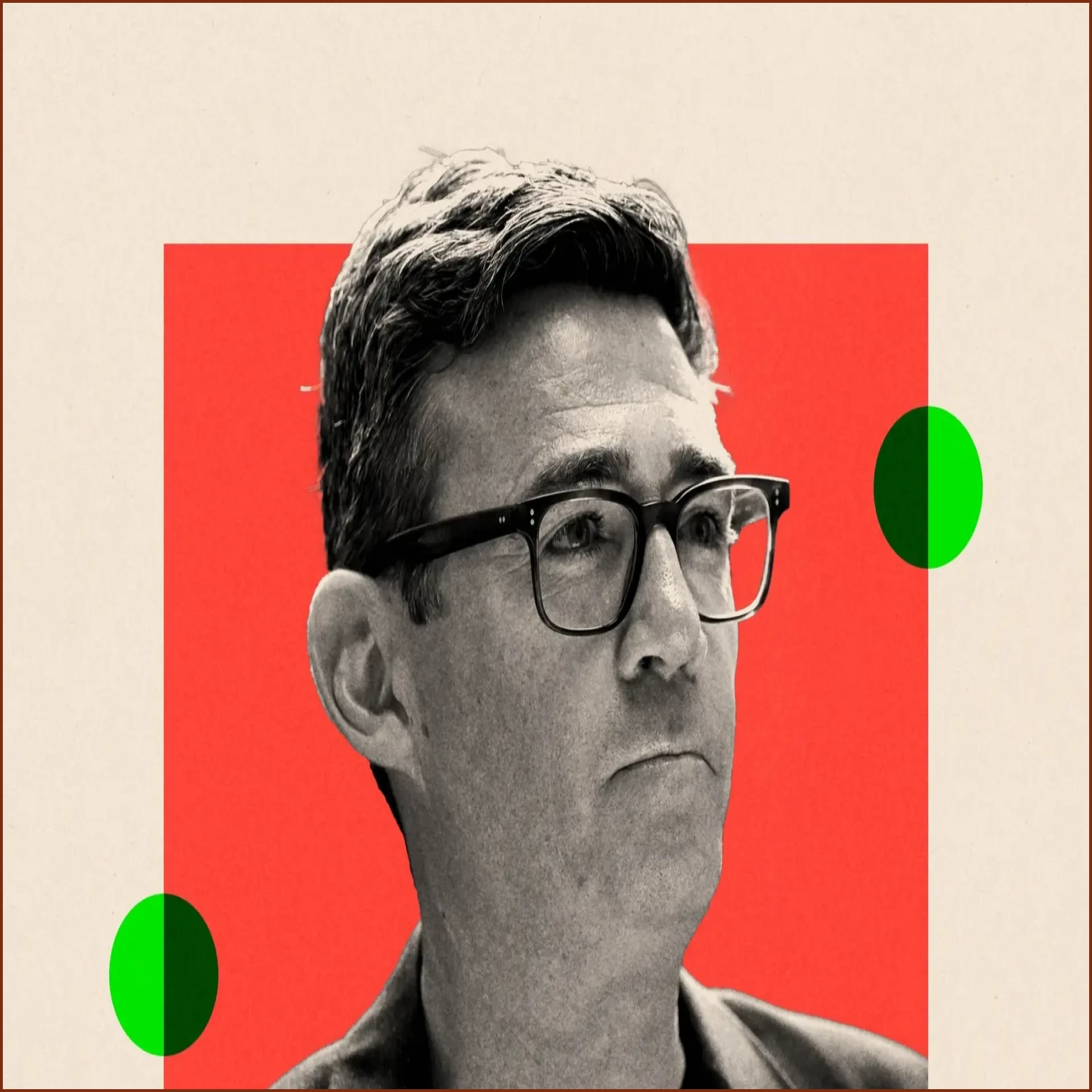
On Monday, Andy Burnham is set to walk through the doors of 10 Downing Street as the 59th Prime Minister of the United Kingdom. The 56-year-old's ascent to the nation's highest office follows a dramatic shadow revolt that successfully ousted Sir Keir Starmer, leaving the Labour Party in a state of hopeful but anxious transition. To understand the man taking the reins of power, conversations with more than 20 individuals who have worked alongside him over several decades—including old friends, political rivals, and both current and former cabinet ministers—reveal a complex figure. He is a leader defined by starkly contrasting labels: the well-liked "King of the North," a ruthless political plotter, an Everton season ticket holder who wants to sit in the stands even while running the country, a poetry lover, a Cambridge graduate, and a "centrist dad" who is not afraid to show off his dance moves.
At a recent Labour Party event celebrating his takeover, Burnham was seen enthusiastically dancing to "True Faith" by New Order, the very track he selected for the occasion. Yet, beneath this affable, "Mr. Nice Guy" exterior lies a politician who insiders warn is fully prepared to wield power with absolute determination. While many of his colleagues remain furious over the coup that unseated Starmer, they still describe Burnham as a decent and pleasant person. However, the critical question hanging over his upcoming premiership is whether his amiable personality will be enough to navigate a brutal and highly volatile political landscape, lift Labour's flagging morale, and address the deep-seated crises facing the country. As one old friend candidly observed, "He is a lovely bloke, but I just don't know if he is up to it – that is the honest question."
To govern effectively, Burnham appears ready to adopt a legendary management style from outside the political sphere. Sources reveal that former Manchester United manager Sir Alex Ferguson once ran into Burnham and initiated a conversation about political leadership. Ferguson questioned the historic, bitter briefing wars between Tony Blair and Gordon Brown, suggesting that Blair should have dragged Brown into a room and told him he was either on board or could "sod off"—using a much ruder phrase in reality. A close ally of Burnham indicated that the new administration might need to employ this famous "Ferguson hairdryer" treatment, noting, "We might need the Ferguson hairdryer – this is our moment and we might have to tell people, if you're not with me, well bye, and thanks for your time."
Another colleague emphasized that Burnham is determined to establish a singular direction for the new government, asserting that he "will be all over every one and everything and there will only be room for his agenda." Early signs of this uncompromising approach are already emerging. Burnham's team appears poised to permit new oil and gas drilling in the North Sea, a decision that directly contradicts the stance of Energy Secretary Ed Miliband. Miliband was one of the key cabinet figures who facilitated Burnham's rise by telling Starmer that his time was up. Commenting on this policy clash, an insider noted, "Burnham is ruthless in every way – Ed helped lever him in – and the first keynote policy is a slap in the face – he looks cuddly to the public but he is a total hammer."
Despite the celebratory atmosphere at recent party gatherings, deep skepticism persists within Labour ranks regarding Burnham's depth and consistency. His political journey began decades ago in Westminster. After a brief stint as a journalist writing for trade publications, including one called Tank World, he entered Parliament as a researcher for former minister Tessa Jowell. He subsequently won a seat as an MP and climbed the ministerial ladder, entering the cabinet in 2007 as Chief Secretary to the Treasury. An old friend from that era recalled the excitement of Labour's peak years, saying, "we were northern hicks who bizarrely found ourselves in the crazy Westminster world – it was a heady time."
During his early years in government, some colleagues viewed Burnham as lacking intellectual weight, describing him as someone with plenty of talk but little substance. Alistair Darling, who served as Chancellor of the Exchequer during the global financial crisis, once affectionately but frustratingly described Burnham as being "like a lorry on ice" because his political thinking tended to swerve around. An ally acknowledged this trait, admitting, "He has that strong sense of self – but it does waver sometimes." A current cabinet minister also expressed concern that Burnham might wobble when confronted with severe pressure.
However, accusations of "flip-flopping" draw sharp rebuffs from his defenders. One source argued that the label is unfair, explaining, "Flip-flop Burnham did my head in, it wasn't flip flopping, when things were changing from five years earlier, he had the courage to change." Many observers believe the real transformation occurred during his tenure in Manchester, drawing a sharp contrast between the Westminster politician of the past and "Burnham 2.0" in the North West of England.
Leaving Westminster after two unsuccessful bids for the Labour leadership was a massive gamble for a career politician with unfinished business, but many close to him view it as a liberating turning point. A cabinet minister explained, "Whether people believe it or tease him about it, it's true that leaving being an MP to go to Manchester meant he could be himself – people forget the New Labour world where there was such conformity." As the Mayor of Greater Manchester, armed with substantial devolved powers over transport, health, skills, and education, Burnham built upon the foundations laid by previous local leaders to foster a genuine sense of regional progress.
An ally praised his collaborative leadership style in Manchester, describing him as a "brilliant leader of teams, and that included Conservative and Lib Dem council leaders." They suggested he could replicate this non-factional, non-tribal approach in national government, adding, "He can do that in government with a cabinet of all the talents. He is not factional in the party, and he wants to work cross party with the others too. He is just not tribal." Another ally reiterated that Burnham genuinely desires a broad, inclusive approach within the party, stating, "He means it when he wants a different approach in the party – he doesn't want a narrow clique."
This non-factional branding has been a long-term strategy for Burnham, though it has not always landed perfectly. During his first leadership campaign in 2010, he told an audience in Northern Ireland, "I am not a factional politician. I was loyal to Tony Blair. I was loyal to Gordon Brown. I am a loyalist." A member of the crowd dryly piped up, "you might want to rethink that line over here."
Now, Burnham inherits a deeply fractured and contentious party, and the challenge of uniting it is formidable. While the current mood is optimistic—with one senior figure comparing it to the hopeful atmosphere of a family wedding, saying it "feels like a family wedding but it depends what happens after. Andy can't just give the love to everyone"—insiders warn that the goodwill will quickly evaporate if Burnham cannot deliver. Another figure warned, "MPs have to be committed to this and keep their eyes on their seats not their egos." The electoral threat posed by Reform UK looms large, and allies hope that reminding the party of this external challenge will help keep internal factions aligned.
Regarding his leadership style, a supporter explained, "it won't be you have to be an Andy Burnham clone – or an Andy supporter, but what he will expect is that even if you do have different views, you have to get behind the leader of the team." Yet, doubts remain about his specific policy plans. One cabinet minister remarked, "replete with political and relationship skills. But on his political project? We're still learning." Another minister noted, "You can't say with any certainty what kind of politics he is going to pursue," while a party insider went further, claiming his team has "no clue" what they plan to do across various government departments.
Burnham had originally hoped to take office in September, which would have provided his team with crucial preparation time. Now, he must transition immediately. While he is a highly experienced, media-savvy leader who thrives on direct human contact, none of these traits guarantee success in managing a struggling post-Brexit economy or satisfying an impatient public. A former minister pointed out the vast difference in scale and pace between mayoral decisions and the relentless demands placed on a prime minister, stating, "as a mayor and cabinet minister Andy is used to taking decisions, the difference is the scale, variety and above all else the pace at which they come at a prime minister." Another insider questioned whether Burnham can find the extra gears needed to transition from regional politics, asking, "We just don't yet know if he can find more gears to transcend mayoral politics, take on a spluttering, post-Brexit economy and turn it into a global competitor able to fund the kind of social programmes Labour voters expect."
The fiscal reality will be incredibly challenging, with a cabinet minister predicting, "what he'll find hard is the fiscal situation – there are a set of winners and losers with every decision, and people's expectations are so high." The public's patience is thin, with his team estimating they have a narrow window of "six, maybe eight months where people might take another look." One minister even warned of the potential for another leadership challenge before the next general election, noting, "it's a distinct possiblity there'll be another leader before the next general election." They added, "We've set the bar so low, removing Starmer over bad poll ratings, now Andy's set expectations too high for himself – that's his strategy – he has always made a grand entrance."
As the removal vans prepare to arrive at Downing Street, Burnham's entry offers Labour what one minister called a "second chance to make a first impression." Whether his family dog, Axel, will join him to rival Larry the cat remains to be seen, but Burnham is finally getting the opportunity he has sought for decades.
Flip-flopper – a charge chucked at him by political critics.
To understand who he is, I've spoken to more than 20 people who have worked with him over the last few decades – old friends and rivals, as well as current and former cabinet ministers.