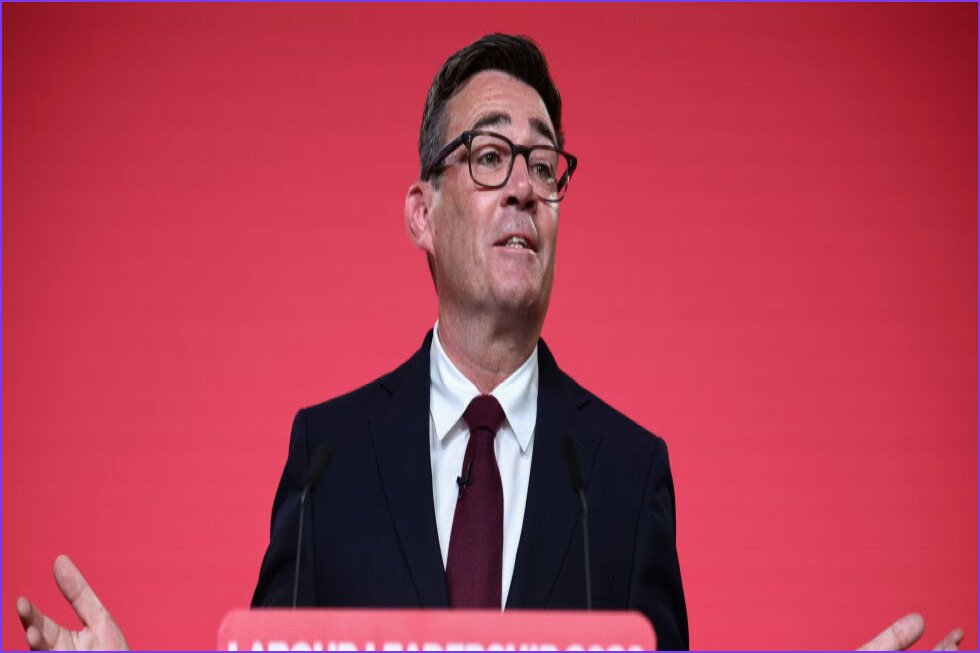
Andy Burnham officially took office on Monday as the new prime minister of the United Kingdom, marking a significant transition in British leadership. His appointment makes him the seventh individual to serve as prime minister within the last decade. The handover occurred following the departure of Keir Starmer, who resigned from his position after only two years in office. Starmer was forced to step down by his own party following a series of political missteps that eroded his standing with both lawmakers and the public. He left office on Monday, bidding farewell outside 10 Downing Street alongside his wife, Victoria, stating that he was confident Britain is now stronger and fairer than it was two years ago.
The formal transition was completed on Monday, July 20, 2026, when King Charles III held an audience at Buckingham Palace and invited the Labour Party leader to form a new government. Shortly after, Burnham addressed the public and staff outside 10 Downing Street, pledging a ten-year strategy aimed at restoring political stability and revitalizing the British economy. He acknowledged the challenges of the political climate, noting that he is stepping into a role that has seen high turnover in recent years. Burnham stated that this is a moment for reflection and new resolution, adding that his generation of politicians must rise to the challenge to make politics work better for the country.
Addressing the press and staff, Burnham expressed his intention to ease the cost-of-living crisis, decentralize political authority, revitalize industry, and end street sleeping by homeless people. He described his agenda as a "circuit breaker" for a system he believes has taken wrong turns since the 1980s, particularly regarding the privatization of utilities and the erosion of local governance. "We will take power out of here and carry it into every postcode in the land so that they can do more and in doing more, build a new economy where we put life’s essentials back under stronger public control to make them affordable to you again," Burnham stated.
As he began his tenure, one of Burnham's primary tasks was to assemble his Cabinet. In a surprising move, he appointed John Healey as the chancellor of the exchequer. Healey, the former defense secretary who recently resigned from his post over funding disputes, takes over from Rachel Reeves, who was the architect of much of the economic agenda of the previous administration. Other notable shifts included Energy Secretary Ed Miliband moving to the role of foreign secretary, replacing Yvette Cooper, who was appointed as health secretary. Shabana Mahmood will continue in her role as home secretary. The full Cabinet is scheduled to meet on Tuesday.
Burnham, formerly the mayor of Greater Manchester, secured his leadership position after being the sole candidate in the contest to replace Starmer, receiving nominations from 379 of the 403 Labour lawmakers in the House of Commons. He faces a daunting list of inherited challenges, including a sluggish economy, overstretched public services, and complex foreign policy issues regarding the wars in Ukraine and the Middle East. Additionally, he has already initiated contact with U.S. President Donald Trump, confirming his commitment to defense and security in a phone conversation held on Monday afternoon.
Regarding his economic approach, Burnham emphasized that he has always taken a prudent approach and will not take any economic risks. He plans to unveil specific measures to provide immediate relief for the cost-of-living crisis starting tomorrow, followed by a broader ten-year plan later this year. Political analysts, such as Tim Bale of Queen Mary University of London, observed that the Labour Party turned to Burnham to provide a renewed sense of purpose and hope. Bale noted that Burnham intends to mark a significant break from both his predecessor and the direction of the country over the last four decades, though the specific details of his concrete policies remain to be seen.
In the rapid-fire world of British political transitions, Burnham entered Downing Street only minutes after Starmer left. While Starmer led Labour to a landslide victory in 2024, he was soon defeated by the challenges of governing. Britain’s parliamentary democracy allows governing parties to change leaders without the need for a general election. The next national poll does not have to be held until 2029, though Burnham retains the option to call one sooner. Commuters in central London gave a mixed but broadly open-minded response to the transition, with several acknowledging they would give the new leader a chance despite knowing little of his platform. Burnham previously pledged to make politics less toxic and to bring back the hope that he believes the country has been missing.