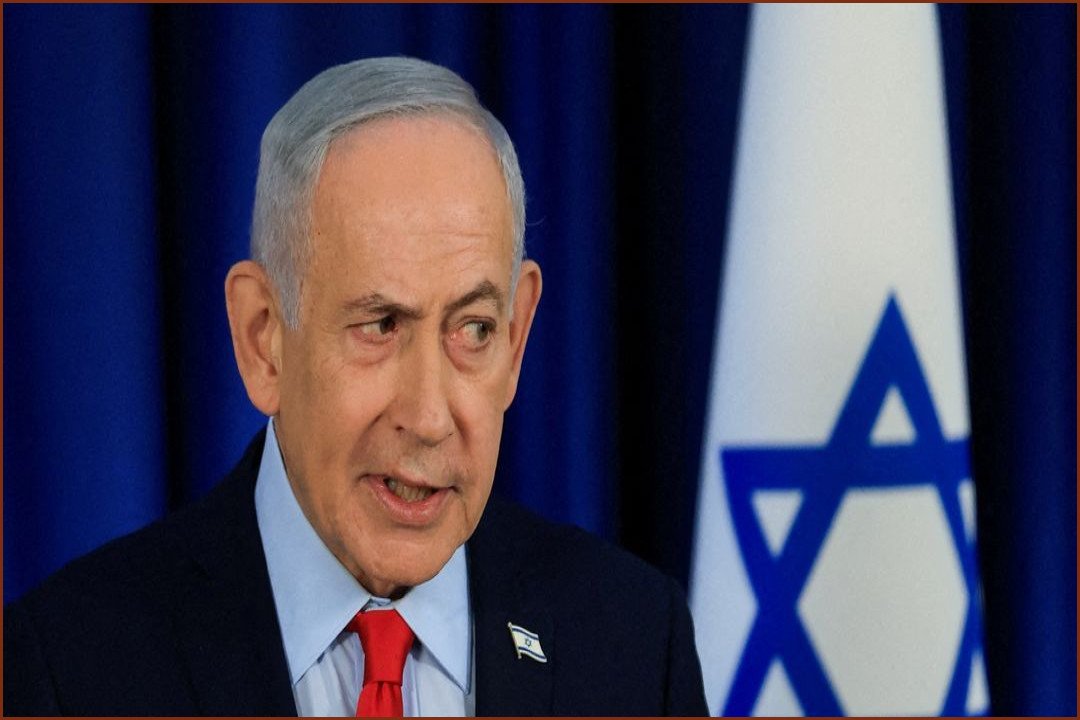
For decades, Israeli Prime Minister Benjamin Netanyahu has cultivated a political identity as a security hawk, a muscular image that cemented his status as the country's longest-serving prime minister. However, as Israel prepares for elections in October, a new survey conducted by the Midgam Institute for Channel 12 suggests that his re-election is in serious doubt. The polling data indicates that 43 percent of Israelis would prefer to see Gadi Eisenkot, the former chief of the Israeli army, as prime minister, while only 34 percent favor Netanyahu.
The survey projects that Eisenkot’s new political party, Yashar, could win 23 seats, narrowly outpacing Netanyahu’s Likud party, which is projected to secure 22 seats if elections were held today. In the broader Knesset, the anti-Netanyahu coalition is expected to win 59 seats, falling just short of the 61-seat outright majority, while the pro-Netanyahu bloc is projected to hold 51 seats. While these figures may appear modest, analysts argue they signal a profound erosion of the security brand that has defined Netanyahu’s career.
Arik Rudnitzky of Tel Aviv University’s Moshe Dayan Center attributes this decline to more than two and a half years of a genocidal campaign in Gaza, alongside intermittent conflicts with Lebanon and Iran. Rudnitzky notes that Netanyahu spent years positioning himself as “Mr. Security,” but this image suffered a severe blow following the events of October 7, 2023. A critical factor in this decline, according to Rudnitzky, is that Netanyahu has never accepted personal responsibility for the failures that led to the attack.
Tugce Ersoy Ceylan, an associate professor at Izmir Katip Celebi University, agrees that Netanyahu’s political brand was fundamentally fractured on October 7, 2023. She argues that his long-standing approach of managing the Palestinian conflict rather than resolving it, combined with a reliance on technological deterrence, collapsed in a single day. Since then, the Israeli premier has attempted to rebuild his credibility through a series of multi-front, never-ending wars. Tel Aviv has attacked six countries since October 7, 2023, including Palestine, Iran, Lebanon, Qatar, Syria, and Yemen.
Ceylan describes this strategy as an attempt to reframe the narrative, shifting from the leader who allowed the October 7 attack to happen to the only leader strong enough to stand up to Iran. While Rudnitzky acknowledges that some Israelis credit Netanyahu for the war with Iran, the prime minister continues to face fierce criticism regarding the northern border. Hezbollah has managed to rebuild some of its capabilities there, continuing to pose a significant security challenge. Furthermore, the human costs of these overlapping wars have become impossible for ordinary Israelis to ignore.
Prolonged rocket and missile fire has tested the home front in unprecedented ways. Rudnitzky points to official findings, such as the state comptroller’s January 2026 report, which revealed that many communities—particularly in the geographic and social periphery—still lack adequate shelters and emergency infrastructure. The report noted that as many as one-third of Israel’s residents are not adequately protected against missile attacks. Rudnitzky emphasizes that security is not merely about military combat, but also about ensuring the civilian population is equipped to endure prolonged periods of uncertainty and insecurity.
The economic and personal toll of these wars has also shattered the illusion of normal life for the middle class, with high defense spending, repeated reservist call-ups, and inflation taking a heavy toll. Ceylan highlights that the hostage crisis has been particularly damaging, with many Israelis viewing Netanyahu’s refusal to prioritize the return of hostages as a betrayal. She notes that Netanyahu is seen as personally accountable for the deaths of the hostages, a sentiment that has alienated even moderate right-wing and centrist voters. His dependence on far-right partners, such as Minister of National Security Itamar Ben-Gvir, has further narrowed his appeal.
Despite these challenges, security remains a central issue on the national agenda, though the definition of the term has expanded. Voters are now demanding accountability, competent leadership, transparency, and a willingness to learn from past failures. While public trust in the military has remained relatively stable because commanders accepted responsibility for the October 7 failures, the political leadership is widely viewed as disconnected from these expectations. Ceylan observes that Netanyahu’s attempts to shift blame onto the armed forces and intelligence services have turned the military into a political punching bag. Ultimately, she suggests the upcoming election will be a referendum on competence, personal integrity, and institutional trust rather than a simple debate between war and peace.