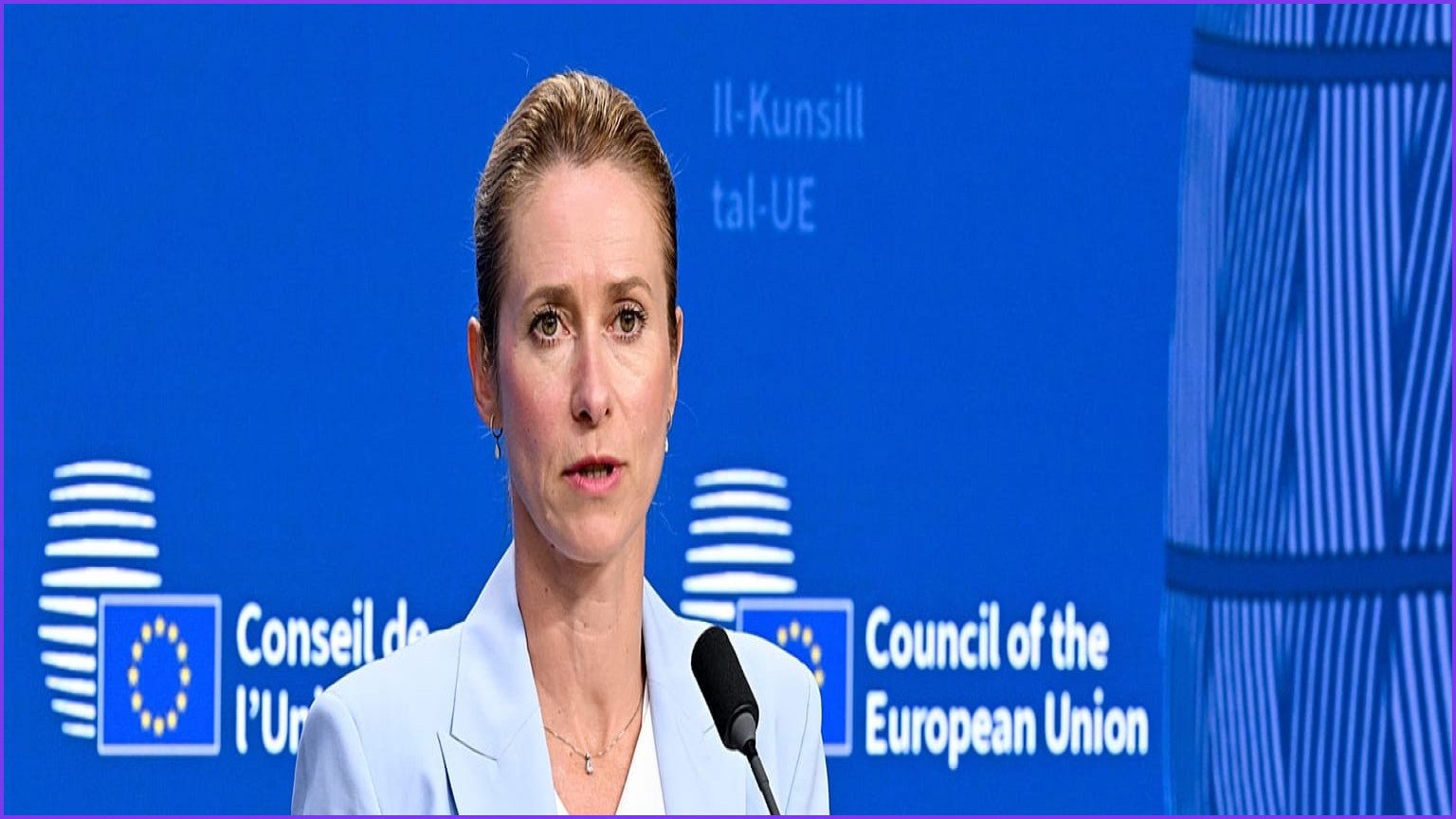
A potential full ban on European Union imports of goods produced in Israeli settlements has garnered the most significant support among EU foreign ministers, according to the bloc's foreign policy chief, Kaja Kallas. The proposal follows an options paper shared by the European Commission last week, which outlined various strategies to restrict trade with these territories, with a total ban being the most stringent measure under consideration.
Speaking to reporters in Brussels, Kallas noted that banning trade with illegal settlements emerged as the preferred option during Monday's discussions. Under international law and EU policy, Israeli settlements in the occupied Palestinian territories are deemed illegal. To move forward, EU ambassadors are tasked with developing the specifics of the Commission's initial proposal. Kallas suggested that an extraordinary meeting of foreign ministers might be necessary to ensure progress, as the next formal ministerial gathering is not scheduled until October. Several diplomats have expressed concern that the timing of the October meeting, which falls shortly before Israel's upcoming legislative elections, could hinder any meaningful action.
Italy’s Foreign Minister, Antonio Tajani, indicated earlier on Monday that no measures should be implemented before the Israeli ballot, a stance viewed as pivotal for the proposal's potential success. Meanwhile, a majority of member states supported classifying these restrictions as a trade policy rather than a foreign policy tool. This distinction is critical because it would bypass the requirement for unanimous approval from all EU governments. Instead, the move would require a qualified majority—the backing of 15 member states representing 65% of the EU population—a threshold that many supporters believe is achievable.
Countries advocating for the trade-based approach, including Belgium, France, Ireland, Luxembourg, the Netherlands, Spain, and Sweden, have challenged the European Commission's previous assertion that such measures must be treated as foreign policy. Dutch Foreign Minister Tom Berendsen emphasized that because these are trade measures, they should be actionable through a qualified majority. Some ministers expressed frustration regarding the Commission's handling of the proposal, citing a lack of detail and unnecessary delays. Belgian Foreign Minister Maxime Prévot remarked that the proposal seemed more like a stalling tactic than a genuine effort to advance. Similarly, Spanish Foreign Minister José Manuel Albares stated that debating the issue endlessly is unnecessary, arguing that a trade ban would simply represent an application of international law.
While the EU already adheres to a policy of "differentiation," which excludes settlement-manufactured goods from the preferential tariffs granted to Israeli products under the Association Agreement, political pressure to enact a full ban has intensified due to the deteriorating conditions in the occupied West Bank. This momentum is further supported by a 2024 International Court of Justice advisory opinion, which highlighted the illegality of the settlements and the obligation of states to avoid economic dealings that could entrench that situation. Although critics have accused European Commission President Ursula von der Leyen of obstructing a decision by insisting on unanimity, Kallas cited an oral opinion from the Council of the EU’s legal services, which suggests that a qualified majority is sufficient. Kallas concluded that while a unified position remains elusive, the legal pathway exists if member states demonstrate the political will to proceed.