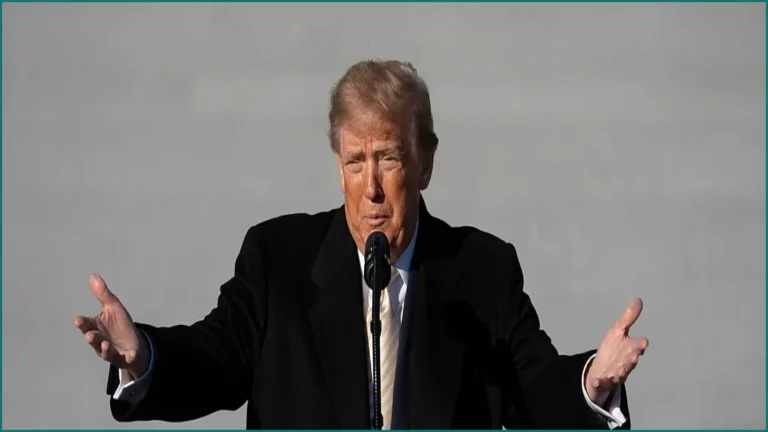
The global race for artificial intelligence supremacy is frequently framed as a contrast between two distinct models: China’s top-down state planning and the United States’ bottom-up market economy. However, the recent turbulence at Nvidia—marked by the sudden ousting of co-founder and long-term CEO Jensen Huang, followed by his rapid reinstatement within a month—reveals that this distinction is often superficial. While China relies on government coordination, the U.S. AI sector has been propelled by a singular, audacious entrepreneur: Huang.
Developing advanced AI requires immense, long-term coordination across computing infrastructure, energy, and research labs. In the U.S., the private sector has essentially acted as an industrial planner, with Huang serving as the primary architect of this ecosystem. His influence is most visible in the semiconductor supply chain. Chip manufacturers are notoriously risk-averse, fearing the “bullwhip effect” where minor shifts in demand cause massive volatility in upstream orders. To mitigate this, Huang spent years building deep personal relationships with executives at major suppliers like TSMC and SK Group, often visiting them in Taiwan and South Korea to foster mutual trust.
This trust was foundational; suppliers believed Nvidia would generate sufficient demand to justify their capital-intensive expansions, while customers trusted Nvidia to provide consistent supply. As Huang noted, the relationship between Nvidia and TSMC operates without a formal legal contract, relying instead on shared confidence. Beyond supply, Huang actively cultivated demand. In 2016, he personally delivered the first DGX-1 AI supercomputer to OpenAI. Today, Nvidia’s Inception Program continues this trend, offering startups technical support, cloud credits, and investor access.
Financial support has also been a hallmark of Huang’s strategy. Nvidia has provided significant financing to customers, including a backstop for CoreWeave and conditional credit guarantees reaching $105 billion for data-center developments involving OpenAI and SB Energy in Ohio. While some critics label these arrangements as circular financing that could fuel an investment bubble, they have served to remove financing bottlenecks that might otherwise stall AI progress.
Huang’s leadership has been characterized by a rare long-term vision, even within the constraints of a public company. His introduction of the CUDA parallel-computing platform in 2006 was initially viewed as a high-risk gamble. It required years of investment before its commercial value was realized, but it eventually became a vital competitive moat. Currently, Huang is applying this same foresight to physical AI, investing heavily in the Omniverse platform and Isaac robotics tools. Given his role as the architect of U.S. AI industrial policy, his return to the helm was seen as essential for maintaining the nation’s strategic trajectory in innovation. You have reached the limit of 3 free articles this month.
As our recent research shows, China’s government has borrowed the playbook of commercial platforms to organize its innovation ecosystem. Rather than simply picking winners, it encourages broad entry into the ecosystem and exerts control through shared interfaces, scaling the innovation ecosystem before capturing its gains. This “platform state” model enables the Chinese state to draw on considerable entrepreneurial dynamism while retaining the power to steer innovation toward its strategic goals.
Jensen Huang, co-founder and CEO of Nvidia, during a fireside chat in Stanford University’s CS 153 course on April 30, 2026.