A senior Taiwanese official warned Saturday that Canadian Prime Minister Mark Carney risks subjecting his country to the exact economic coercion he has publicly cautioned against by pursuing deeper commercial ties with Beijing, emphasizing that Taiwan has firsthand experience with the severe consequences of financial reliance on China.
Speaking on Saturday at the Halifax International Security Forum in Nova Scotia, Taiwan Deputy Foreign Minister Chen Ming-chi expressed deep concern over Ottawa's recent efforts to mend foreign and commercial relations with Beijing. “We worry. We worry,” Chen said while discussing Canada's diplomatic trajectory.
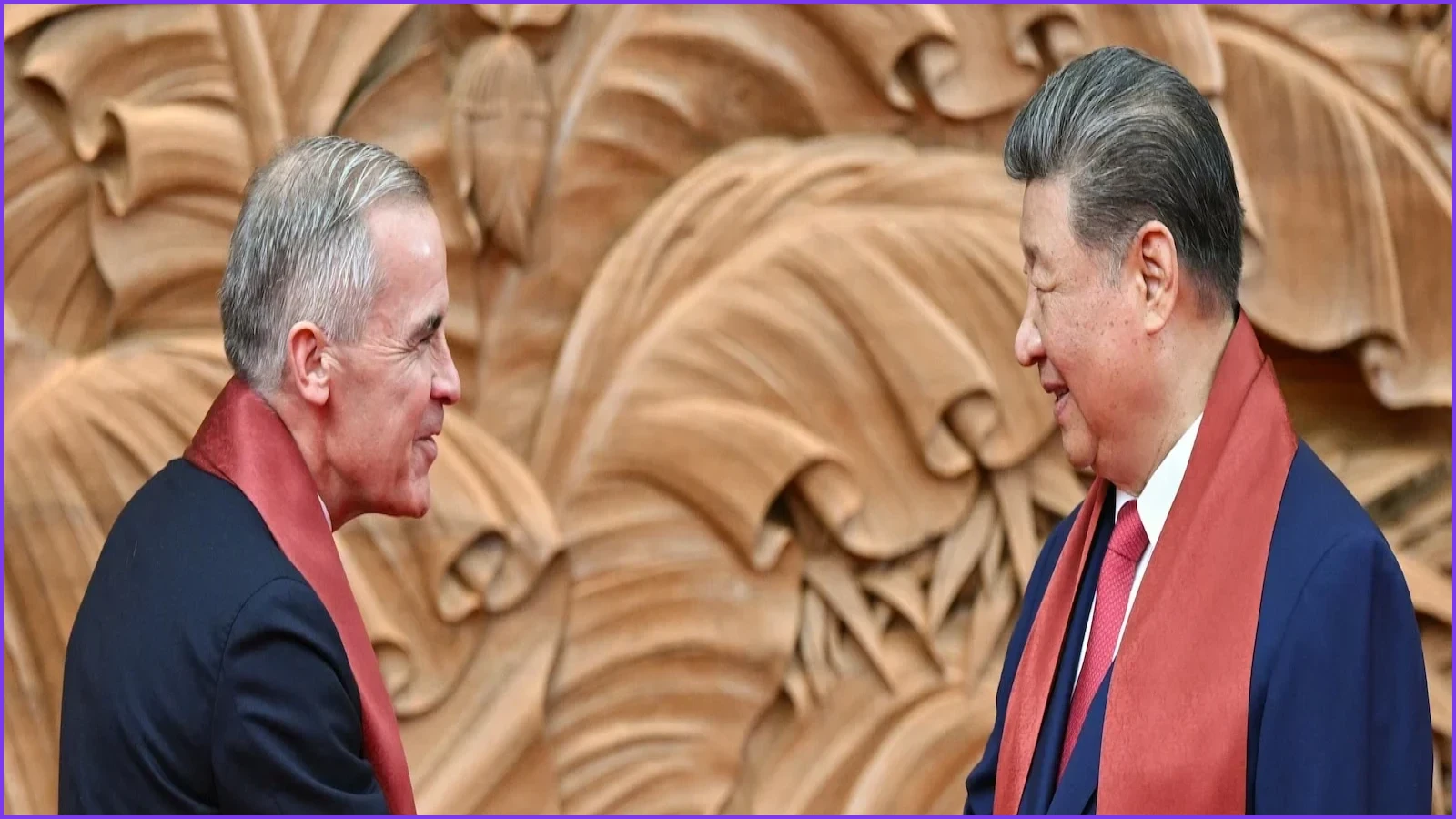
The warning follows Carney's recent trip to Shenzhen, where he met Chinese President Xi Jinping and agreed to additional tariff cuts. The Canadian leader has been working to diversify trade relationships amidst ongoing economic pressure from U.S. President Donald Trump, who has threatened 50% tariffs on Canadian vehicles and auto parts starting Jan. 1. Carney noted that Canada might consider turning to Chinese automakers if negotiations with Washington fail to preserve a viable domestic auto industry.
Chen countered that importing Chinese electric vehicles poses serious risks to Canadian manufacturers and introduces surveillance hazards through connected vehicle technologies, even if the automobiles are assembled inside Canada. He urged Carney to remember Canada's recent history with Beijing, pointing to the cases of former diplomat Michael Kovrig and businessman Michael Spavor.
“You have your own history. You have two Michaels,” Chen noted, referencing the pair whose nearly three-year imprisonment in China sparked widespread accusations of hostage diplomacy. Kovrig and Spavor were detained in 2018 shortly after Canadian authorities arrested Huawei executive Meng Wanzhou on a U.S. extradition warrant. Both men were released in September 2021 on the exact day Meng was permitted to return to China, though Beijing maintained their arrests were not politically motivated.
Carney has previously warned that world powers are increasingly weaponizing economic integration, specifically citing U.S. tariff policies alongside Chinese restrictions on critical minerals, while urging middle powers to broaden their trading partners to mitigate vulnerability. “Who do you want to choose as your partners?” Carney previously asked. He has also argued that Canada's relationship with Beijing differs from the more complex standoff between Washington and China, noting that Canada primarily exports agricultural products, energy, and commodities rather than sensitive technology like advanced semiconductors.
However, Chen explained that Taiwan dramatically curtailed its economic reliance on Beijing after facing direct trade restrictions aimed at extracting political concessions. “They are very good at weaponizing interdependence,” Chen said. “They are very good at leveraging our dependence to reach political goals.”
Chen also criticized Beijing's propaganda efforts surrounding a high-profile photograph from this week's summit in Shenzhen, which pictured Xi seated prominently between Trump and Russian President Vladimir Putin. Chen stated that Beijing used the image to project China as the dominant global leader to both domestic and international audiences, describing the gathering as “more symbolic than substantial” and adding that “they are so good at propaganda.”
Turning to regional security, Chen cautioned that Beijing is escalating military maneuvers around Taiwan despite the potentially devastating costs of an amphibious invasion. He warned that Chinese naval forces may currently be rehearsing procedures for a potential maritime quarantine of the self-governing island.
Despite his sharp warnings regarding Beijing, Chen expressed admiration for Carney's broader diplomatic vision and welcomed the prime minister's commitment to complete a long-delayed bilateral trade cooperation arrangement with Taiwan. “We have a high respect of Prime Minister Carney’s vision. And we want to be part of this vision,” Chen said.