A mathematician at the San Francisco-based artificial intelligence (AI) company Anthropic has announced that its Claude AI software played a crucial role in cracking the Riemann hypothesis, one of mathematics' most significant unsolved problems. The claim has since been verified by independent experts.
Levent Alpöge, a Turkish American mathematician, posted a note on his personal website on Friday, detailing how Claude AI assisted him in developing a solution to the Riemann hypothesis over approximately six weeks. His findings were subsequently confirmed on Saturday afternoon by the Lean Focused Research Organization, which promotes the use of the Lean programming language, and the Mathlib Initiative, a program that works with Lean for mathematical equations.
“We have full confidence that Alpöge’s proof of the Riemann hypothesis is correct, and we congratulate him on this achievement,” the groups jointly announced.
Alpöge linked to computer code, written in the Lean language, which he asserted could verify his findings. He also shared an anthropomorphic reflection on his collaboration with the AI, writing, “Claude and I have had a great time together with such breadth in recent months, but this time Claude far outpaced me near the finish line. No, Claude flew, and danced, and sparkled near that finish line.”
The Riemann hypothesis, named after German mathematician Bernhard Riemann who proposed it in 1859, is a nearly 170-year-old problem. It is one of the seven Millennium prize math problems selected in 2000 by the Clay Mathematics Institute, which offers a $1m reward for each problem solved.
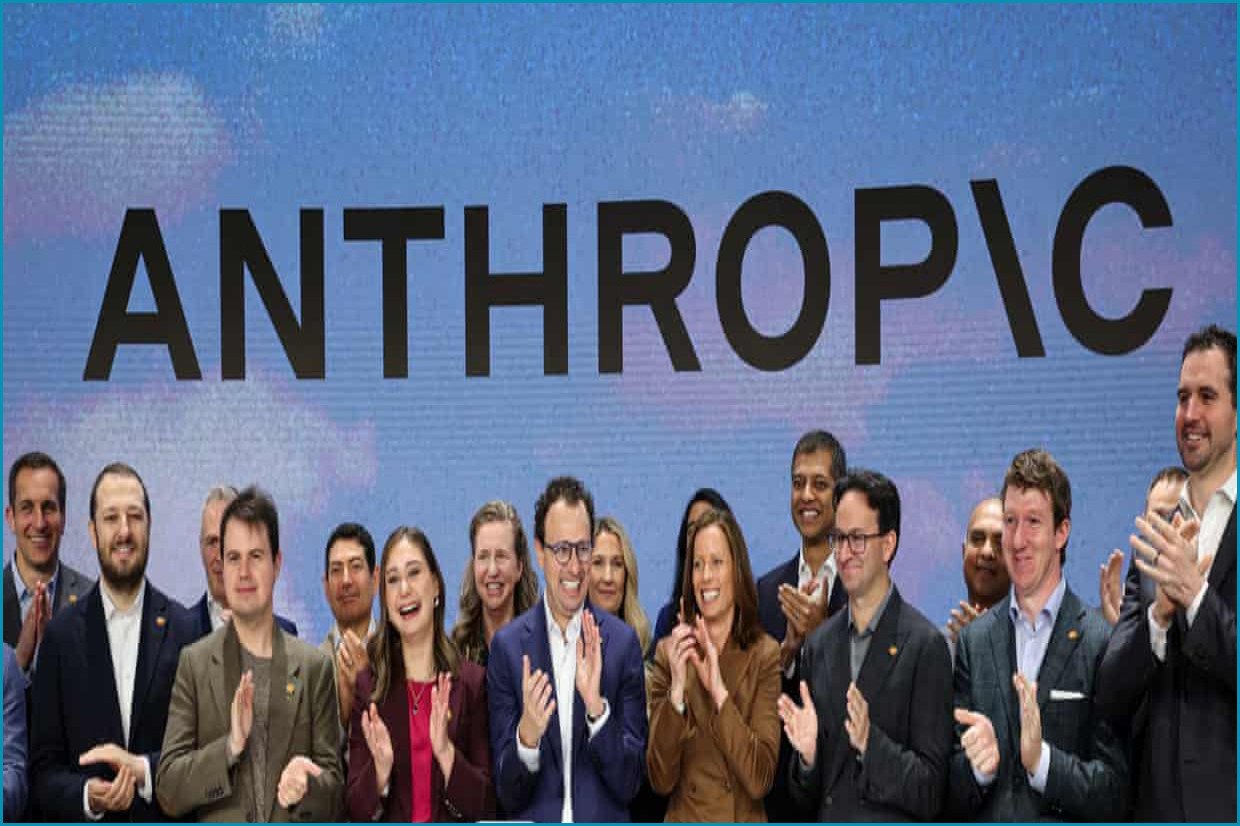
Alpöge acknowledged the unfortunate timing of his announcement, which came just one day after Anthropic went public on the Nasdaq stock market index. He stated, “The precise timing is horrible. If I could have, I’d have finished this all much earlier.”
The successful application of AI to such a complex mathematical challenge marks another significant breakthrough, even as some mathematicians express unease regarding private companies investing millions in AI technology to solve these problems.
This development follows a similar claim in September by OpenAI, an Anthropic competitor, which stated that a non-public version of its AI tools helped solve part of another Millennium prize problem. That solution, however, involved a near-trillion-dollar private company spending $15m to employ 10,000 AI systems, an approach Alpöge criticized. He was working on that separate problem for Anthropic when OpenAI made its announcement.
Alpöge remarked on OpenAI's method, saying, “It seems like immature playground boasting writ large, underpinned by billions of dollars and the potential for significant environmental damage in an age when climate change is probably the biggest challenge we face.”
Separately, on Friday, an independent mathematician in Italy, Alessandro Masullo, released an incomplete proof of the Riemann hypothesis that he had been developing for almost 12 years. Masullo stated he did not use AI, citing a lack of full trust in such systems.