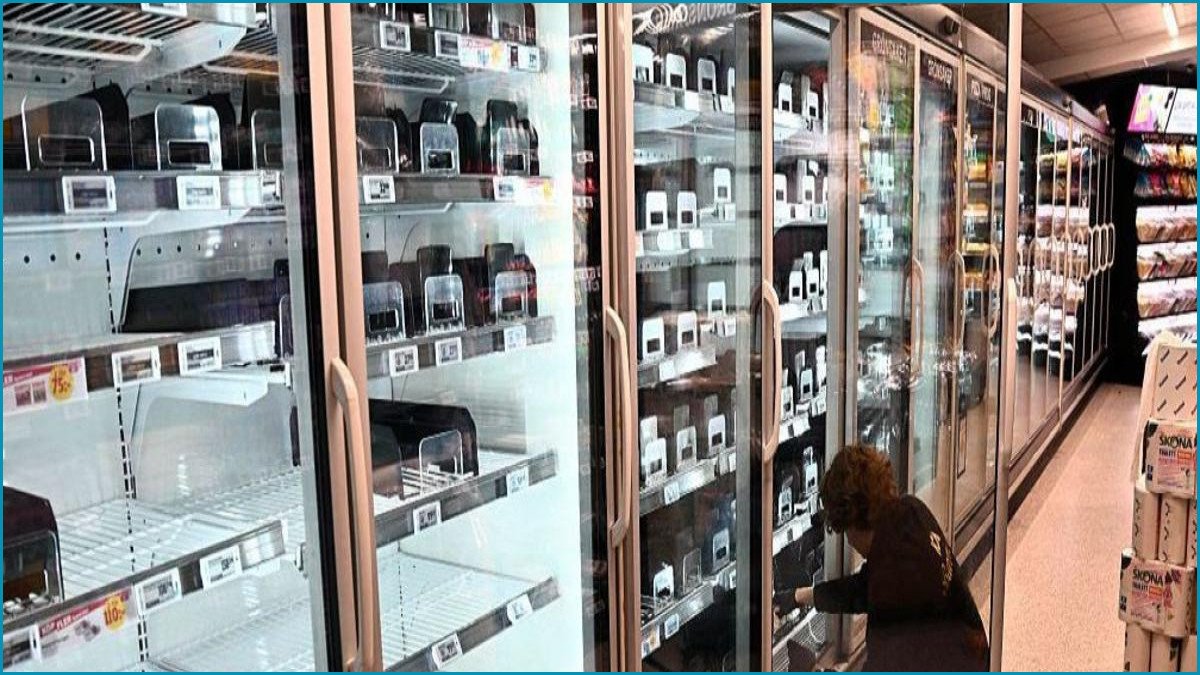
A covert cybersecurity operation has taken place across the United Kingdom to secure tens of thousands of commercial fridges and freezers from potential hacking threats. The nationwide intervention targeted temperature control devices used by major supermarket chains, food distribution warehouses, restaurants, petrol stations, fast-food outlets, sports arenas, hotels, processing plants, and cold storage facilities.
The secretive response was mounted following recent waves of cyber-attacks across mainland Europe that disrupted refrigeration units, causing tonnes of food to spoil at hundreds of stores and resulting in millions of pounds in financial damage. Among the affected nations, Sweden reported a cyber incident where supermarket fridge temperatures were deliberately raised. France attributed one major wave of attacks targeting its supermarkets to Iran, an allegation that officials in Tehran have denied.
While the UK food sector was initially believed to be safe because British refrigeration systems frequently utilize different devices, security researchers discovered a critical vulnerability in late October. The flaw was identified by staff at refrigeration consulting firm Omega Solutions, before being verified and expanded upon by cybersecurity experts at Pen Test Partners.
Had malicious hackers discovered the vulnerability first, experts warn the resulting disruption across the UK could have been far worse than the incidents reported in Europe.
Following the discovery, experts at the National Cyber Security Centre (NCSC), the Department for Environment, Food & Rural Affairs (Defra), and the Food Standards Agency (FSA) launched an urgent campaign to patch the security gaps. Authorities organized industry conference calls and deployed dedicated teams to directly notify at-risk organizations.
To mitigate the danger, thousands of control units managing tens of thousands of cooling devices were disconnected from the public internet. In some instances, connections were severed remotely, while in others, site workers were instructed to physically disconnect internet cables and monitor temperatures manually.
Major UK supermarket chains were forced to divert extensive IT resources toward neutralizing the threat. A worker at one large grocery chain revealed that technical teams took hundreds of control devices offline every single day over the span of a week. The employee, who spoke on the condition of anonymity, described the effort as a race against time to prevent business interruption and massive supply chain disruptions, noting that single warehouses store millions of pounds worth of perishable inventory susceptible to spoilage.
The defensive measures follow three distinct waves of cyber-attacks on refrigeration temperature controllers recorded globally this year. In August, systems at a small number of United States military bases were targeted. On October 11 and 12, hundreds of French supermarkets and food processing sites suffered outages when Danfoss control systems were hit.
Shortly after, on November 1 and 2, dozens of supermarkets across seven European nations were disrupted, with Belgium and Luxembourg sustaining the heaviest impact alongside a small number of blood bank facilities in France.
Attention in the UK focused on temperature controllers manufactured by Resource Data Management (RDM), where each controller can remotely monitor and adjust the temperature of dozens of cooling units. Cybersecurity researchers cautioned that with heightened attention on ubiquitous commercial infrastructure, criminal groups or state-sponsored hackers could have discovered the vulnerability within days.
Ethical hackers noted that gaining physical access to hardware involved in the vulnerability was achievable, as similar control units could be purchased cheaply online on platforms such as eBay.
RDM disputed the critical severity of the reported vulnerabilities and argued that direct comparisons to the breaches in mainland Europe were inaccurate because compromising RDM systems required physical access to hardware. Ged Evans, Chief Executive Officer of RDM, stated that the issue was identified within a test environment that went beyond standard evaluations by including hardware disassembly.
Evans confirmed that RDM acted at pace to address the concerns, deploying initial software patch releases while proactively contacting clients to advise on mitigatory steps. RDM confirmed there has been no indication of malicious activity on its controllers and noted that the company remains in close communication with the NCSC and other regulatory authorities.