The European Union executive has proposed a €45bn (£37.5bn) loan for Ukraine, designed to address a looming cash crisis and bolster its defences amidst Russia’s relentless bombardment. The plan, announced by European Commission President Ursula von der Leyen, aims to provide Kyiv with the funds in 2027.
“We think this is the best way to give Ukraine a strong hand at the negotiating table,” von der Leyen stated, adding that “Ukraine only needs to repay once Russia pays for the damage it has caused in Ukraine.” She voiced confidence that all 27 member states would support the loan, even though four central and eastern European countries had previously ruled themselves out.
Ukrainian President Volodymyr Zelenskyy expressed hope for the swift adoption of the loan, emphasizing his reliance on the support of all EU member states. Writing on X, Zelenskyy said, “Strong support for Ukraine is the best signal to Russia that this war must end.” Last month, Zelenskyy had informed EU leaders that his country faced a €70bn funding gap in 2027, with the EU pledging to cover €45bn and urging other allies to provide the remaining €25bn.
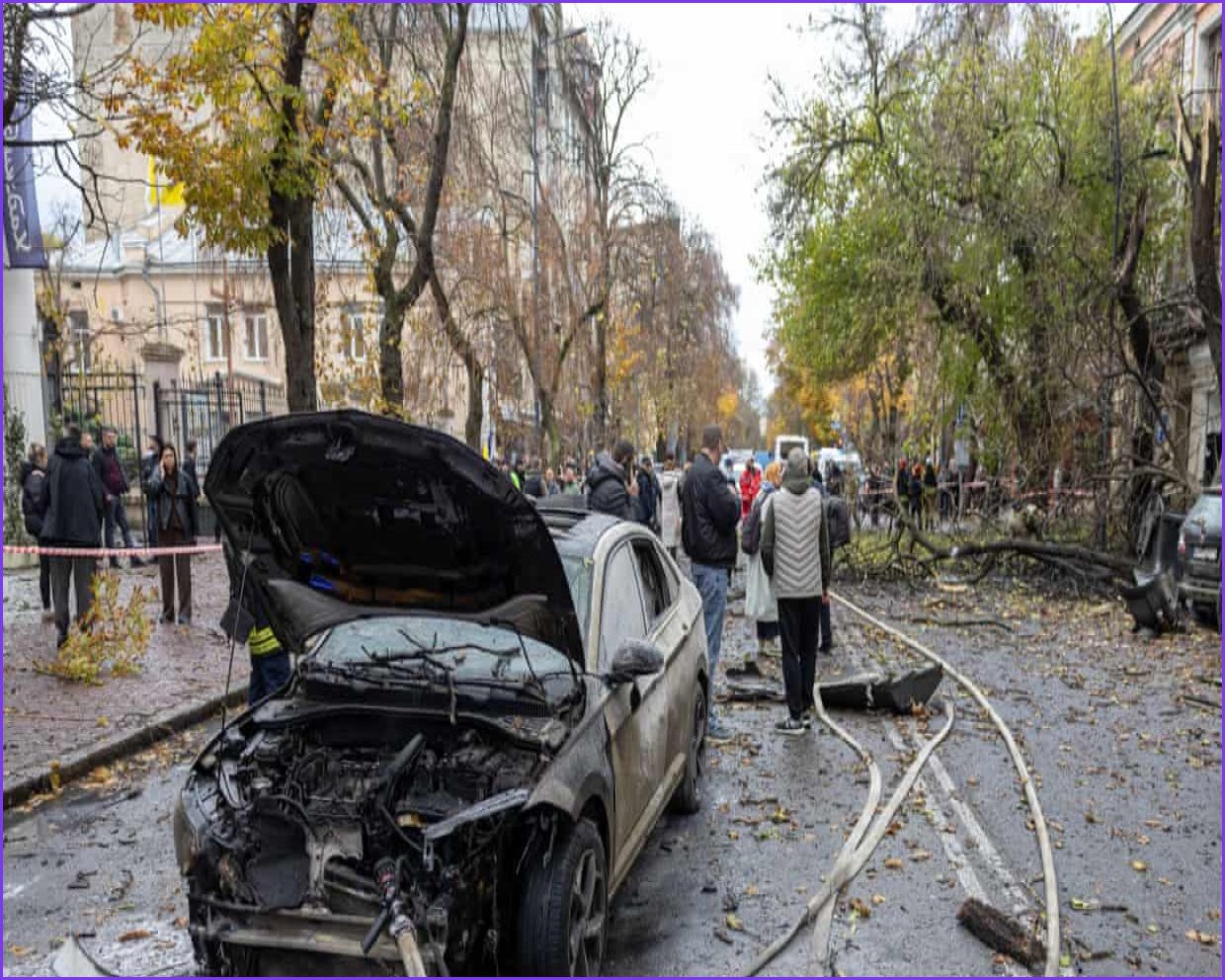
This new proposal follows a €90bn loan agreed by the EU just 11 months ago, which was intended to cover two-thirds of Kyiv’s military and civilian needs for 2026 and 2027. However, the escalating intensity of Russia’s attacks has led to a continuous rise in Ukraine’s defence costs and the toll of economic disruption.
Andrius Kubilius, the EU defence commissioner, highlighted that Ukraine’s military expenditure is increasingly dominated by drones. He told reporters that Ukraine anticipates Russia will deploy 10 million drones this year and 20 million in 2027, asserting that “Ukraine with EU assistance needs to match – and will match.”
The proposed EU loan is structured into two main components: €25bn allocated for weapons and €20bn designated for civilian needs, including vital services such as schools and hospitals. Von der Leyen reiterated her confidence in member state support, citing that “all 27 member states say very clearly that they want to support Ukraine.” She also noted that member states could opt to fund Ukraine’s civilian needs rather than its military spending.
While Germany stands as the largest payer to the EU budget and Ukraine’s biggest EU donor, the four central and eastern European countries that have expressed reservations are net beneficiaries of the EU budget. The EU is also seeking €25bn from non-EU allies, including Norway, the UK, and Canada, for Kyiv in 2027.
A senior commission official confirmed that the EU proposal includes provisions “to help other countries to help us.” Brussels has suggested that G7 countries providing new loans could receive guarantees that the borrowing will be repaid using future profits generated from Russia’s frozen assets. Currently, profits from these Russian assets are being used to repay a €45bn loan issued by the G7 to Ukraine in 2024.
Furthermore, countries with a triple-A credit rating could offer guarantees of up to €5bn to the EU budget, enabling expanded European borrowing for Ukraine on capital markets. Six countries have been identified in this category: Australia, Canada, Liechtenstein, Norway, Singapore, and Switzerland.
Previously, EU officials had indicated that the UK and other allies needed to increase their support for Ukraine in 2027, arguing that the EU was bearing too much of the burden. The UK subsequently pledged a £10bn economic and military support package for Ukraine. President Zelenskyy acknowledged the significant contributions, stating: “The UK, Canada, Japan, and Norway have been helping tremendously in our defence of life, and establishing clear rules under which they can provide further aid in conjunction with the EU will help even more.”
Adding to the international support, Britain announced on Wednesday night that it would send 1,000 long-range attack drones to Ukraine as part of a further £260m military aid package. This commitment came a day before Prime Minister Andy Burnham was scheduled to travel to Berlin to co-chair a meeting of Kyiv’s European allies. The decision to support Ukraine’s deep strike campaign into Russia followed criticism from the US, which argued that Kyiv’s attacks on refineries and warehouses were ineffective and counter-productive, a stance that drew criticism from both the UK and Germany. Burnham affirmed, “The UK will do everything we can to ensure Ukraine is able to defend itself.”