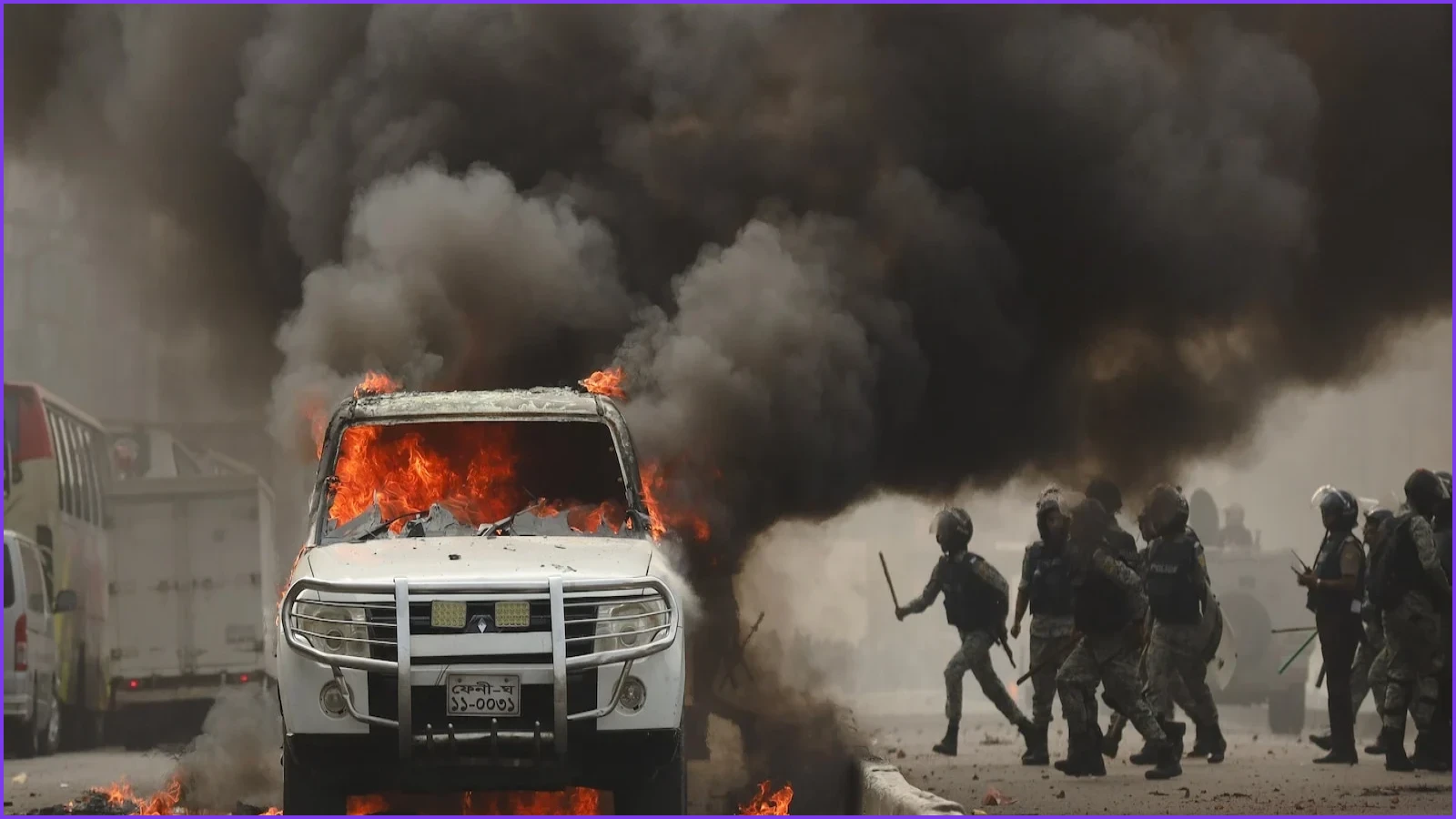
Thousands of garment workers in Bangladesh engaged in violent clashes with police on Wednesday as protests over basic pay continued to destabilize the country's vital export sector. The unrest, which has persisted for weeks, saw approximately 20,000 workers take to the streets in Savar, located outside the capital, where they blocked the Dhaka-Aricha Highway. Authorities responded by utilizing tear gas, stun grenades, and batons to disperse the crowds, though the extent of injuries remains unconfirmed.
The disturbances extended into the neighboring industrial area of Ashulia, where local police chief Saiful Alam confirmed that officers intervened after workers obstructed traffic and threw stones at security personnel. According to police reports, the ongoing instability has forced the closure of about 25 factories in Ashulia. Similar scenes unfolded in the district of Gazipur, another major industrial hub, where protesters blocked the Dhaka-Mymensingh highway and set fire to a police vehicle, prompting further use of tear gas and stun grenades by law enforcement.
The garment sector, which comprises roughly 2,500 factories and generates approximately $40 billion in annual export earnings, has faced routine disruptions throughout the month. Workers are currently calling for their monthly minimum wage to be increased to 30,000 takas ($236), up from the current 12,500 takas ($98). Protesters cite the erosive impact of inflation and rising living costs on their purchasing power. The industry directly employs about 4 million workers, primarily women from rural areas, with millions more employed in related support industries.
In response to the protests, many factory owners have remained shut under a “no work, no pay” provision under labor laws that allows for the suspension of operations due to unrest. While the government has established a board to negotiate a new wage package, these efforts have not yet satisfied the demonstrators. Both the Bangladesh Garment Manufacturers and Exporters Association and the Bangladesh Knitwear Manufacturers and Exporters Association have issued calls for the protection of their facilities.