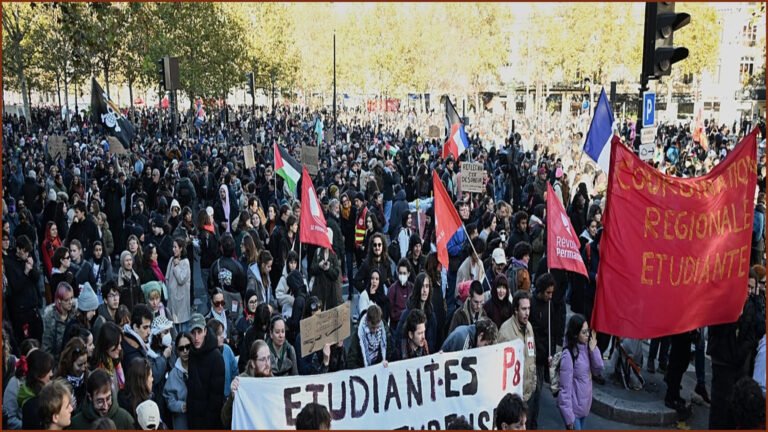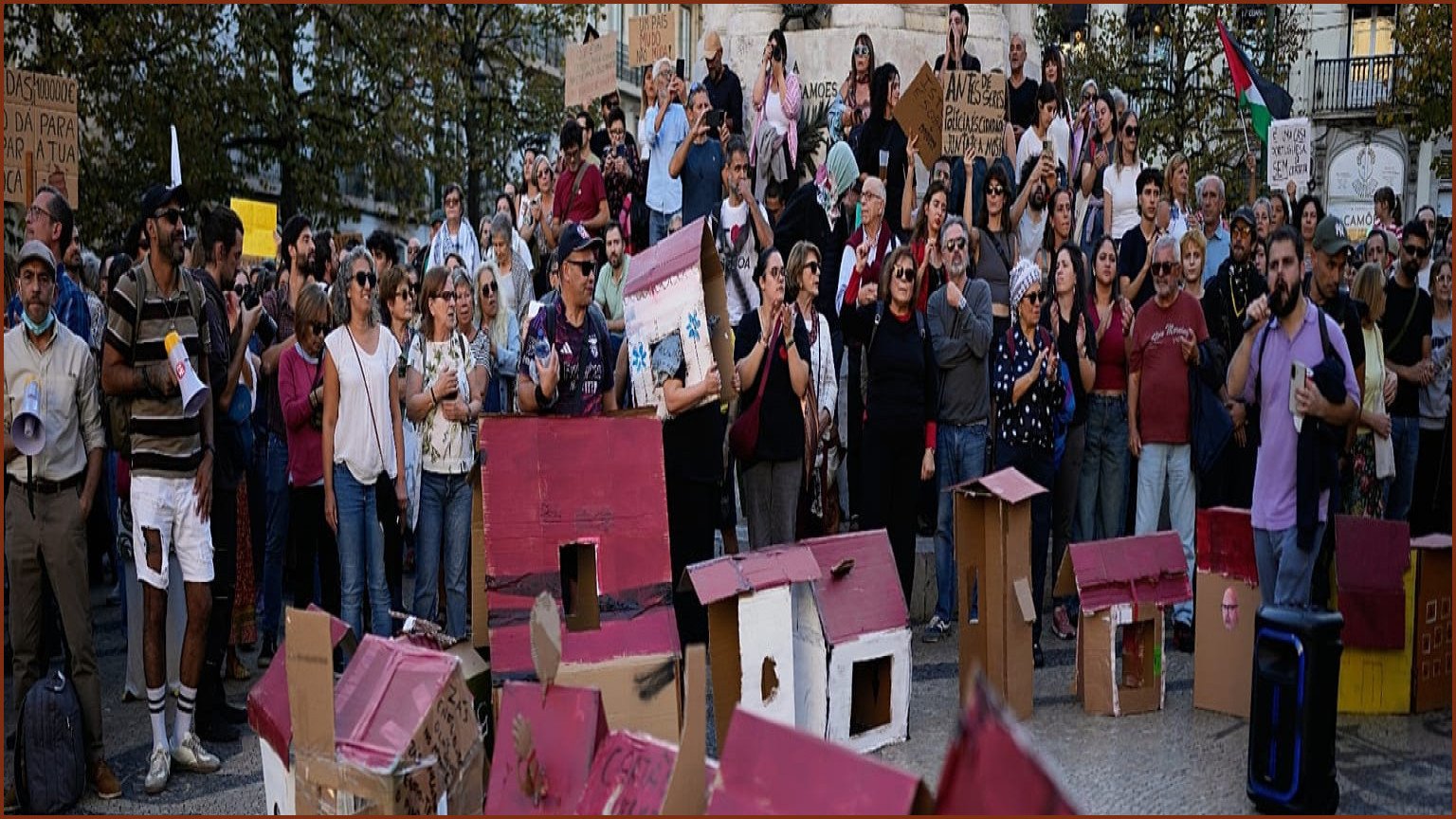
Thousands of demonstrators staged nationwide rallies across Lisbon, Porto, and dozens of other Portuguese cities on Saturday to protest skyrocketing housing costs, stagnant wages, and new government legislation. Uniting under the banner slogan "they will not steal our right to live here," the crowds called for urgent caps on rent increases, enhanced legal protections against tenant evictions, an expansion of public housing, and direct government action to curb real estate speculation.
The widespread street demonstrations were sparked by a newly adopted draft law introduced by the government. The proposed legislation aims to make it faster and simpler for landlords to evict tenants and regain control of rental properties. In addition, the bill removes existing caps on rental pricing, permits property owners to demand larger upfront payments including higher security deposits and advance rent, and updates regulations governing older lease agreements entered into prior to 1990. José Manuel Pureza, coordinator of the Left Bloc political party, voiced strong opposition during the demonstrations, declaring, "What should happen, and what this massive mobilisation across the country is demanding, is the withdrawal of this draft law."
At the start of the demonstration in Porto, Raquel Ferreira, a representative from the housing-rights movement 'Casa Para Viver', emphasized the urgent need for systemic change. "We need homes to live in, not homes to speculate on. Public housing needs to be built and the price of rents needs to come down," Ferreira told local media. While government officials argue that loosening regulations will motivate property owners to list more units on the long-term rental market, Casa Para Viver countered that the reform leaves tenants increasingly vulnerable. The advocacy group is urging authorities to implement strict rent controls that keep housing costs aligned with national wage levels.
Casa Para Viver sharply criticized the government's economic assumptions, pointing out that official policies treat a monthly salary of €2,300 as a "moderate" income, despite the reality that "more than half the people working in this country earn less than 1,000 euros." Under current real estate classifications, homes priced as high as €660,000 are also designated as having "moderate" market value. In a statement released earlier in March, the organization accused decision-makers of exacerbating the situation, stating, "The government and the parties that have allowed these measures to pass are pushing prices up and normalising the absurd, while rewarding landlords, developers and property funds."
Official figures highlight a dramatic divergence between housing costs and earnings across the country. European Union statistics indicate that housing prices relative to incomes in Portugal jumped 60.8% from 2015 to 2025, representing the highest increase in the bloc and far outstripping second-placed Netherlands at 34.3%. The steepest price surges occurred in Lisbon and Porto. Furthermore, data released at the end of October by the National Statistics Institute (INE) revealed that residential property prices soared by nearly 20% between the first quarter of last year and the first quarter of 2026. Government records show that rental prices have climbed by 68% overall since 2020.
Analyzing the roots of the inflation, economist Mike Langen explained that Portugal "experienced a tourism boom, and their golden visa program attracted foreign investors, so house prices grew partly because of foreign capital." Foreign buyers and institutional investment funds drove market values upward by acquiring real estate, including dilapidated buildings. Concurrent with foreign investment, the rapid expansion of tourism resulted in numerous city-centre apartments being converted into short-term vacation rentals, removing them from the long-term housing supply. To counteract these trends, Casa Para Viver is demanding an immediate halt to golden visas, the termination of tax incentives for digital nomads, and the end of tax exemptions granted to property funds.
The housing crunch has created severe financial pressure for residents in urban centers. Although official statistics place Portugal's average monthly salary at approximately €2,200, real estate agents report that a basic one-bedroom apartment in central Lisbon typically costs a minimum of €1,100 per month, leaving family-sized city flats unaffordable on a single income. A comparative analysis published by the Deutsche Bank Research Institute (DBRI) examined disposable monthly income after rent across 28 European cities, finding figures ranging from €9,140 in Zurich down to a European low of €253 in Lisbon. The DBRI report concluded that Lisbon and Milan represent the most difficult European cities for couples to reside in, noting that while net monthly pay in Lisbon averages €1,408, typical rents can reach €2,561 per month, leaving households with just €253 for all remaining monthly living expenses.
The ongoing housing crisis has left young residents unable to enter the property market, while parents report growing concerns that their adult children are forced to relocate far from their hometowns to secure shelter. Conversely, some Portuguese homeowners have capitalized on the boom, securing substantial financial gains by selling their real estate assets. In response to mounting public discontent, the government has introduced several mitigation policies, including tax cuts on new residential construction projects, tighter restrictions on short-term holiday rentals, and a commitment to construct 145,000 new homes, though ministers concede that these measures will not provide immediate relief to struggling households.