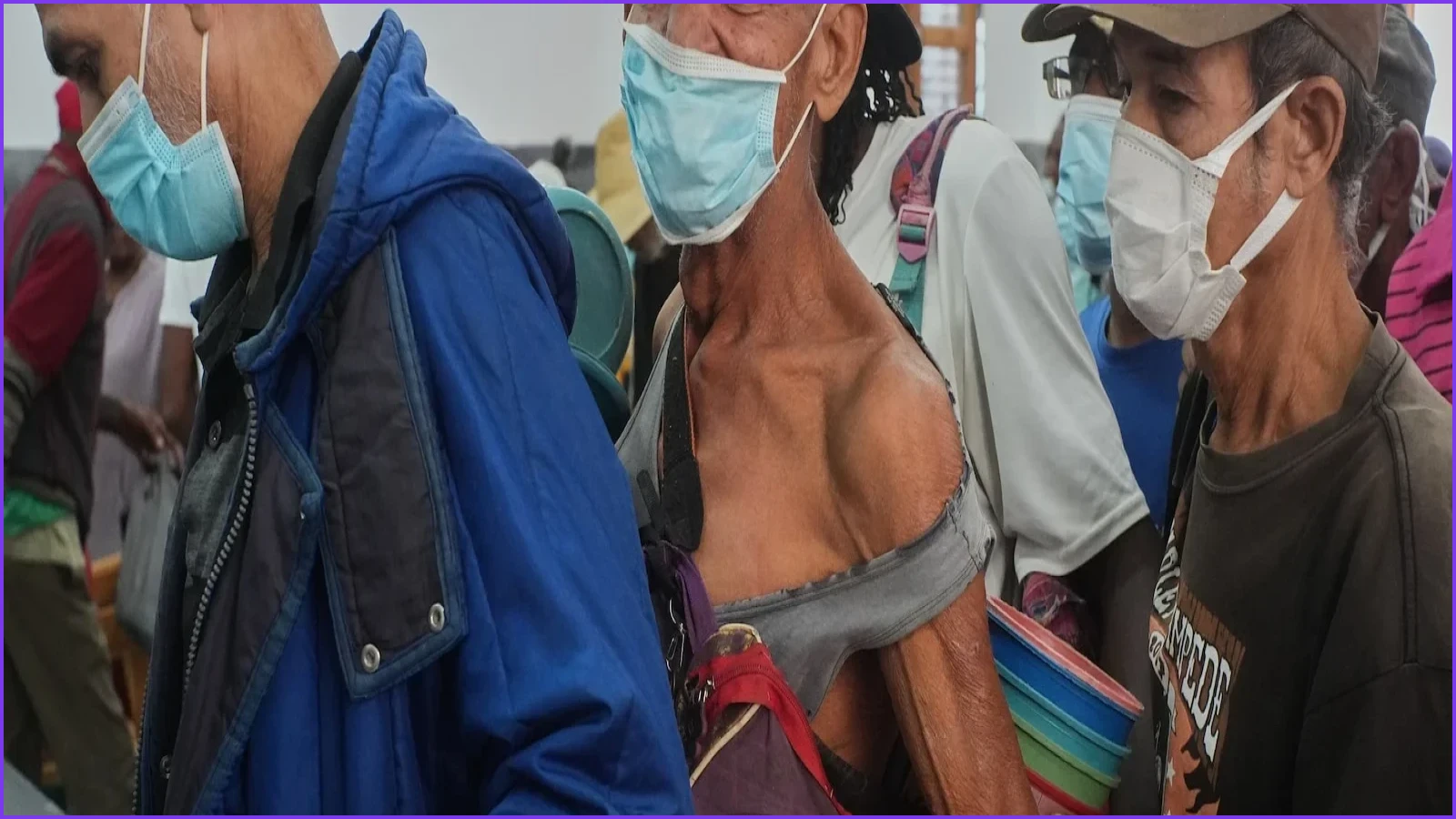
Outside a charity-run food pantry in the center of Havana, hundreds of residents assemble every night, with some sleeping on the sidewalk to secure a place in line for what may be their only complete meal of the day. The scene reflects a deepening economic crisis across Cuba, where severe inflation, dwindling state resources, and international energy constraints have left increasing numbers of citizens unable to afford basic nutrition without charitable assistance.
When doors open at 7 a.m. at the Asociación Quisicuaba, visitors enter carrying numbered plastic containers. Inside a sprawling kitchen equipped with over 20 large cauldrons, volunteers maintain a structured routine, washing containers, calling numbers, and serving portions containing a mixture of rice, eggs, and pasta, occasionally accompanied by chicken, along with bottles of chocolate milk. The community center, which operates out of a religious setting, relies on backing from international aid organizations, European donor groups, and United Nations agencies to maintain its daily food assistance operations.
Among those waiting in the early hours is Fernando Fernández, a 71-year-old retiree who previously worked as a cook, security guard, and caretaker. Fernández noted that the worsening hardship forces him to arrive in the early morning or even join the queue the afternoon prior. While he once visited the kitchen alongside his 80-year-old wife, Josefa, he now attends alone because she has fallen ill. The couple currently depends on Josefa's monthly pension of 3,200 Cuban pesos—equivalent to slightly more than $3—supplemented by food distributed at Quisicuaba.
The food line also includes working parents like Marelys Ponce, a 34-year-old single mother who joined the queue accompanied by two of her children. Ponce explained that she began seeking help a little over a month ago because her income could no longer stretch to feed her family. Her three other children attend school, where they typically receive a provided lunch. Ponce stated that the soup kitchen provides essential food that she is otherwise unable to supply at home.
Organizers and attendees emphasize that the crowd lining up daily is largely comprised of people with extensive employment histories rather than homeless individuals. Retired educators, medical workers, former state employees, and currently employed workers line the streets, reporting that their fixed incomes or state salaries have lost critical purchasing power. While a doctor in Cuba can earn up to 15,000 pesos monthly—amounting to roughly $18—annual inflation reaching 28% as of September has severely undercut household budgets.
Asociación Quisicuaba has identified approximately 12,500 highly vulnerable individuals across Havana who require food aid. Dr. Enrique Alemán, a physician who serves as president of the organization, observed that walking through the island's capital reveals a new dimension of vulnerability. Alemán noted that the people seeking aid are products of Cuban society who do not suffer from illiteracy or structural marginalization, but are instead facing acute financial, food, and healthcare insecurity due to broader societal strains.
For decades, Cuba's socialist framework guaranteed basic needs through free public education, universal healthcare, and heavily subsidized food rations, keeping basic living standards baseline-secure even if modest. However, a combination of external pressures and domestic shortfalls has severely disrupted that model. The drop in tourism, historically a primary source of foreign revenue, alongside energy restrictions imposed by the United States, has hampered domestic food production and economic stability.
Analyzing the causes of the crisis, Spain-based Cuban American lawyer Luis Carlos Battista highlighted that growing poverty stems from both internal and international factors. These include elevated global food prices, the severe downturn in tourism during the COVID-19 pandemic, and the cascading impact of U.S. energy restrictions on agricultural output. Meanwhile, the expansion of private enterprise in Cuba has broadened economic disparities, creating a growing gap between entrepreneurs or citizens receiving foreign remittances and state workers or retirees dependent on local currency.
The Cuban government has traditionally allocated roughly $2 billion annually to import essential food supplies—such as rice, beans, powdered milk, cooking oil, chicken, and eggs—distributed through its national monthly rationing system. However, state authorities acknowledge that the economic downturn has prevented the government from sustaining these import volumes, resulting in prolonged delays or missing distribution of subsidized food items across the island.
This systemic breakdown has altered the social contract across Cuban households. In a recent essay published on the critical online platform La Joven Cuba, researcher Lisbeth Moya González remarked that while official political rhetoric continues to champion progress toward socialism, daily life for ordinary citizens increasingly functions under an individual survival logic. Consequently, Cuban families are left to navigate private markets, seek foreign remittances, or rely on charity food pantries to obtain basic necessities once guaranteed by the state.
Centers such as Quisicuaba, often housed in religious buildings or affiliated with faith-based groups, have proliferated across the island in recent years.
Alongside Ponce and Fernández were men and women from a wide range of professions. Few were homeless. Most had long work histories or were still employed, but told the AP that their earnings were no longer enough to live on.