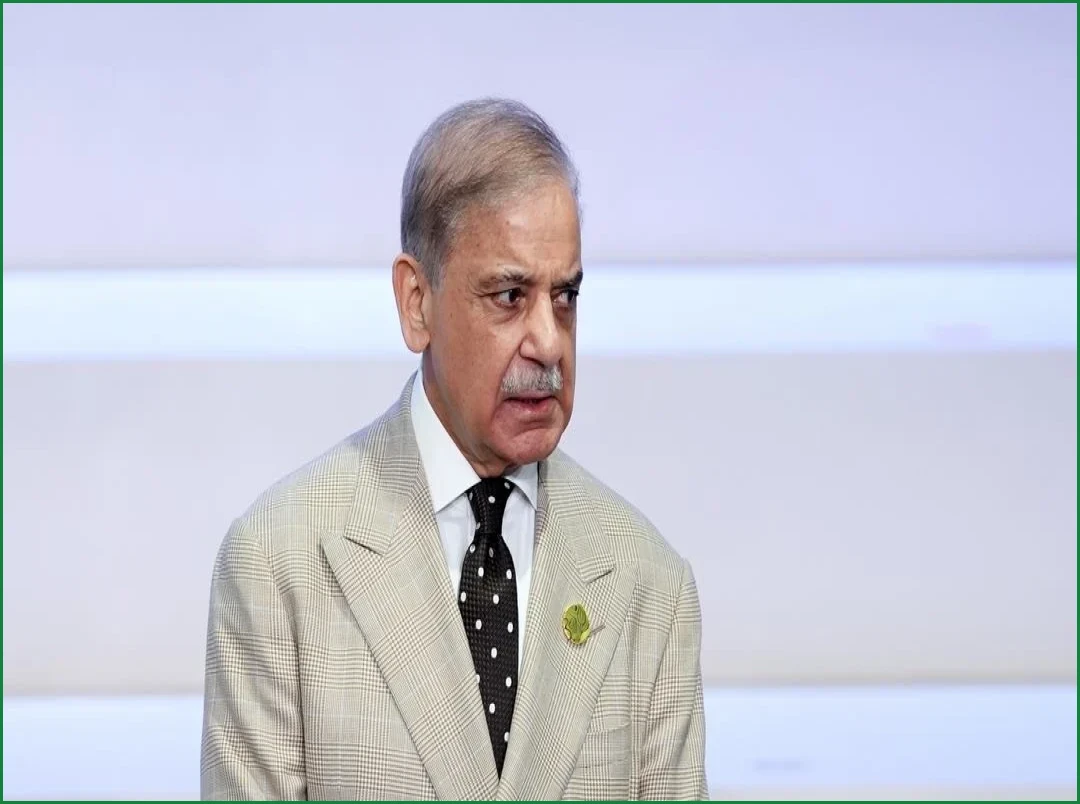
Pakistani Prime Minister Shehbaz Sharif delivered a strong appeal for international climate justice during his address at the COP31 summit held in the southern Turkish city of Antalya. Sharif emphasized that national efforts alone are insufficient to combat the escalating climate crisis, calling for a fair and comprehensive global response. He specifically urged the international community to provide grant-based climate financing to vulnerable nations, noting that such support is critical to ensuring that struggling economies do not fall deeper into debt while attempting to build resilience and adaptation.
Highlighting the urgency of the situation, the Prime Minister warned against the "weaponisation" of water. He asserted that no nation should be permitted to jeopardize the lives and livelihoods of downstream communities, insisting that water-sharing agreements must be strictly honored. This statement follows the diplomatic tension that arose last year when India suspended the Indus Waters Treaty and ceased sharing water data with Pakistan after a deadly attack in India-administered Kashmir that resulted in 26 deaths.
Reflecting on Pakistan’s own experience with climate disasters, Sharif recounted the 2022 flash floods that submerged one-third of the country and impacted 33 million people, causing billions of dollars in damage. He reminded the audience of his warning issued at the United Nations four years ago that climate-related catastrophes do not remain confined by national borders. "The future we feared has become the present we are living," he stated, urging that solidarity must manifest as concrete, real-world action.
During his remarks, the Prime Minister also expressed gratitude for the support Türkiye provided to Pakistan during its recent flooding crises. Regarding domestic efforts, Sharif highlighted Pakistan's commitment to a clean energy transition. He stated that green energy sources now comprise approximately 55 percent of the country’s energy mix, with ongoing investments in solar capacity and nuclear power. Furthermore, the nation is actively advancing electric mobility, with an stated goal to reduce projected emissions by approximately 50 percent by 2035.