The sixth World Nomad Games, hosted in Kyrgyzstan in September 2026, demonstrated how ancient Central Asian survival traditions have evolved into an expanding international sporting phenomenon. What started in Kyrgyzstan in 2014 as a regional cultural initiative aimed at reviving and promoting nomadic customs brought together more than 3,000 athletes from 109 countries to compete across 43 distinct sports. The event attracted competitors from around the globe, including numerous nations with no historical ties to nomadic culture.
Historically, the skills showcased at the Games were forged in battlefield combat, hunting, and the rigorous everyday demands of life on the steppe, developing essential qualities of strength, endurance, agility, and horsemanship. For peoples with deep-rooted nomadic heritage—such as Kazakhs, Kyrgyz, Uzbeks, Turkmens, Tajiks, and Mongols—these disciplines remain vital expressions of historical continuity, cultural identity, and pride. Historical records document that wrestling, archery, and equestrian prowess served as central components of warrior training and community gatherings across the steppe for generations.
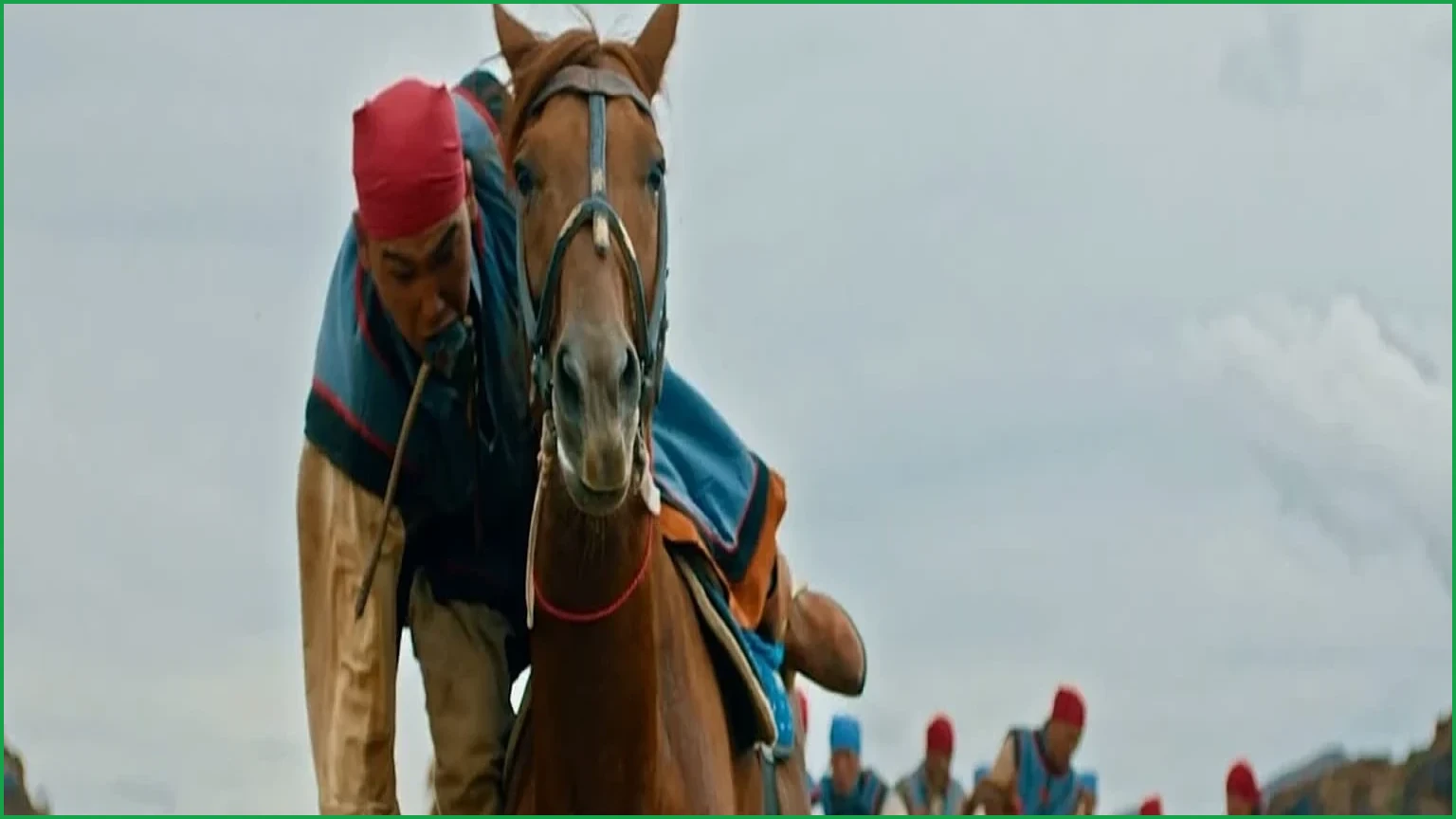
Among the sports drawing the greatest spectator interest are those demanding physical endurance and extreme coordination from both horse and rider. Chief among these is kokpar, an ancient sport described in the 19th century by American diplomat Eugene Schuyler as a game in which "one man holds a kid thrown over his saddle and everyone else tries to tear it from him." In contemporary competitive rules, four riders from each team are active on the field simultaneously. Competitors must reach down while riding at speed to lift a heavy dummy carcass weighing between 30 and 33 kilograms from the ground, driving it toward a designated scoring circle.
Known as kok boru in Kyrgyzstan, kokpar is deeply embedded in Kazakh culture, drawing thousands of Kazakh fans across the border to witness the finals during the 2026 event. "Just as every nation has its own national games, our equestrian and national sports can be called the soul of the Kazakh people," said Baurzhan Mugyzharov, trainer of Kazakhstan’s national kokpar team. "Of course, in a developing world, riding horses and shooting arrows might seem unusual or like something from the past to some people, but for us, national sports are our wealth."
Mugyzharov emphasized that involvement in equestrian traditions begins in early childhood across Kazakhstan. "Kazakhs have a tradition of getting children onto horses from a very tender age," he noted. "Once they grow up enough to hold the reins properly, they are made to race in competitions and play kokpar. We guide each child according to their aptitude, because this is our national sport and a tradition handed down from our ancestors."
Equestrian disciplines in Central Asia prioritize long-distance stamina over raw short-course speed. The 2026 Games featured a 25-kilometre horse race alongside a grueling 300-kilometre endurance marathon conducted over three days. Horsemanship also underpins audaryspak, or horseback wrestling, where two riders maneuver their mounts while attempting to pull, push, or unseat each other from their saddles.
Zhanbatyr Bekmusaev, Vice-Chairman of Kazakhstan’s Audaryspak Association, highlighted the growing international stature and domestic structure of the sport. "At the recent World Nomad Games, which brought together representatives from many countries, we saw significant progress in the development of audaryspak in Kazakhstan," Bekmusaev said. He explained that Kazakhstan systematically holds national championships for youth, juniors, and adults. "The results speak for themselves. At the competition held in Issyk-Kul, Kyrgyzstan, four of our six Kazakh wrestlers won gold medals, one won silver and one won bronze. As a result, Kazakhstan took first place in the team standings."
Ground-based combat forms also featured heavily at the Games. In Mongolian bökh, competitors don traditional attire known as zodog and shuudag and perform an ceremonial ritual dance prior to fighting. A bout ends when any part of a wrestler's body above the knee touches the ground. Kazakh kuresi takes place entirely in a standing position, with participants wearing specialized jackets as they attempt to throw opponents onto their back or shoulders. Similarly, Uzbek kurash is conducted strictly standing, banning ground fighting and grips below the waist in favor of throws and sweeps.
Precision sports like traditional archery drew equal attention, particularly horseback archery, which mimics ancient mounted battle techniques. Nurzhan Zhaksylikuly, an archer representing Kazakhstan’s Zhetysu region, detailed how nomadic techniques differ from Western traditions. "In our Kazakh tradition, our ancestors used to shoot while riding on horseback. That's why, when shooting from horseback, the arrows need to stay in place and not move around," Zhaksylikuly explained. "So we shoot differently from Europeans. They used long bows from the ground and pulled the string with three fingers. Horsemen could accidentally release that pinch so we are using our thumbs to pull. On the thumb, there’s a thumb ring. The rings can be made of leather, wood or brass."
In addition to high-intensity athletic trials, traditional games requiring less raw physical power remain integral to nomadic heritage. In Zhetysu, known as the region of the seven rivers, primary and secondary schools teach children traditional bone games such as asyk and bes asyk. Asyk involves using a sheep knuckle bone to strike and knock other bones out of a designated playing circle, requiring high levels of control and accuracy.
"Asyk is a traditional heritage left to us by our ancestors. It is played by everyone, from five-year-old children to the elderly," explained Ashat Turlybekov, a trainer for the Zhetysu regional team. "Speaking of its benefits, asyk fosters flexibility, agility and accuracy." Turlybekov observed that games like asyk atu and bestas are experiencing rapid growth following recent regional competitions in Kyrgyzstan. "Instead of children sitting on their phones, it is much better for them to learn useful skills like precision, agility and marksmanship," Turlybekov added. "In a single game, each child is given five to seven minutes. Moving back and forth gives the child strength and energy."
Physical strength is demonstrated in other unique disciplines, including a traditional Mongolian contest where competitors break animal vertebrae using only their bare hands. To sustain these practices, governments and sports federations across Central Asia are pouring resources into dedicated training facilities, specialized schools, and structured leagues aimed at engaging younger generations.
For organizers and participants, the resurgence of these ancient games transcends athletic competition. "We are reviving our history and bringing forgotten heritage back to light," stated Erlan Ashym, founder of an equestrian club in Karaganda. Ashym stressed that the broader mission is about cultural preservation and instilling ancestral values in today's youth. "Ultimately, our main goal isn't just to promote sports; it is to restore our core national identity through the strength of our history, traditions, national sports and the horse."