Uzbekistan is implementing a multi-faceted modernization strategy across its agricultural sector, introducing digital tools, advanced irrigation systems, and high-yield farming techniques to strengthen domestic food security and boost international trade. Facing tight land constraints and severe environmental pressures, the Central Asian nation aims to expand its food export revenues to $10 billion (€8.6 billion) by 2030, having formally designated the 2026–2030 period as a priority window for national food security and reduced import reliance.
According to Agriculture Minister Ibrokhim Abdurakhmonov, Uzbekistan currently harvests roughly 26 million tonnes of fruit and vegetables each year, exporting agricultural goods to 92 foreign markets. A core goal of the government's strategy is boosting per-hectare productivity rather than bringing new land under cultivation. Shamshod Ergashev, Head of the Secretariat of the Minister of Agriculture, noted that scientific research and technological innovations are driving these yield increases. In 2025, cotton cultivation was scaled back to approximately 875,600 hectares—down from over one million hectares in previous years—yet output still reached nearly four million tonnes. Furthermore, assisted by improved seed treatments and refined planting methods, the country harvested 10 million tonnes of grain in 2026.
The government is also undertaking a major overhaul of Uzbekistan's fruit production footprint. The country presently contains around 572,600 hectares of orchards and vineyards, with plans to establish 172,000 hectares of modern, high-yield orchards between 2026 and 2028. Abror Jo'rayev, Head of the Republican Horticulture Development Department, pointed out that traditional orchards typically produced seven to ten tonnes of fruit per hectare. By transitioning to trees cultivated on dwarf and semi-dwarf rootstocks, yields have climbed to between 30 and 35 tonnes per hectare, with some operations reaching 50 to 60 tonnes.
At a 138-hectare commercial enterprise growing apples, pears, plums, peaches, and apricots, these modern practices are already operational. Qahramon Ilhombekov, a representative of the farm, shared that their enterprise yields an average of 35 tonnes of apples per hectare. He explained that while pushing output to 50 tonnes is technically achievable, it places excessive strain on the trees, whereas maintaining a range of 30 to 35 tonnes ensures the desired fruit size, coloration, and overall market quality.
To stimulate farm-level investment in modern horticulture, the government has structured direct financial support packages. Agricultural producers developing new orchards can access preferential loans of up to 120 million soums (€8,873) per hectare, offered on a seven-year repayment schedule that includes a three-year grace period. Additionally, growers receive annual maintenance subsidies of five million soums (€370) per hectare for three consecutive years, alongside targeted state support for acquiring planting materials and installing efficient irrigation equipment.
Addressing acute water scarcity remains a central focus of the reform agenda. World Bank data indicates that agriculture accounts for approximately 90 percent of all water consumption in Uzbekistan. To alleviate supply pressures, the World Bank approved a $200 million (€172 million) project in May 2025 aimed at modernizing irrigation infrastructure across five regions. The initiative targets a reduction in annual water losses of about 540 million cubic metres while enhancing irrigation delivery across 232,000 hectares of farmland. On individual farms, the adoption of drip irrigation is enabling precise management of water and fertilizer. Jo'rayev emphasized that drip technology delivers water directly to the tree root zone rather than saturating surrounding soil, which is essential as water stress intensifies across the region.
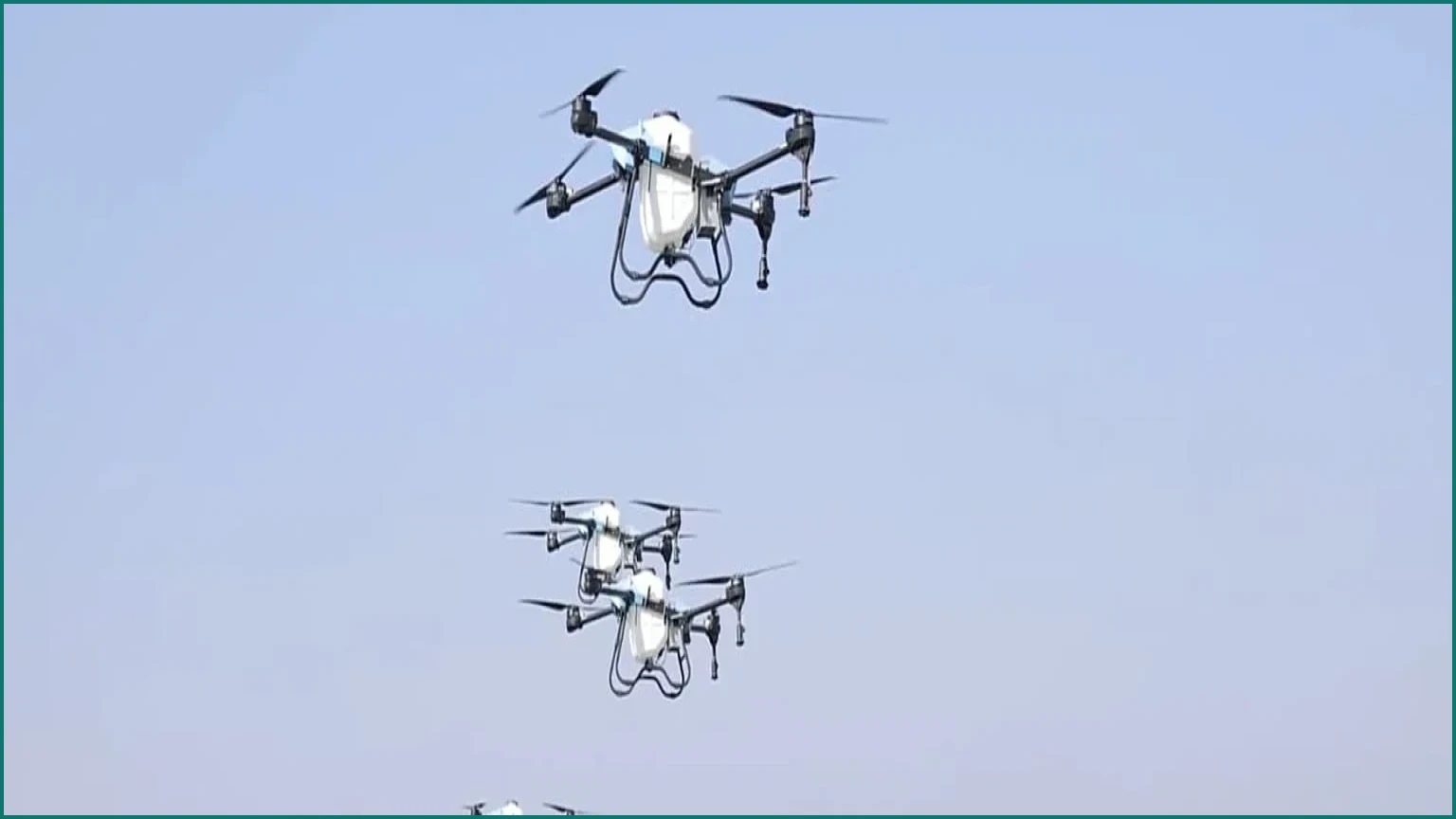
Digitalization efforts are expanding rapidly alongside physical infrastructure upgrades. In 2026, Uzbekistan acquired 100 Chinese-made agricultural drones through a program launched by the Ministry of Agriculture with World Bank backing. Half of the fleet is dedicated to remote monitoring of crop health, while the remaining 50 units handle precision fertilizer application, pest control, and field operations. Authorities are also building satellite crop monitoring capabilities, geographic information systems, and artificial intelligence models for yield forecasting and disease detection. To streamline administrative procedures for growers, state agencies have launched digital platforms like Agroportal and Agrosubsidy to process support applications and agricultural services.
To build resilience against land degradation, soil salinity, and water deficits, Uzbekistan is tapping international sustainability partnerships. The Global Green Growth Institute (GGGI) has partnered with local stakeholders on climate-smart farming projects, particularly in Karakalpakstan. Bakhtiyar Radjabov, Senior Officer for Green Growth Policy and Government Liaison at GGGI, stated that their focus has been scaling climate-smart solutions from initial pilot stages to major investment programs. GGGI supported commercial banks in Uzbekistan with issuing green bonds on the London Stock Exchange to raise funds for environmental projects. Furthermore, Radjabov highlighted an agrifood investment platform developed with the European Bank for Reconstruction and Development (EBRD) and the Ministry of Agriculture, designed to mobilize around $1.5 billion (€1.3 billion) for the sector. He emphasized the necessity of strengthening local technical expertise so domestic agribusinesses can successfully integrate these technologies amidst severe environmental constraints.
Uzbekistan’s long-term agricultural blueprint attempts to balance expanding high-value export capabilities with securing reliable domestic food supplies. To enhance local competitiveness abroad, the government is incentivizing investments in food processing, quality packaging, and value-added production. Nevertheless, the country remains reliant on foreign imports for key staples, including sugar and vegetable oil. Ergashev noted that by applying new technologies in farming and horticulture, Uzbekistan is elevating overall productivity and expanding the export footprint of its fresh produce into new international markets. Ultimately, the success of this strategy hinges on whether ongoing capital investments enable farmers to manage operational costs, raise yields, and navigate persistent climate and water constraints.