The economic and political fallout from foreign policy decisions took center stage in the U.S. midterm elections on Nov. 3, as rising gas prices linked to the ongoing war in Iran and increased business costs from tariffs heavily influenced voter decisions. Public sentiment reflected widespread opposition to current overseas actions, according to an SSRS Voter Poll conducted for major news outlets. The survey revealed that 63% of voters viewed the conflict in Iran as the wrong decision, while 51% believed U.S.
support for Israel was too strong. Furthermore, 74% of respondents cited the war as a major or crucial factor in how they cast their ballots, secondary only to the economy, which 89% described as a key voting influence. Beyond domestic polling, the election outcomes triggered extensive international commentary, including AI-generated videos, social media memes, and foreign newspaper coverage.
With Democrats winning majorities in both chambers of Congress, foreign allies may see signs of renewed stability in American democratic institutions, according to Pulitzer Prize-winning historian and The Atlantic staff writer Anne Applebaum. Applebaum, who has extensively researched authoritarianism and democratic erosion, had previously expressed concerns regarding foreign policy corruption, pointing out in a February interview that individuals surrounding the president and his family had accepted financial contributions from foreign governments.
While congressional control provides a structural counterweight, Applebaum noted that whether the legislative shift translates into fundamental foreign policy changes remains uncertain, outlining three key mechanisms through which lawmakers can assert influence while highlighting the boundaries of congressional authority.
The primary mechanism available to incoming Democratic majorities involves the power of the purse to constrain military operations in Iran. Since June 2025, joint military campaigns by the U.S. and Israel against Iran have drawn heavy financial resources, costing American taxpayers approximately $47.1 billion as of mid-October, based on Pentagon figures. Iranian retaliatory strikes have simultaneously targeted U.S. military bases located throughout the Gulf region. Applebaum remarked that direct executive shifts are unlikely, stating, "I don't expect Trump to change.
He's not that interested in what Americans think of his policies." However, once the new Congress convenes, lawmakers can insert binding funding restrictions into federal appropriations bills to restrict funding for specific military engagements. "You could see them trying to use the power of the purse, the appropriations committees, to end the war or to influence politics," Applebaum observed, adding that legislative financial pressure is likely to "change the trajectory of the war sooner or later."
Timing also plays a critical role in the immediate outlook for the Middle East conflict. Trita Parsi, an Iran specialist at the Quincy Institute for Responsible Statecraft, noted that Iran remains apprehensive about potential new military strikes. Parsi warned that proponents of the military campaign may view the two-month transition period prior to the swearing-in of the new Congress as a final window to escalate hostilities before funding hurdles take effect.
Beyond financial leverage, Congress possesses expansive oversight authority to conduct high-profile investigations into administration decision-making. Applebaum expects Democratic lawmakers to examine potential corruption involving individuals close to the president as well as the counsel provided by foreign policy officials. Specifically, she raised questions regarding the competence of Defense Secretary Pete Hegseth and the nature of the advice given during the war in Iran.
Although public hearings and investigative disclosures can increase transparency and elevate political scrutiny, Applebaum stressed that oversight cannot directly compel policy shifts because the president retains veto power over legislation. "Congress can't force the president to make changes," Applebaum explained, emphasizing that Democratic leaders must act swiftly to determine investigative priorities.
Legislative strategy regarding Ukraine and Russia represents a third key arena where congressional action could intensify. Despite White House approaches to Moscow that have sparked concern among lawmakers, cross-party support for Ukraine remains resilient. Applebaum anticipates that a revitalized bipartisan coalition will pursue statutory measures to tighten pressure on Moscow, stating, "I would expect legislation forcing the president to reimpose sanctions." Whether lawmakers can secure a sufficient majority to overcome a presidential veto remains an open question, though Applebaum noted the strong baseline of congressional backing for Kyiv makes such an outcome possible.
Furthermore, lawmakers are anticipated to probe unresolved disruptions affecting Ukraine's battlefield communications. In October, the Pentagon's inspector general turned down a bipartisan request to investigate service slowdowns involving Starlink and Starshield satellite networks, which Ukrainian officials reported had compromised their ability to intercept incoming Russian drones. The issue has been complicated by conflicting statements from the administration and SpaceX regarding operational responsibility.
Applebaum expects Congress to examine these satellite disruptions in greater detail, alongside broader scrutiny of diplomatic negotiations with Moscow and Kyiv, including allegations concerning financial dealings involving negotiators. She indicated that these matters will become "more open, more part of the conversation, more part of criticism" as congressional oversight takes hold.
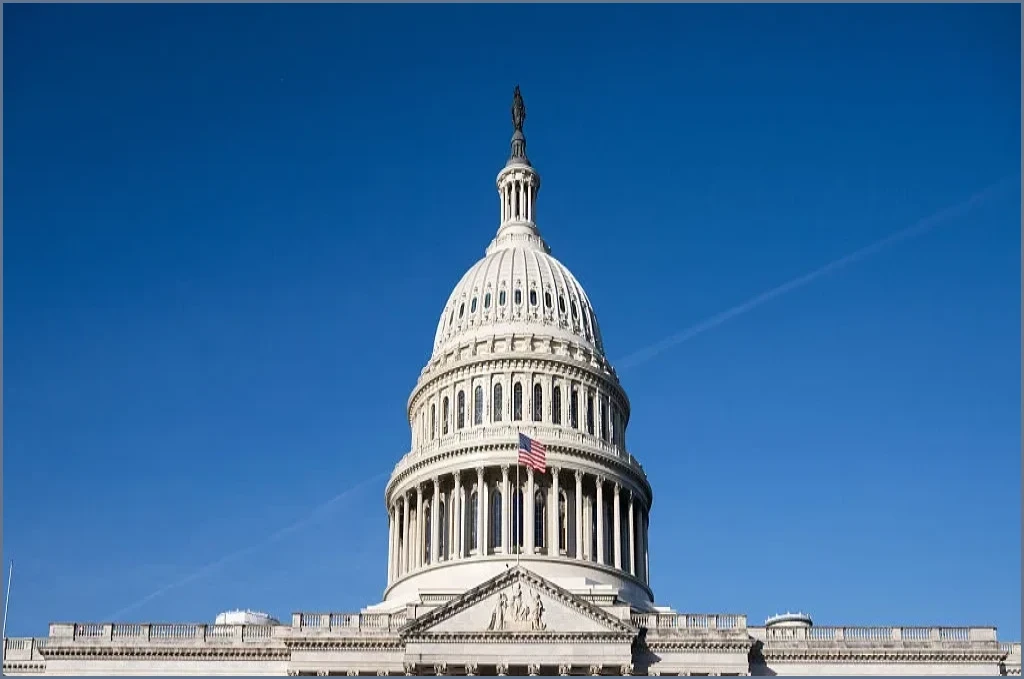
The U.S. Capitol in Washington, D.C., on Nov. 3, the day of the midterm elections. Saul Loeb/AFP via Getty Images hide caption
The digital version was edited by Treye Green.