Israeli President Isaac Herzog is set to hold high-stakes meetings with Prime Minister Benjamin Netanyahu and his primary political rival, Gadi Eisenkot, this Thursday. With less than a week remaining, the president must determine which candidate holds the most viable path toward establishing a stable governing coalition.
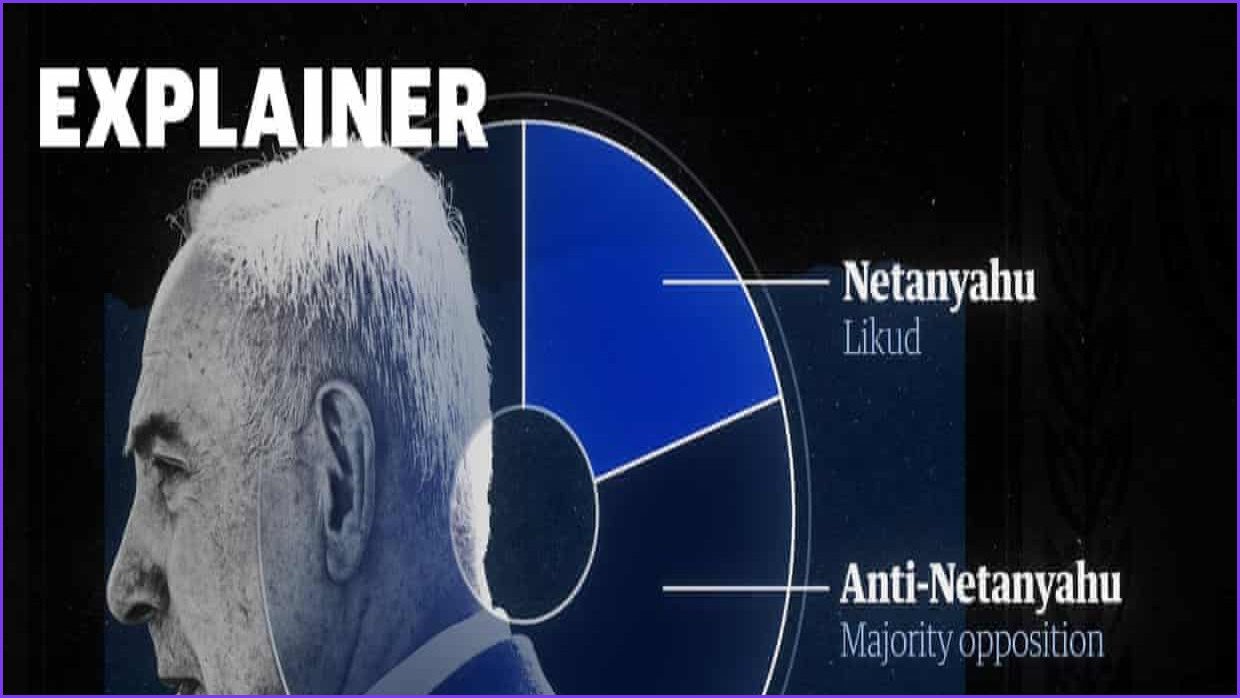
The recent general election, widely regarded as one of the most significant in decades, concluded without a clear mandate for either major bloc. Netanyahu’s right-wing coalition saw its parliamentary strength decline, falling from 68 to 53 seats within the 120-seat Knesset. Conversely, the Change bloc, spearheaded by former military chief Gadi Eisenkot, secured 48 seats. The balance of power currently rests with parties representing Israeli Palestinians, which hold a record-breaking 19 seats, with the Joint List controlling 11 and the conservative Islamist Ra’am party holding eight.
As the president’s role in this process is largely ceremonial yet pivotal, Herzog is tasked with identifying which candidate has the best prospect of forming a government. Addressing the urgency of the situation, Herzog has appealed to all parties to cooperate to prevent the necessity of another round of elections. He emphasized that the nation faces significant security and diplomatic challenges that necessitate a sense of immense responsibility from elected officials.
The political landscape has been notably shifted by a surge in voter turnout among Arab Israelis, which doubled to approximately 80%. Yousef Jabareen, a leader within the main Palestinian coalition, acknowledged ideological disagreements with Eisenkot but noted that Palestinian voters are seeking an alternative to the current government, citing concerns over racism, crime, and exclusion. While the Joint List has indicated a willingness to support an opposition from outside the government through tactical voting, Ra’am has expressed openness to joining a potential Eisenkot-led administration. Eisenkot, however, has set specific conditions for any such partnership, requiring support for Israel as a Jewish state, participation in national service, and the denunciation of Hamas as a terrorist organization.
Meanwhile, Netanyahu continues to serve in a caretaker capacity. Despite his party, Likud, winning the most individual seats, he faces the prospect of losing power. Netanyahu has recently alleged that Arab-led parties may have engaged in vote tampering, claims which he has used to cast doubt on the election results. These allegations have been firmly rejected by the Central Election Committee. Supreme Court Justice Noam Sohlberg, who heads the committee, stressed the importance of protecting public trust and warned that the peaceful transfer of power remains a fundamental pillar of democracy. Far-right allies of Netanyahu, such as Itamar Ben-Gvir, have gone further, calling for the arrest and interrogation of Arab party leaders, a move that has drawn sharp criticism from political opponents.